Laatst bijgewerkt op: 10/09/2026
Anyone looking for an espresso machine, a tamper, or a bag of coffee beans in Amsterdam’s Pijp neighborhood will sooner or later end up at Duikelman. Behind the counters of this cooking and coffee shop lies a family business that, since 1940, has been doing just about everything differently than the average retailer. No online store. No automated inventory management. No sales pressure. And precisely because of that, Duikelman seems stronger than ever.
The name “Duikelman” does not refer to a person, but to an invention. Founder Joop van Hal, the grandfather of the current owner David Appelboom, developed a special mercury switch for flashlights just before World War II. When the flashlight was pointed upward, the circuit was automatically broken. This prevented the light from accidentally shining into the sky and giving away the users’ location to German aircraft. “People called my grandfather the ‘Duikelman,’ the man behind the flip switch,” says David, now the third generation in the family business.
The company started out as a wholesaler of butchery supplies. Back then, butchers still did their own slaughtering and needed a wide range of tools and materials. As that market gradually disappeared, Duikelman shifted its focus to restaurant and kitchen supplies.
The big turning point came in the 1980s, when David’s parents, Hans and Katja Appelboom, took over the company. They saw opportunities outside the professional market. David explains that his father was inspired by his own experiences as a DIY enthusiast. After all, anyone who does their own construction work buys their tools from specialty stores. “People who love to cook actually want to be able to cook with the same tools that chefs use.”
It turned out to be a prescient move. When cooking shows became popular in the 1990s, demand for professional kitchen appliances for home use skyrocketed.
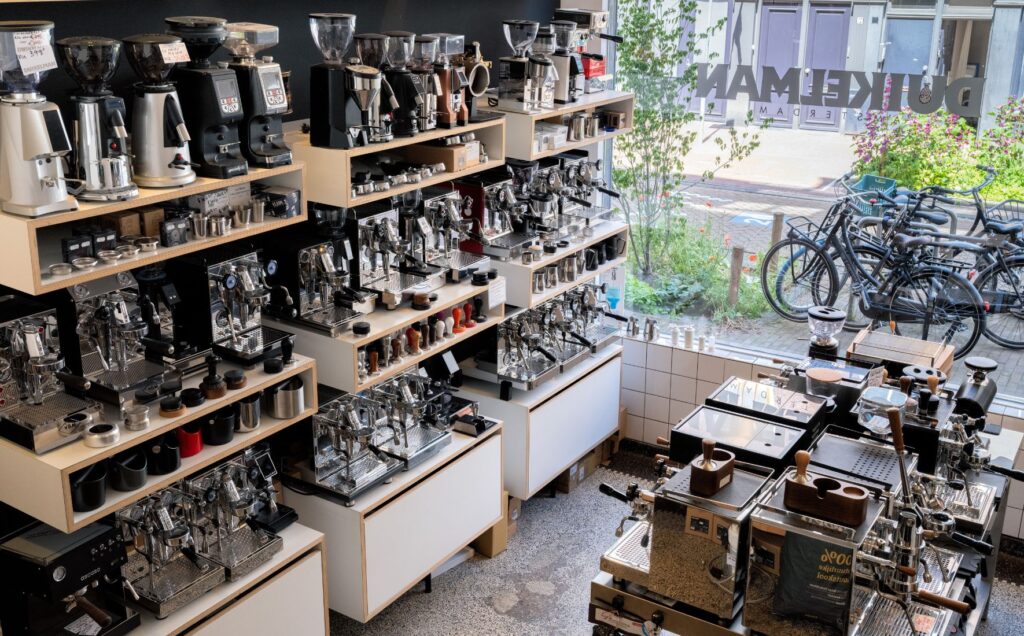
Coffee also played an increasingly important role in the product lineup during that period. While many stores focused on basic consumer appliances, Duikelman recognized the rise of the home barista early on. Machines from brands such as Vibiemme, Rancilio, and Bezzera found their way to a growing group of enthusiasts who wanted to make espresso at home.
David: “More and more people view espresso the same way they view a good wine. It’s not about quantity, but about quality.”
According to David, this trend began to take shape gradually about 25 to 30 years ago. “More and more people view espresso the way they view a good wine. It’s not about quantity, but about quality.”
Mathieu Tensen, who is responsible for espresso machines at Duikelman, witnessed that development firsthand. He first came to Duikelman as a customer in the late 1990s to buy coffee beans from Boot Koffie. “I once said, just for fun: ‘If you need any staff, I’d be happy to come work for you. The next day, I got a call.” He has now been working at Duikelman for nearly twenty years and is the face of the espresso machine department.
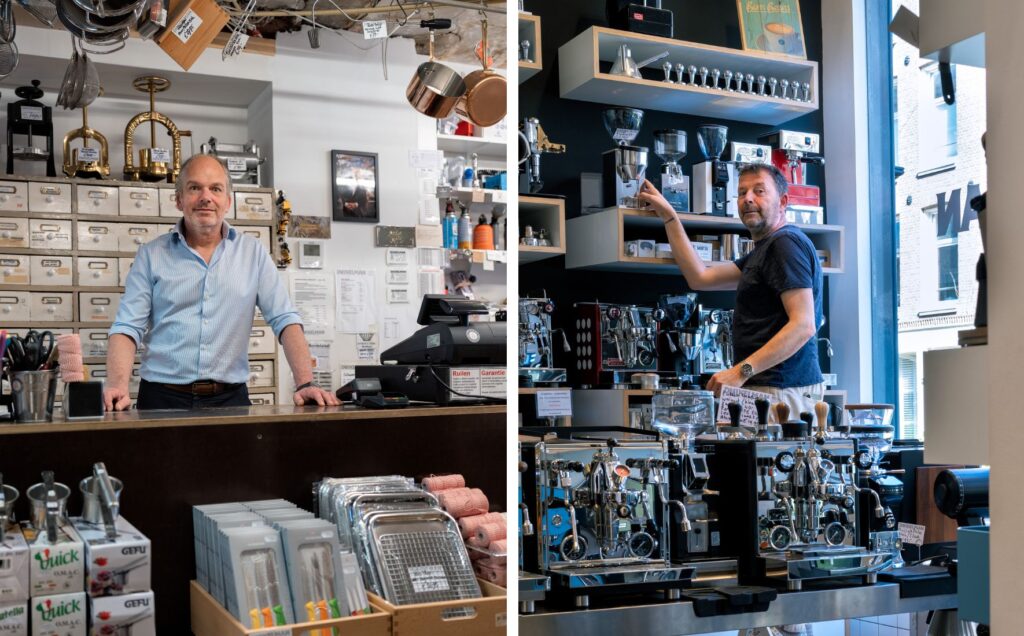
Anyone who talks to David and Mathieu quickly realizes that sales aren’t the main focus. Advice is.
It starts with the selection of espresso machine brands. New machines aren’t simply added to the product line. The team takes a critical look at the technical construction, the quality of the components, and how service-friendly the design is.
“A machine must be able to make a professional-quality espresso and be built with high-quality components. Those are really the two things we look for,” says David.
Mathieu: “Start with a machine first—maybe with a bean grinder to go with it. Start by making coffee. Once you’ve got the hang of that, then you can start fine-tuning with specialized tools.”
That’s why some brands don’t make it onto our shelves, even if they look good on the outside. “There have been beautifully designed appliances that we ultimately decided not to stock. That’s not the quality we stand for.” Often, the internal components were of poor quality, or the machine was so complex that maintenance would have been costly.
The same philosophy applies to sales conversations as well. Mathieu actually tries to rein customers in when he thinks they’re trying to buy too much at once. Then there are customers who walk in wanting to buy all the accessories right away because they saw something on YouTube: WDT tools, levelers, flow control systems.
According to him, the basics are much more important. “Start with a machine, maybe with a bean grinder as well. Start by making coffee. Once you’ve mastered that, then you can start fine-tuning with specialized tools.”
Mathieu sees that customers appreciate that honesty. “You’re not trying to sell me any accessories at all,” a customer once told him. According to both men, it is precisely that kind of advice that is the store’s strength.
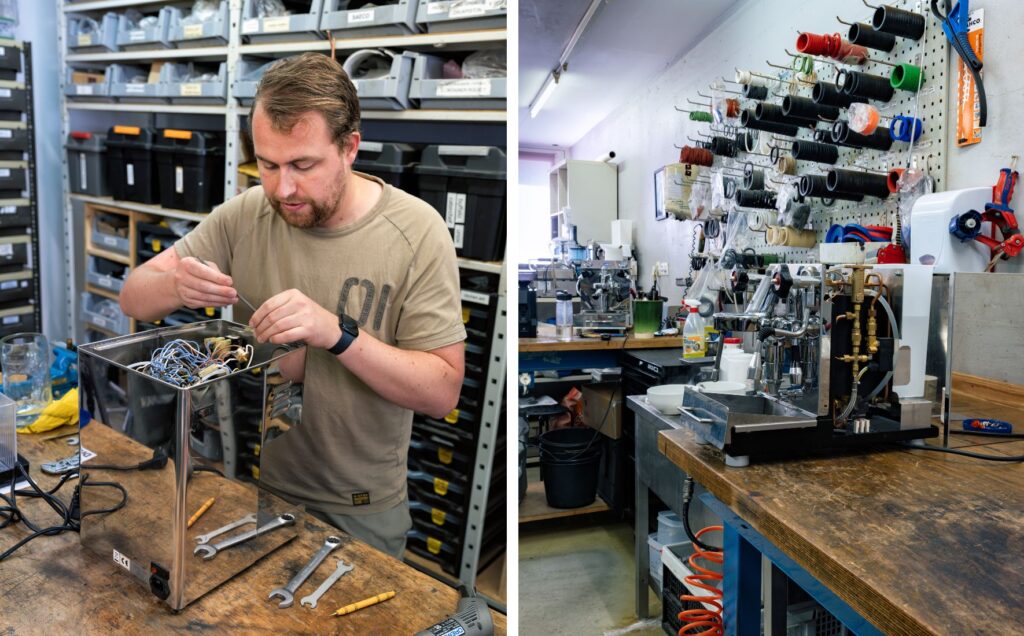
That long-term vision doesn’t stop at the point of sale. One of Duikelman’s most notable decisions is that virtually all the appliances sold there are also repaired in-house. Only for large appliances, such as stoves and refrigerators, does the company work with suppliers.
That service is exclusively for customers who actually purchased their equipment from Duikelman. “Espresso machines are, after all, devices that require regular maintenance,” says David. “Ultimately, that service is more important than the price.”
David: “In the end, that service is more important than the price.”
We regularly have customers who bought a machine elsewhere because it was slightly cheaper. When a problem arises later, they still hope to get help from our workshop. “We don’t do that,” David says firmly. “They’ll have to go back to where they bought it.”
It is a choice that, in his view, is essential to the business model. Service costs money and requires skilled professionals. Only if sales and service remain linked can that quality be maintained.
At a time when virtually every retailer is focusing on online growth, Duikelman has made a conscious decision to prioritize brick-and-mortar stores.
That’s not a fundamental aversion to the internet. In fact, there was once a fully developed online store ready to go, in which tens of thousands of euros had been invested. In the end, the project was shut down.
According to David, online sales fundamentally change the dynamics of a business. “People who come into the store are looking for good advice. They want to hold things in their hands. At that moment, they’re not so interested in the price anymore.”
It works differently online. There, a difference of just a few euros is sometimes enough to drive a customer to a competitor.
Mathieu also recognizes the extra work that online stores entail. Returns, inspections, logistics, and customer service require a completely different organizational structure.
But even without an online store, the shop is doing more than fine. “Apparently, we don’t need it,” he says matter-of-factly.
If you ask David how many espresso machines or kilograms of coffee beans Duikelman sells each year, you won’t get an exact answer. Not because those figures are secret, but because they simply aren’t central to the company’s operations, and so he simply doesn’t know. The company deliberately operates without automated inventory management, despite carrying a product range of 25,000 to 30,000 items.
According to David, digitizing that inventory would be a monumental task, especially since many products don’t have barcodes and the product lineup is constantly changing. Instead, inventory is managed visually, and the team relies on experience. “I think the bigger picture is more important,” he says.
Mathieu doesn’t concern himself with sales figures either. He doesn’t know how many kilograms of coffee are sold each year or how many espresso machines are sold. “I never look at that. What matters most to me is that customers are satisfied and that we enjoy our work every day.”
It is precisely this almost old-fashioned approach to business that suits Duikelman: relying less on dashboards and spreadsheets, and more on professional expertise, intuition, and long-term customer relationships.
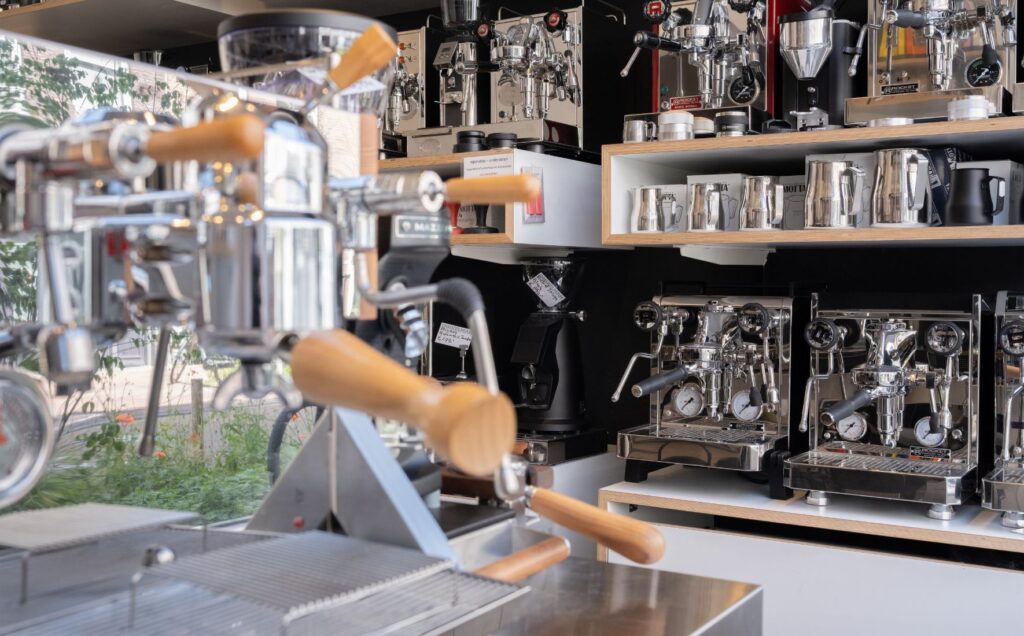
Another striking choice: Duikelman deliberately maintains large inventories. While many companies minimize their inventory, David sees availability as one of the most important factors that set them apart. “That’s our strength,” he says. “We always have plenty of everything in stock, so we can often deliver right away.”
David: “We always have plenty of everything in stock, so we can often deliver right away.”
Mathieu recalls how he once ordered five machines from Kees van der Westen. These machines are built to order by hand, so delivery times of four to six months are quite common. “A customer contacted Kees van der Westen directly about the same machine but was told he’d have to wait until our machines were ready. He was referred to us, and that’s how I sold the first machine even before they were on the store shelves.”
The coffee market has changed significantly over the past few decades. Whereas fully automatic espresso machines that were easy to use used to be popular, demand is increasingly shifting toward high-quality equipment for serious coffee enthusiasts.
According to David, this is similar to what happened earlier in the world of stoves and kitchen appliances. Cheaper products became online-only items, while Duikelman continued to move further into the higher-end segment. “We’ve gradually moved further and further up into that market, specifically targeting the home barista—the true enthusiast.”
“Customers are increasingly interested in grinding, experimenting, and learning on their own”
That’s in line with what Mathieu sees every day on the shop floor. Customers are increasingly interested in grinding their own coffee, experimenting, and learning. Fully automatic machines are losing ground to semi-automatic ones, simply because people appreciate the ritual.
Whereas Duikelman previously offered a wide range of fully automatic machines, it now carries only one model.
Over the years, the company has occasionally purchased additional properties on both sides of Gerard Doustraat. With about 25 employees now and another property recently added, one might think that Duikelman is in the midst of a major expansion. Yet its focus lies elsewhere.
David has gained experience in the past running multiple stores in different cities, in partnership with other entrepreneurs. Eventually, he discovered that scaling up doesn’t automatically lead to more enjoyment. “I realized that, in terms of the work itself, I no longer enjoyed what I was doing. I was constantly dealing with personnel issues and troubleshooting.”
So he went back to running just one store, and his ambition is now stated more simply. “With each department, we want to be the best in our segment. Or at the very least, I want to be proud of what we do in terms of our product selection, products, and service.”
Profit remains important, he emphasizes, but not as an end in itself. If the product selection, service, and craftsmanship are right, revenue will follow naturally.








Two weeks of testing: I especially liked the extra-strong espresso and the milk foam. How much control do you give up for that convenience?
Tea from the fields of Brabant, a roastery looking to phase out gas, and two chocolate bars up for grabs. Plus: a fruity soda as an alternative to your second cup of coffee.
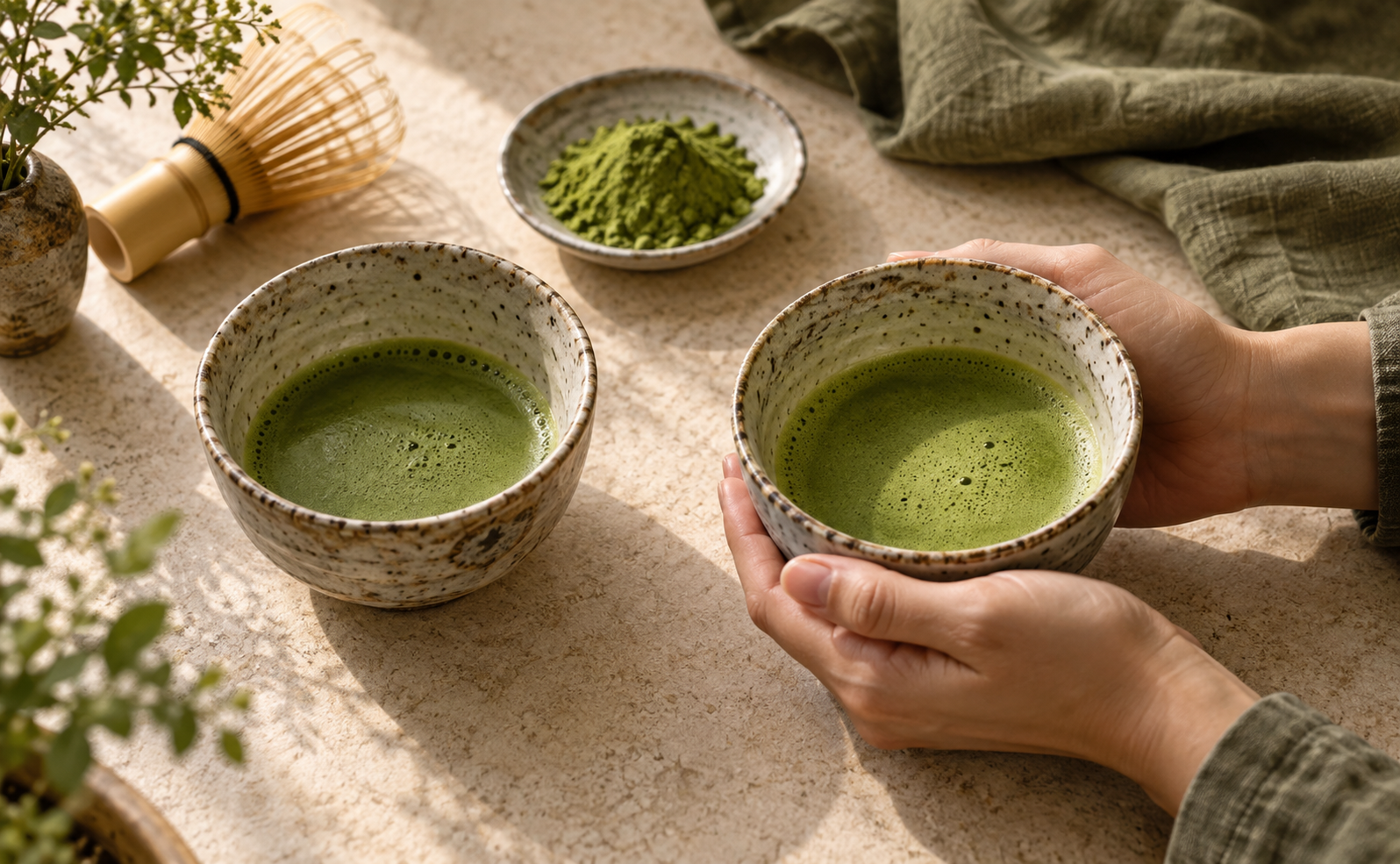
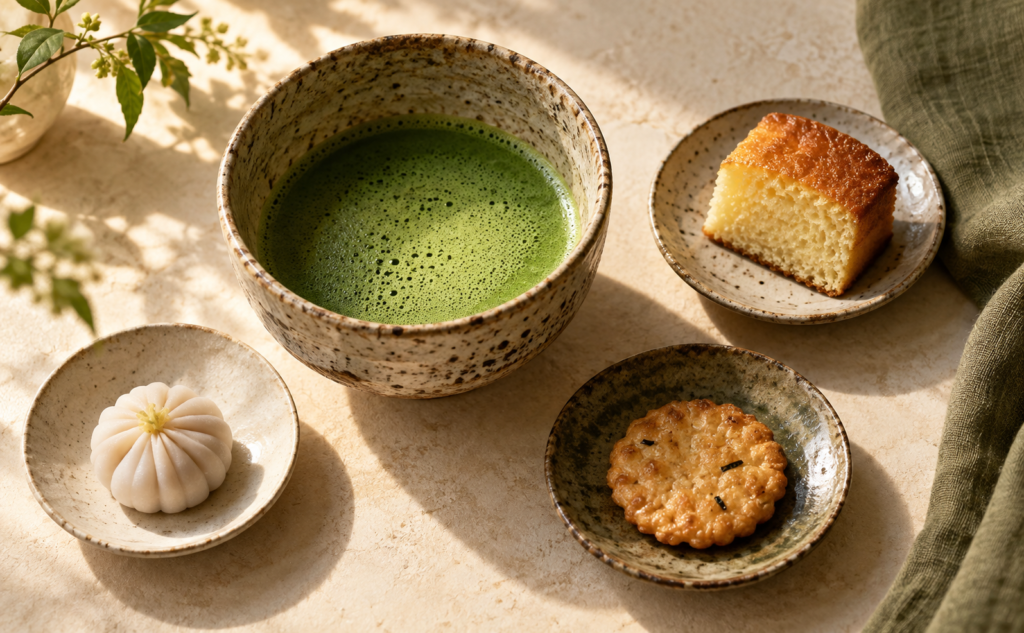
Tasting matcha requires a different approach than tasting brewed tea.