


Laatst bijgewerkt op: 17/06/2026
Ever since the French introduced coffee to their colony of Vietnam in the 19th century, the beverage has become an integral part of the country’s culture. In fact, Vietnam has become the world’s second-largest producer of Vietnamese coffee. Gradually, quantity is giving way to quality, and a new generation of coffee professionals is working on the next step in a quiet coffee revolution, while honoring their rich history.
Vietnam is the world leader in the production of full-bodied Robusta, which accounts for more than 95% of its coffee exports. Although Robusta is now the dominant crop, the first coffee seedlings to arrive in Vietnam were of the Arabica variety. French missionaries brought this variety from Île Bourbon in the Indian Ocean in the mid-1850s. These first plants thrived in the region’s fertile volcanic soil and yielded a substantial harvest.
In the years that followed, the young coffee bushes were distributed among the churches in the provinces of Ninh Binh, Nghe An, and Ha Tinh. After the failed French invasion of Da Nang in 1858, the nearby port city of Hoi An became the country’s first hub for the fledgling coffee trade, with English, Dutch, and French merchants transporting beans from other coffee-producing regions. Lively coffee shops serving Vietnamese coffee sprang up along the waterfront. The growing entrepreneurial spirit encouraged settlers to take sacks of beans with them on their exploratory trips into the interior.
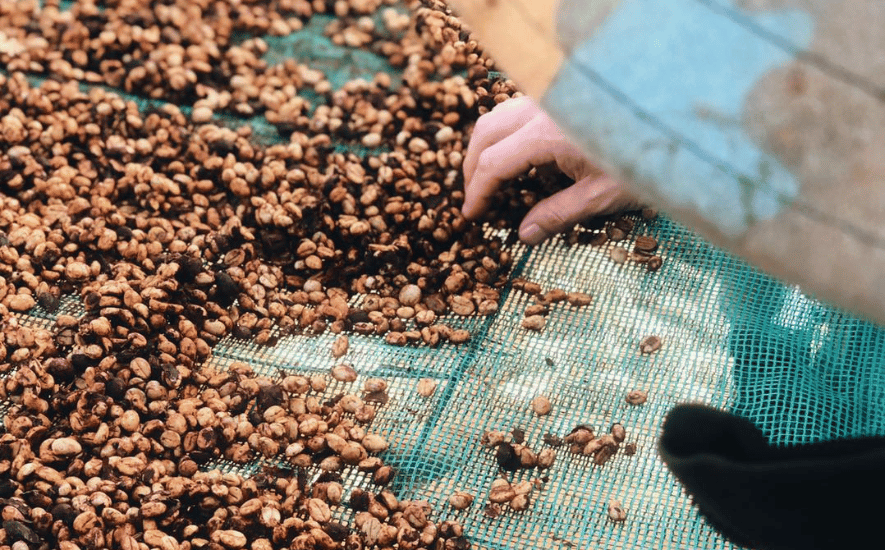
The French also brought their café culture with them. The first Parisian-style cafés opened their doors on the boulevards of Saigon in the 1860s. These cafés served traditional French-style coffee to the colonial elite, government officials, and military officers. During those years, French colonists mostly imported their coffee. As demand grew and Vietnamese coffee production increased, many began drinking the cheaper, locally grown coffee.
Because the first Arabica bushes fell prey to pests and diseases, their yield declined. In 1908, the French therefore introduced the first robusta seedlings, originating from the Indonesian island of Java, along with a third variety, the excelsa. Excelsa is now often called jackfruit or mitkoffee and is still cultivated in Vietnam. Due to its low yield, it is often used as a windbreak for other coffee crops.
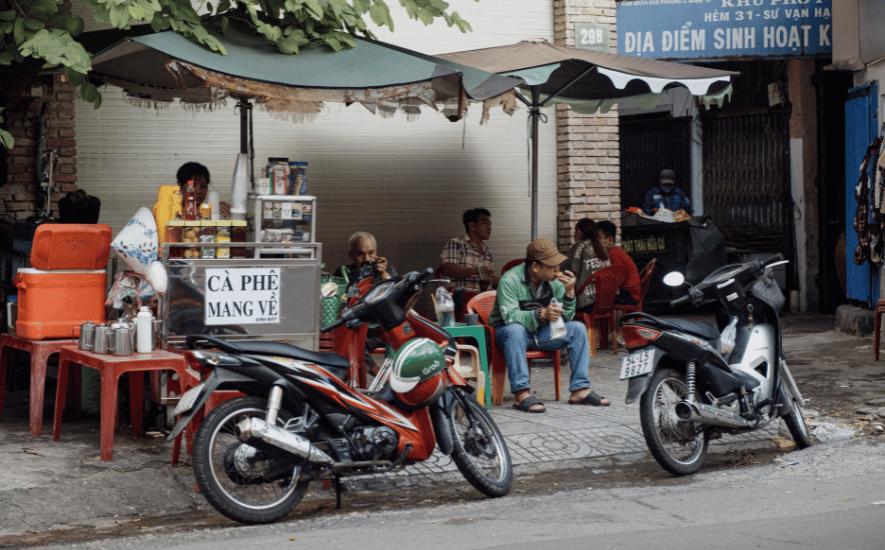
In the 20th century, coffee slowly gained popularity, and domestic production and consumption rose steadily, leading to the emergence of roadside coffee shops in every town and village. The Vietnamese quickly embraced the beverage, developing a coffee culture all their own.
For many years, milk was not commonly consumed in Vietnam because it is difficult to keep fresh in a tropical climate. To mellow the intense bitterness of the caffeinated Robusta beans, coffee was sweetened with condensed milk to create “ca phe sua,” a drink that is as addictive as it is strong and sweet.
Different regions in Vietnam have their own unique ways of making coffee. They often substitute fresh milk with alternatives such as coconut milk or yogurt. One of the most unusual is ca phe trung, or egg coffee, invented in the 1940s at a posh hotel in Hanoi. Looking for an alternative to frothed milk for cappuccinos, an inventive barista added whipped egg yolk to his coffee. In doing so, he created a drink that became synonymous with Vietnamese coffee culture.
Over the past 20 years, the Vietnamese coffee industry has faced new challenges, such as climate change, environmental degradation, rising production costs, aging coffee plants, and a workforce migrating to the cities. To address these challenges, policy measures have been implemented to improve the quality and value of coffee while maintaining Vietnam’s position as the world’s second-largest exporter.
The goal was to stabilize coffee cultivation—for both Robusta and Arabica—at approximately 600,000 hectares. This shift coincides with the global rise of the third wave of coffee, which emphasizes quality, diverse flavor profiles, sustainability, and fair trade initiatives. A new generation of Vietnamese coffee professionals is eager to improve the quality of Vietnamese coffee and introduce it to international markets. Thanks to these professionals, significant changes have been implemented across all links in the coffee value chain.
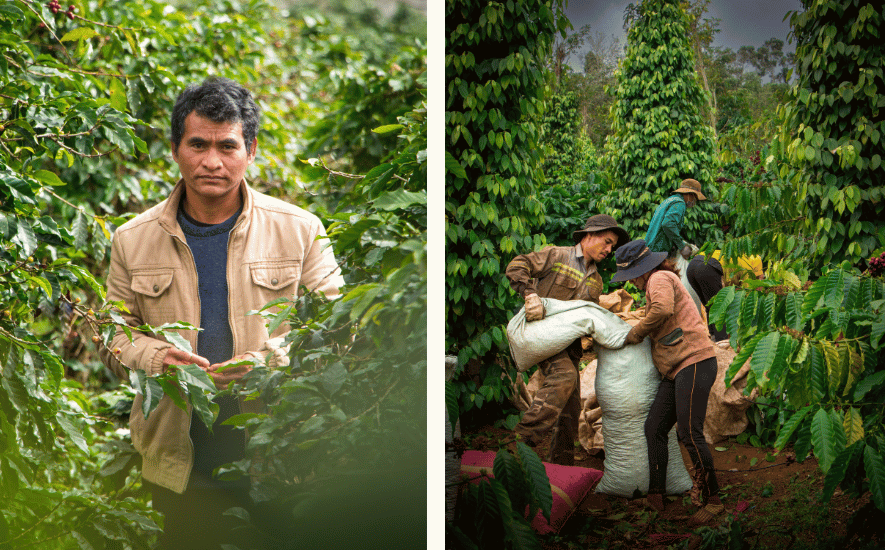
The introduction of modern agricultural techniques and new hybrids with high yields and pest resistance resulted in Vietnam’s first Arabica to score more than 80 points on the SCA scale, as well as in the development of Fine Robusta. Major barista academies are popping up everywhere, international chains like Starbucks are struggling against local competitors, latte art and cupping competitions are held regularly, and cities are being flooded with trendy coffee bars. In this way, Vietnam is quietly undergoing a coffee revolution. The burgeoning artisanal coffee scene is attracting the attention of overseas coffee roasters and investors.
Companies such as Lacàph, with international expertise and driven by the emerging generation of Vietnamese coffee professionals, are carving out a new niche within the country’s coffee sector. Their focus is on providing a premium coffee experience, accompanied by a strong customer-centric approach, while simultaneously celebrating the heritage of Vietnamese coffee and the pride of a domestically produced product.
These fifth-wave coffee companies, such as Lacàph, work closely with local farmers with the aim of improving the quality of their coffee. They invest heavily in technology and personnel. The farmers are also part of this new wave. Many of them come from families of coffee farmers that go back generations, sometimes all the way to the first French coffee plantations.
A good example of this is Ngoc. His plantation is located just outside Da Lat City in the central highlands province of Lam Dong, and was originally established in 1927 by a French family who were among the region’s first colonial settlers. Ngoc’s grandparents worked on the plantation nearly a century ago before eventually purchasing it. Under Ngoc’s leadership, the farm now grows some of the best coffee varieties in Vietnam, with beans that score highly on the Specialty Coffee Association’s rating scale.
One coffee farmer worth mentioning is Phu, who is also part of the new generation of Vietnamese coffee farmers applying international best practices to improve the quality of their beans. Phu’s family began growing coffee in the mid-1990s after moving to Dak Nong Province as part of the Doi Moi reforms.
When Phu took over his father’s farm, he explored ways to make it more profitable. Since it wasn’t financially feasible to replace his existing coffee bushes with the more profitable Arabica variety, he decided to improve the quality of his Robusta. That decision paid off. Thanks to the changes he implemented through partnerships, he now grows some of Vietnam’s finest robusta beans and has helped other farmers improve the quality of their harvests. His contribution to the improved quality of Robusta coffee is now recognized as helping to change the perception of Vietnamese Robusta, which is now valued for its distinctive characteristics and rich aromas.
Lacàph’s mission is not only to produce world-class coffee, but also to share the farmers’ stories and promote Vietnamese coffee and culture. At Lacàph Space Sài Gòn, a “hidden gem” located on the top floors of a 1930s colonial apartment building just a few minutes’ walk from the historic center, the company offers a “coffee experience.” Guests and customers learn more about Lacàph’s coffee varieties, their history, and heritage.

Lacàph Space also serves as the setting for the popular “Saturday Sessions” concept, which offers coffee lovers the chance to learn the essentials of brewing great coffee at home. Now that Vietnam is gradually returning to “normal,” regular coffee fairs will resume, giving local boutiques and artisan roasters the chance to introduce their coffee to a wider audience.
Projects like these, and a growing number of companies such as Lacàph, are opening new doors for the Vietnamese coffee industry. There is still a lot of work to be done to boost the reputation of Vietnamese coffee. But thanks to the blend of innovation and tradition, the future looks bright, both for Vietnamese coffee and for the new generation of companies emerging around it.
Curious about the stories from other cocoa, tea, and coffee-growing regions? Take a look behind the scenes in the countries of origin.












In Amsterdam's Pijp neighborhood, Duikelman proves that expertise, service, and inventory still make all the difference.

Arabica, Robusta, Bourbon, Gesha, or SL28: the plant names on a coffee bag reveal something about the variety, flavor, and origin.

Is a lot of foam a sign of good matcha? Not necessarily.


