

Laatst bijgewerkt op: 05/10/2026
CHAPTER 11
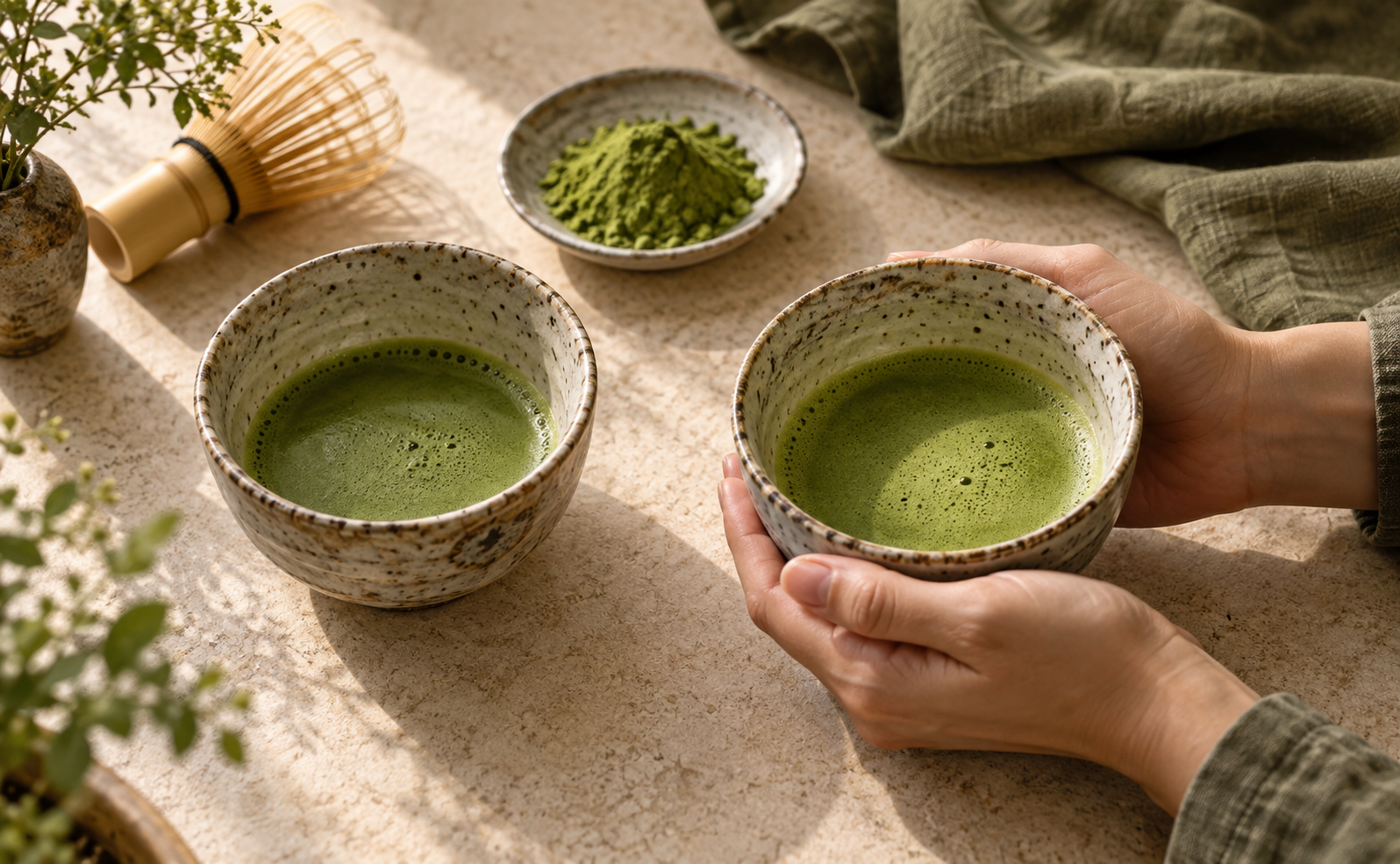
Tasting matcha requires a different approach than tasting brewed tea. You’re not evaluating an extract, but the whole leaf in liquid form. Everything in the powder ends up in your mouth. That makes matcha honest, but also demanding.
Tasting well does not mean looking for individual flavors, but rather recognizing their balance. Umami, bitterness, and mouthfeel together form the structure of matcha. It is only within that context that quality becomes apparent.
The explanation in this article is based on the practical experience and teaching materials of Richard Schukkink, founder of the International Tea and Coffee Academy.
This article is part of the Matcha dossier. The complete overview of all articles, from cultivation and processing to brewing and applications, can be found on the overview page: Matcha explained: from tea leaf to bowl.
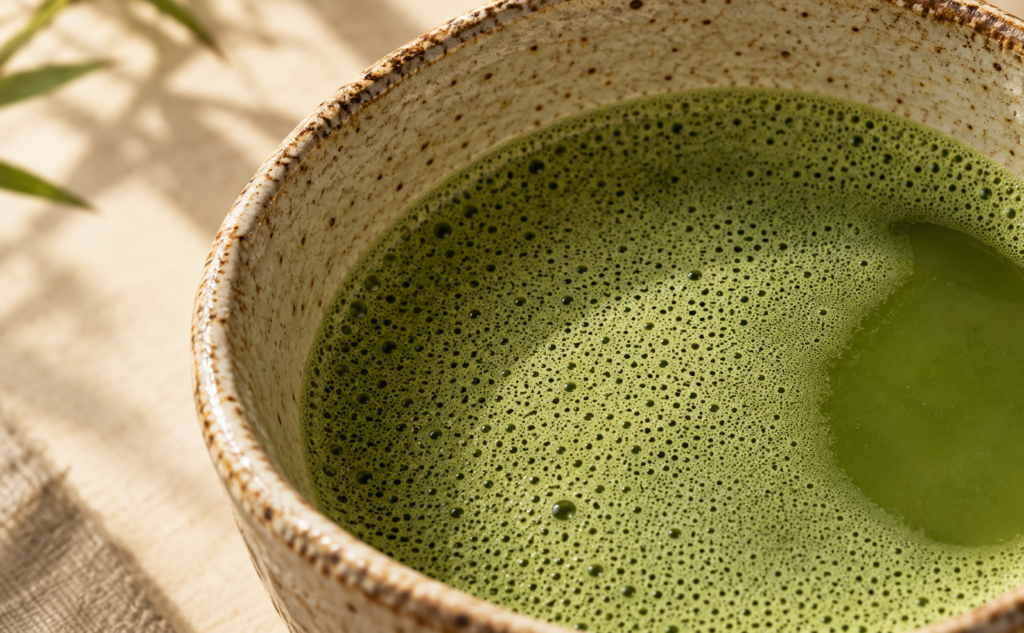
With matcha, tasting begins with looking. Visual cues already provide a great deal of information about freshness, processing, and grind.
Please note:
Color alone is never enough, but it does set the initial expectation.
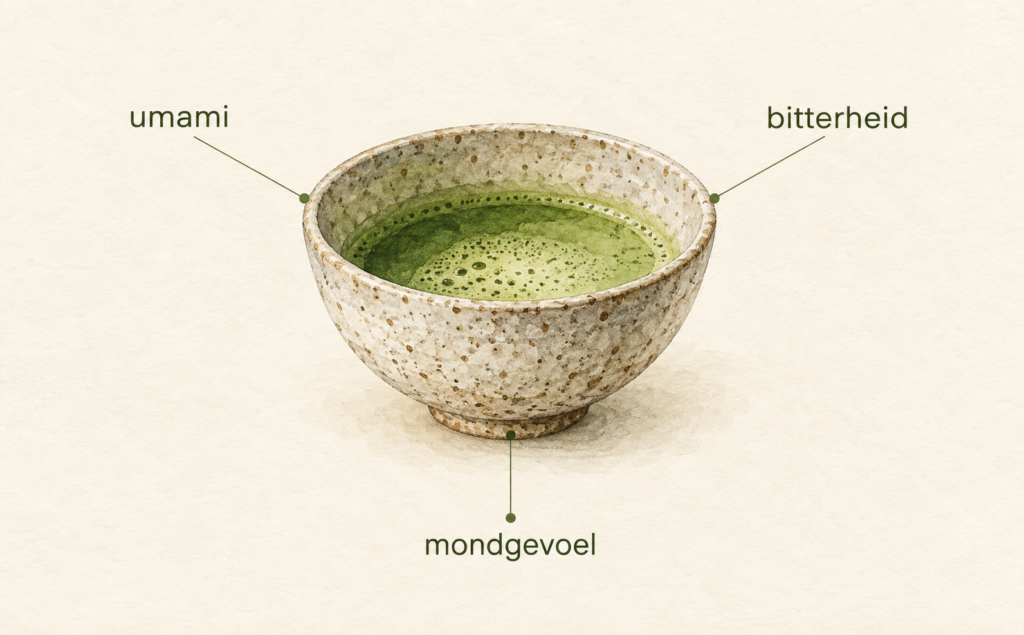
Umami is often described as savory or rich, but in matcha, it is primarily a unifying quality. It provides depth, balance, and cohesion.
You can recognize good umami by:
Problems with umami:
Umami never stands alone. It works best when balanced with bitterness and texture.
Bitterness is not a flaw in matcha. Without bitterness, matcha would be flat. The question is not whether bitterness is present, but how it behaves.
Functional bitterness:
Problematic bitterness:
Bitterness is influenced by:
That is why bitterness is always context-dependent.
Astringency is the tightening, dry sensation in the mouth. To a limited extent, this can add structure, but with matcha, there is little room for error.
Good astringency:
Poor astringency:
With matcha, excessive astringency is often a sign of:
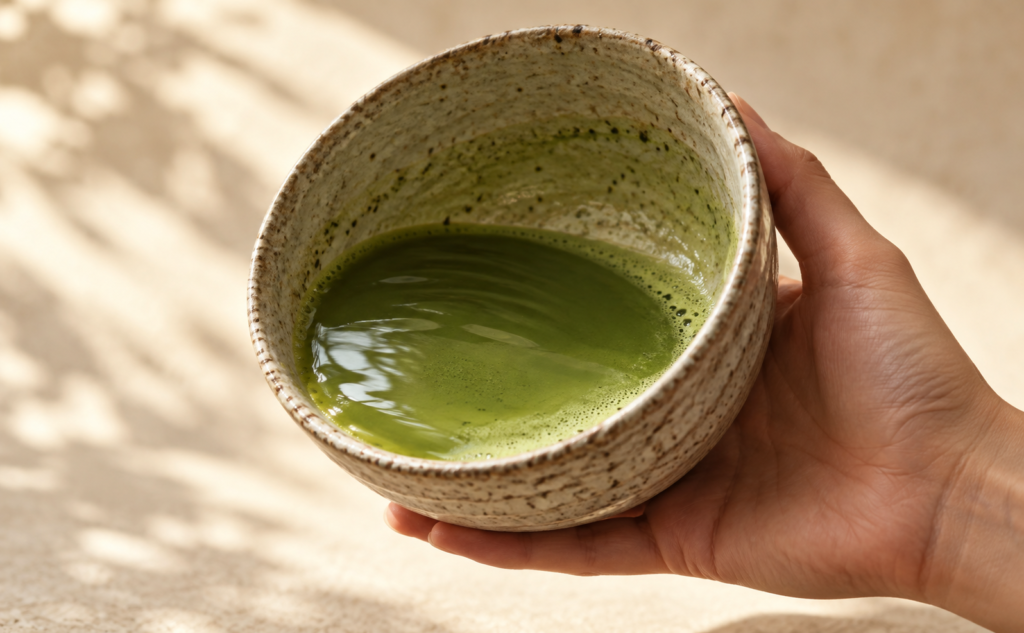
Since you don’t strain matcha, mouthfeel is one of the most important evaluation criteria.
Please note:
A good matcha feels like:
Sandy texture is almost always a quality issue, not a matter of preference.
Matcha is often judged based on its individual elements, but its quality lies precisely in their harmony.
A balanced matcha:
You can recognize an imbalance by:
Balance is the result of making good choices at every step of the chain.
The same misconceptions often arise when it comes to matcha:
By letting go of these assumptions, tasting becomes more precise and impartial.
Tasting matcha is about recognizing the balance between umami, bitterness, and mouthfeel. None of these elements stands alone; together, they form the structure of the experience. Good matcha carries the palate. Poor matcha is harsh or falls flat. Those who learn to focus on cohesion rather than isolated flavors will taste matcha as it is meant to be enjoyed.
In the following articles, we’ll explore how these tasting principles influence pairings, applications, and market choices.
This article is part of the Matcha dossier. The complete overview of all articles, from cultivation and processing to brewing and applications, can be found on the overview page: Matcha explained: from tea leaf to bowl.

















From higher Fairtrade prices and coffee beans for home use to an exhibition on coffee and colonial history: here's what's happening in September.

In Amsterdam's Pijp neighborhood, Duikelman proves that expertise, service, and inventory still make all the difference.

Arabica, Robusta, Bourbon, Gesha, or SL28: the plant names on a coffee bag reveal something about the variety, flavor, and origin.


