

Laatst bijgewerkt op: 28/09/2026
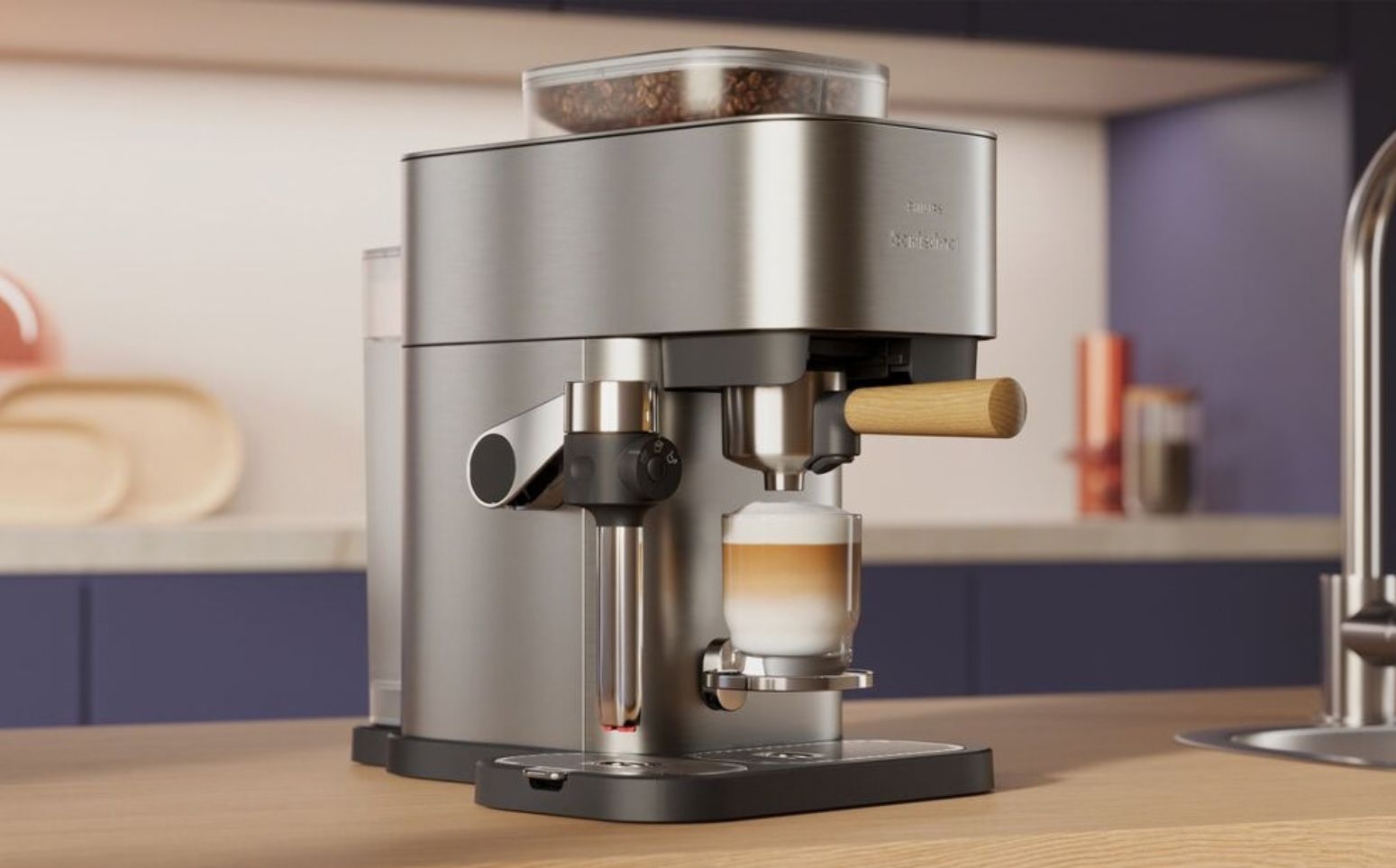
Use fresh beans, brew a delicious espresso, and froth milk for a cappuccino. It sounds straightforward—until you start delving into grind settings, dosages, and steaming techniques. The Philips Baristina Latte takes care of most of that for you. We tested it for two weeks and discovered a machine that excels in simplicity, with surprisingly good milk foam and a few points to note.
This was our first experience with the Baristina. We hadn’t yet worked with the original model. The Latte builds on the same principle of automatic grinding, tamping, and brewing, but adds a steam wand. With a retail price of around 410 euros, it’s an attractive option for anyone who wants to switch from Senseo pods or coffee capsules to whole beans without having to buy a full espresso set right away.
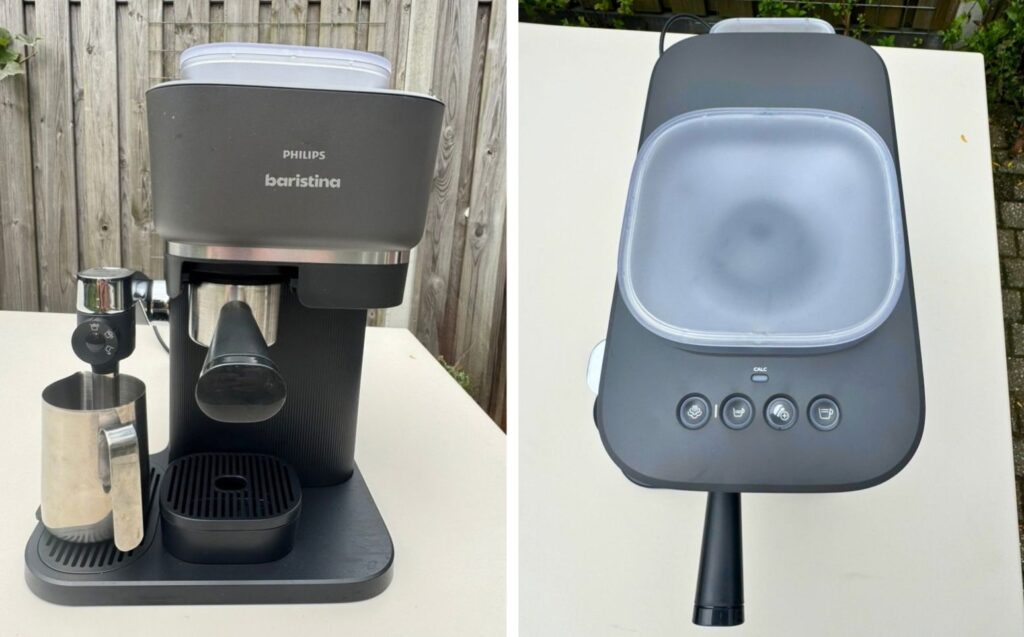
The packaging makes a pleasant first impression: plenty of cardboard and very little plastic. As soon as we take the device out of the box, however, the extensive use of plastic stands out. Don’t expect a heavy machine with lots of metal or shiny chrome. At first, it gives us a bit of a Senseo vibe.
As a result, the Baristina Latte feels a bit cheaper than we had hoped. At the same time, the build quality is solid. The parts fit together well, everything clicks into place smoothly, and the machine has a sleek, modern look.
There’s another side to the use of plastic, by the way. Philips notes that more than 50 percent of the plastic used is recycled, with the exception of parts that come into contact with coffee and water. That doesn’t change how the material feels, but it does provide context for the choice of materials.
It’s easy to use. You fill the bean hopper, select an espresso with or without extra intensity, or a lungo. Next, slide the filter holder to the right, under the grinder. The machine grinds the coffee, tamps it down, and automatically returns the filter holder to the brewing position. Then the coffee flows into your cup.
It worked well during our test. No separate grinder, no tamper, and no grind setting you have to figure out first. You do a few things yourself, but the machine takes care of most of the brewing process.
After brewing, remove the filter holder. A small push button helps release the coffee puck so you can easily tap it out. Give it a quick clean, and you’re ready to brew again. A tapping tray comes in handy for this; you’ll need to purchase one separately.
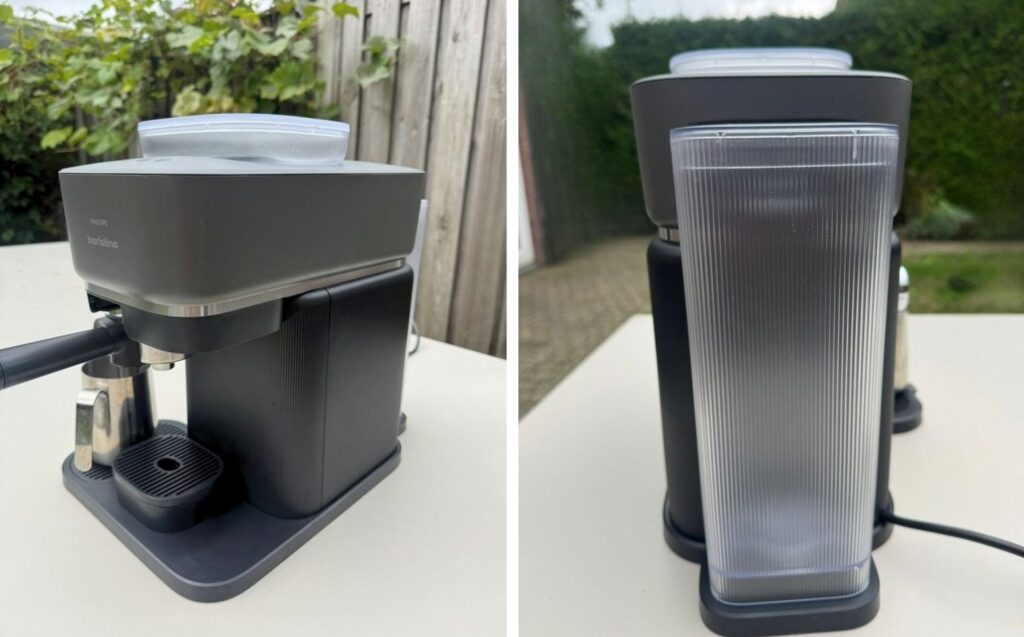
Another practical feature: the small riser under the cup is easy to remove. This allows you to place cups and glasses of various sizes under the spout.
During the test, we mainly used the espresso function with extra intensity. We liked the taste of that brew the best. The yield was typically around 35 to 40 grams of coffee per cup.
We were unable to reliably measure the amount of ground coffee used for this. Therefore, we cannot provide an exact ratio between dosage and yield.
What we can assess, however, is the result. The coffee tastes good and also serves as a fine base for milk-based drinks. We didn’t find the same complexity and refinement here that we get from a well-calibrated semi-automatic machine. But as a simple way to brew coffee from fresh beans at home, we found the Baristina Latte to be impressive.
We didn’t really prefer the lungo. If you want a larger cup, we’d rather make an espresso and top it off with hot water on the side—an Americano. That way, you increase the volume of the drink without adding extra water by letting it run through the ground coffee, which would make your cup too bitter.
Although the grind setting is fixed, you can adjust and save the amount of coffee in your cup. According to the manual, the programmable range for espresso is approximately 30 to 71 milliliters, and for lungo, approximately 71 to 200 milliliters. These are volumes; during our test, we weighed the yields in grams.
That setting gives you some control over the flavor. If you opt for a shorter espresso with the same amount of coffee, less water will pass through the coffee. This usually results in a more concentrated flavor, where the acidity may come through more and the bitterness is less pronounced. Whether that tastes better depends on your beans and personal preference. With dark-roasted beans, using fewer milliliters can reduce the bitterness, while with light-roasted beans, using more milliliters can actually tone down the acidity.
A common volume for espresso is 20 milliliters, but this falls outside the programmable range. You also can’t freely adjust the grind size and dose to match each other, as you can with a semi-automatic machine. The adjustable volume primarily offers a simple way to tailor your cup to your taste.
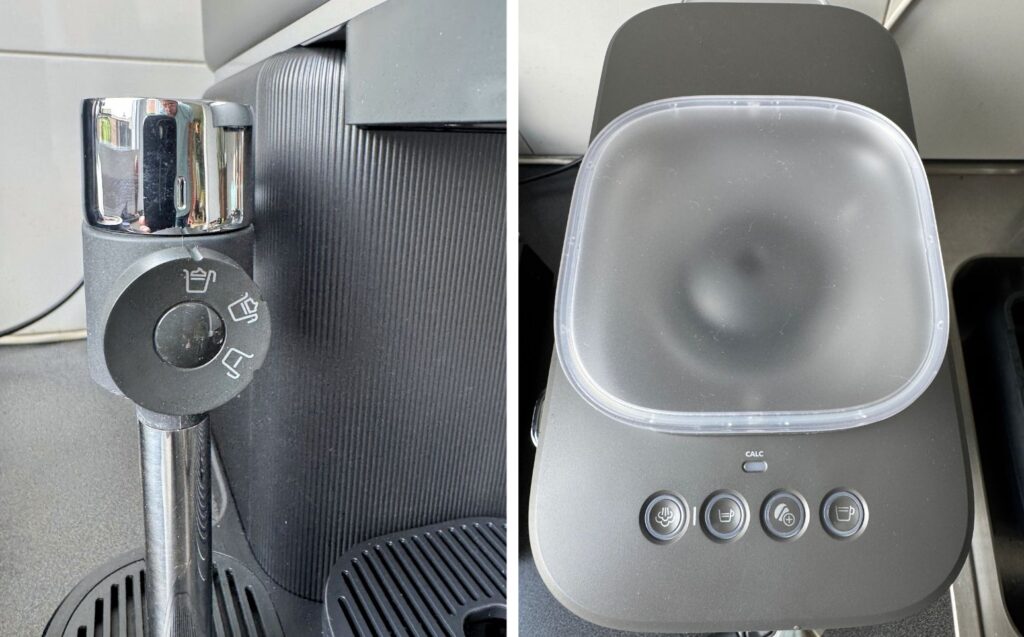
The steam wand is the most important feature of the Latte model. It comes with a milk pitcher, and you can use the dial to select warm milk, fine foam, or lighter foam. Then, you start the frothing process with the push of a button.
We were pleasantly surprised by the result. After frothing, it helps to tap the pitcher gently and swirl the milk around. This removes larger air bubbles and blends the milk and foam more thoroughly.
With the dairy milk we used, it clearly worked better than with the oat milk we tested. The best result came pretty close to microfoam: a fine foam that blends nicely with the milk. We think that’s impressive for an automatic system in this price range.
This lets you make a good cappuccino or latte without having to spend a lot of time practicing with a steam wand yourself. You then pour it yourself.
We measured the temperature at the surface of the coffee using an infrared thermometer. For espresso with extra intensity, we recorded values between 46.8 and 62.8 degrees. In several test runs, the second cup was warmer than the first. For example, we measured 51.5 and 62.8 degrees, respectively.
Those differences were noticeable, but they require some context. An infrared measurement reflects the surface temperature of the coffee or crema. It is not a measurement of the brewing water during extraction. The cup and the timing of the measurement can also have an impact.
The machine has a rinse cycle that runs water through the empty, installed filter holder. According to the manual, this is actually intended for use after a prolonged period of inactivity. However, rinsing beforehand certainly helps raise the temperature of the first cup and flush out any coffee residue from your machine at the end of each day. Preheating a cup can definitely help minimize heat loss when pouring.
The filter holder is easily accessible and simple to empty. We like that: you can see where the coffee residue is and remove it right away. Rinsing and cleaning therefore fit easily into your daily routine.
To start the rinse cycle, press and hold the extra-intensity button for five seconds with an empty filter basket in the machine. This is a different process than cleaning the individual parts.
The milk system requires a bit more attention after use. You take it apart, clean the parts, and dry them before putting everything back together. During our test, we found disassembly a bit stiff. Because of the plastic fastener, applying force feels less reassuring. Our experience doesn’t prove that the fasteners are fragile; after just two weeks, we can’t assess their durability.
The Philips Baristina Latte is particularly appealing to those who currently use Senseo pods or coffee capsules and want to switch to fresh beans. You get simple preparation, choose your own coffee beans, and can make a good cappuccino or latte with the milk system. During our test, we were already satisfied with the taste using the default settings.
The plastic housing doesn’t feel very luxurious, and cleaning the milk system requires a specific routine after each use. We also noticed temperature differences between cups during our surface temperature measurements. On the other hand, it offers user-friendly controls, an easy-to-empty filter holder, and surprisingly good milk foam.
If you’re looking for more complexity in your espresso and want to fine-tune the grind size, dose, and yield yourself, then an adjustable semi-automatic machine is the better choice. Consider a suitable model from Sage or the Meraki and WMF Espresso Pro, which we’ve tested previously. Depending on the model, this requires a higher budget and more attention to the brewing process.
The Baristina Latte, on the other hand, is perfect for those who don’t want to spend much time on it. For delicious brewed coffee and milk-based drinks every day, we think this is a great machine.
















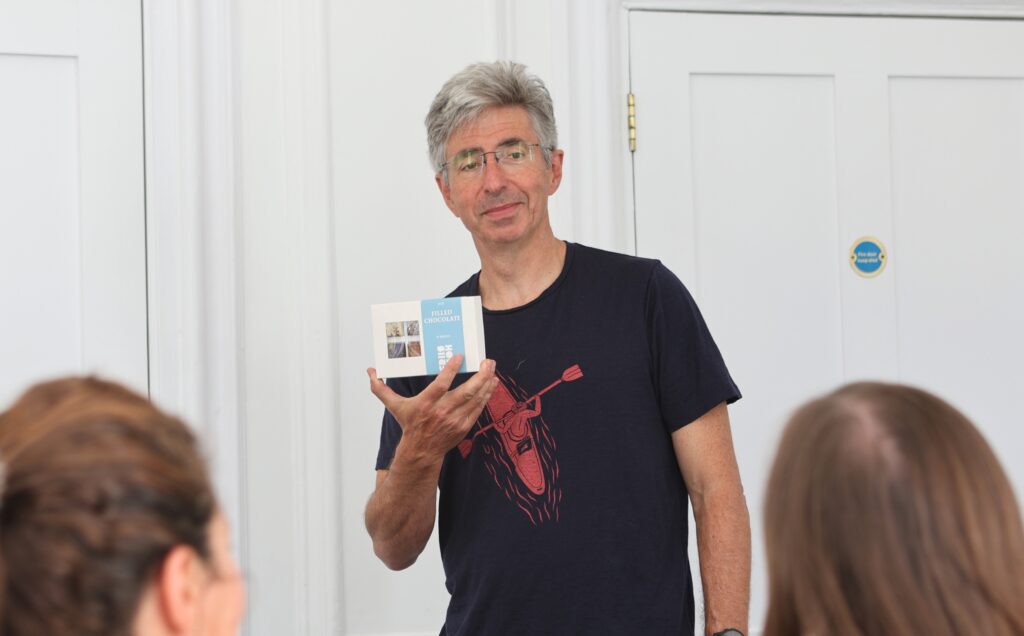


According to Spencer Hyman, founder of the artisanal chocolate platform Cocoa Runners, we need to learn to eat chocolate differently.

Yerevan is best known for its rich history, but is developing into a surprising destination for specialty coffee. On this city trip to the Armenian capital, you’ll discover hidden roasteries, modern coffee bars, and a traditional tea house.

From higher Fairtrade prices and coffee beans for home use to an exhibition on coffee and colonial history: here's what's happening in September.


