

Gepubliceerd op: 01/10/2026
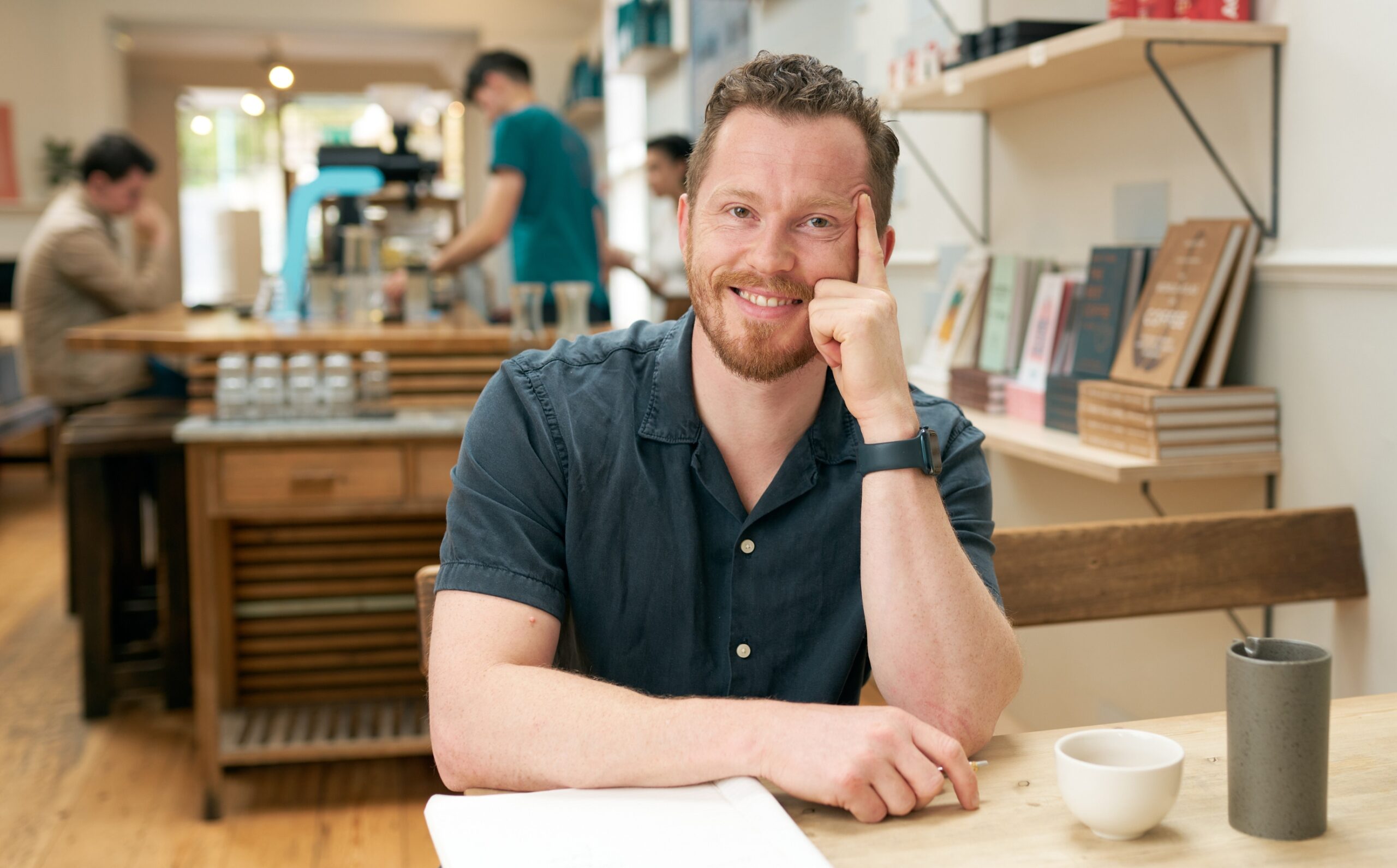
Maxwell Colonna-Dashwood is a name synonymous with innovation, craftsmanship, and a distinct vision in the coffee world. The multiple British barista champion and owner of Colonna Coffee was once a visual artist but has since evolved into a coffee visionary and writer. We spoke with him on the occasion of his latest book.
This article comes from the rich archives of 12 years of KTC magazine. Every now and then we dive into that archive to bring out the best gems and present them to all members!
Do your own treasure hunt? Check out here the complete (searchable) archive with all 55 editions! (exclusive for members)
For nearly 20 years, British coffee expert Maxwell Colonna-Dashwood (41) has dedicated his life to coffee. During that time, he opened a roastery and two espresso bars, was crowned British Barista Champion three times, and wrote books and scientific articles about coffee. If anyone understands the complexity of the coffee world, it’s him.
It’s often striking how he has a completely unique perspective on things. While 10 years ago hardly anyone cared about the importance of water in coffee brewing, Maxwell wrote an entire book on the subject. Whereas an espresso bar traditionally displays a sign listing all the coffee options, he chooses not to do so. And while the specialty coffee scene tends to put small-scale farmers on a pedestal, he openly questions the sustainability of that small-scale approach.
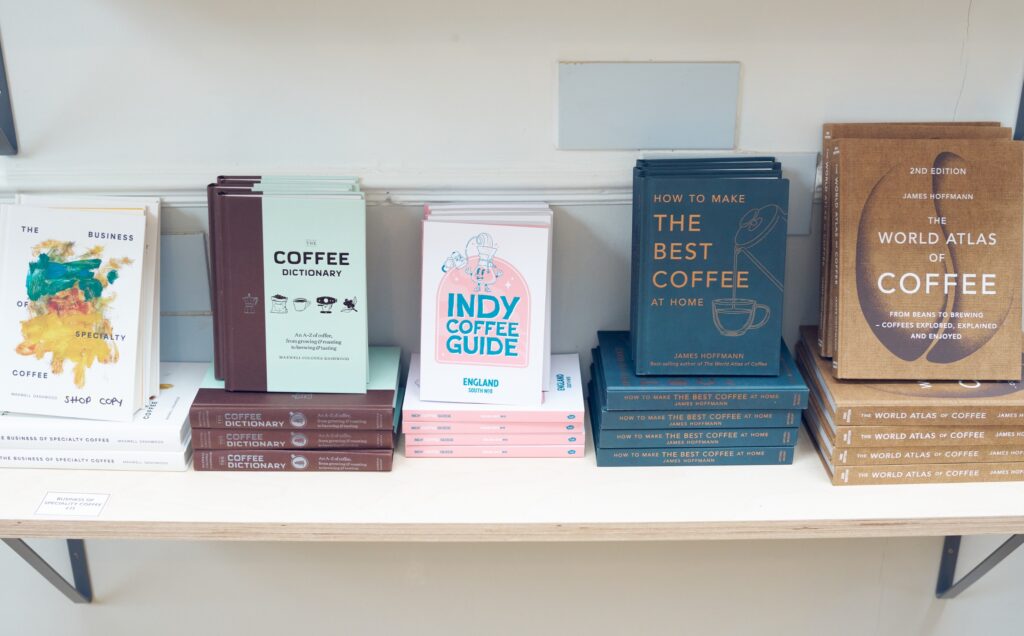
That insight came to him while working on his latest book The Business of Specialty Coffee. For this book, he took on the role of a journalist. He formulated questions and interviewed (other) experts in the coffee world to uncover the answers. The book is divided into eight sections, each highlighting a (business) aspect of specialty coffee—from successfully running a coffee plantation to the power of a carefully built coffee brand or setting up an espresso bar. He also paints a picture of the future of the coffee scene.
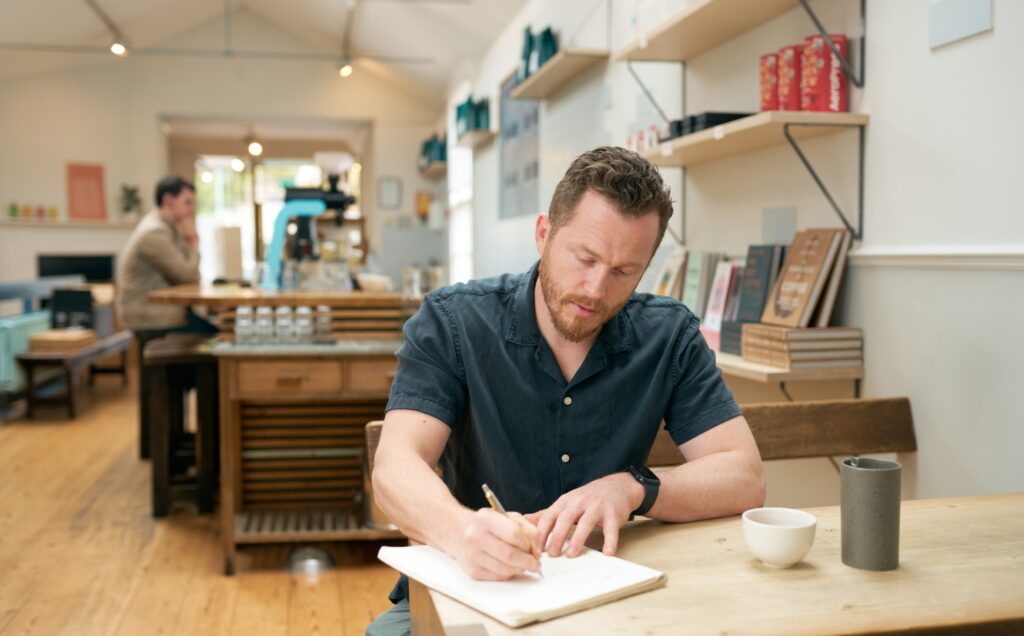
Maxwell Colonna-Dashwood is as outspoken as he is eloquent, setting forth his vision of the world of specialty coffee in long, enthusiastic monologues. A world he, like many others, stumbled into by chance.
Originally trained in the arts, with a father who was a sculptor, a career in the creative sector seemed like a natural fit for Maxwell. His first steps into the professional world were, therefore, in portraiture. “I painted people, which in itself was a form of creative expression,” Maxwell recalls. “But I quickly realized that I derived much more satisfaction from interacting with people than from creating works of art.”
That realization led him to the restaurant industry. Maxwell became fascinated by the dynamics of restaurants and the way people interact within them. “The restaurant industry is something special,” he says. “It’s a place where everything comes together: design, service, interaction, and, of course, food and drink.”
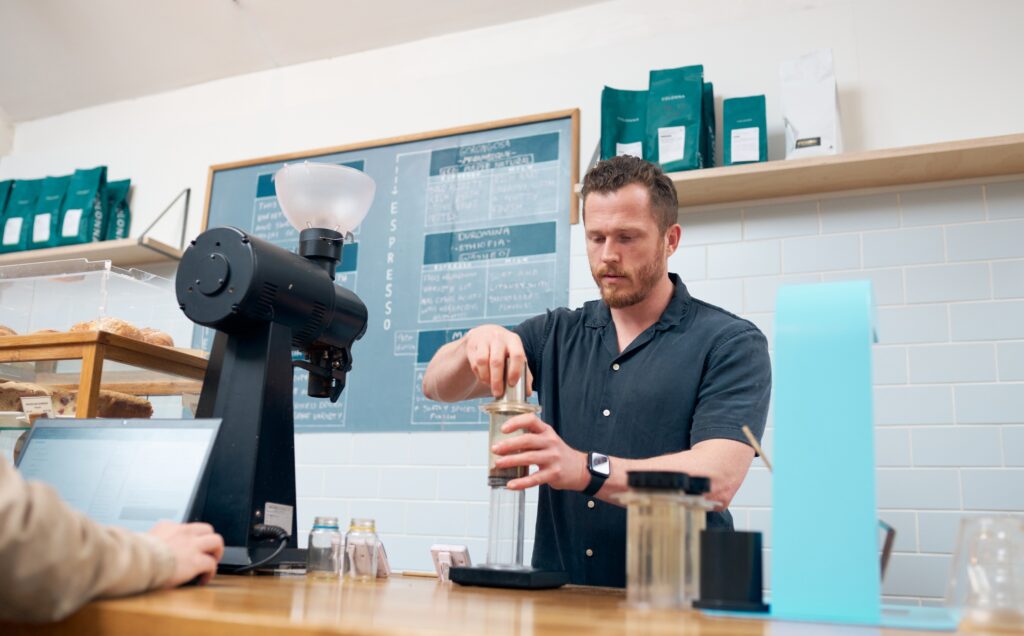
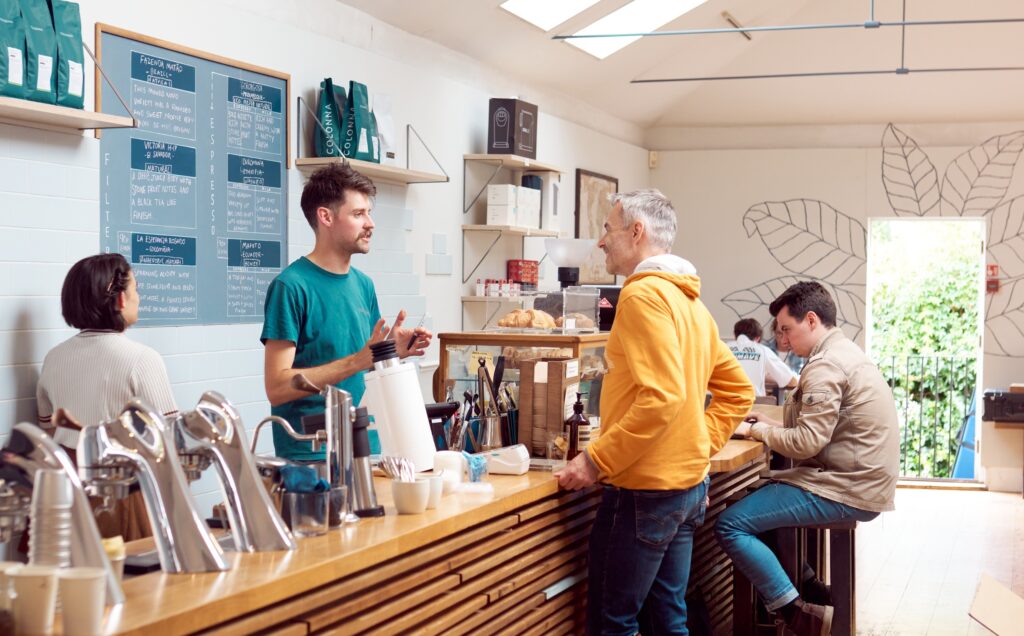
But it wasn’t until a stay in Melbourne that his passion for coffee truly blossomed. “Melbourne is where I first encountered ‘culinary coffee.’ I didn’t even know the term ‘specialty coffee’ back then,” Maxwell says. “In 2007, specialty coffee was still very much a niche culture, even in Australia. I tasted coffee there that intrigued me. I’d never tasted anything like it before. I knew right away: this is what I want to pursue. The next day, I quit my job at a large hospitality company and spent the rest of my time in Australia immersing myself in coffee.”
Back in the United Kingdom, Maxwell decided to further explore his passion for coffee. He started an event company that focused on serving coffee at music festivals and agricultural fairs. Although these experiences were valuable, the headstrong expert soon came to the conclusion that this wasn’t the right environment for a coffee purist of his caliber.
In 2009, Maxwell Colonna-Dashwood opened his first café, Colonna & Smalls, in Bath. This café was more than just a place to drink coffee; it was a laboratory for Maxwell’s ideas about how coffee should be experienced. “We wanted to put the interaction between barista and guest front and center. The focus was on education and hospitality. Instead of a fixed menu, the coffee offerings changed constantly, and there was—and still is—no sign listing the coffee drinks. The barista discusses with the guest what he or she is in the mood for.”
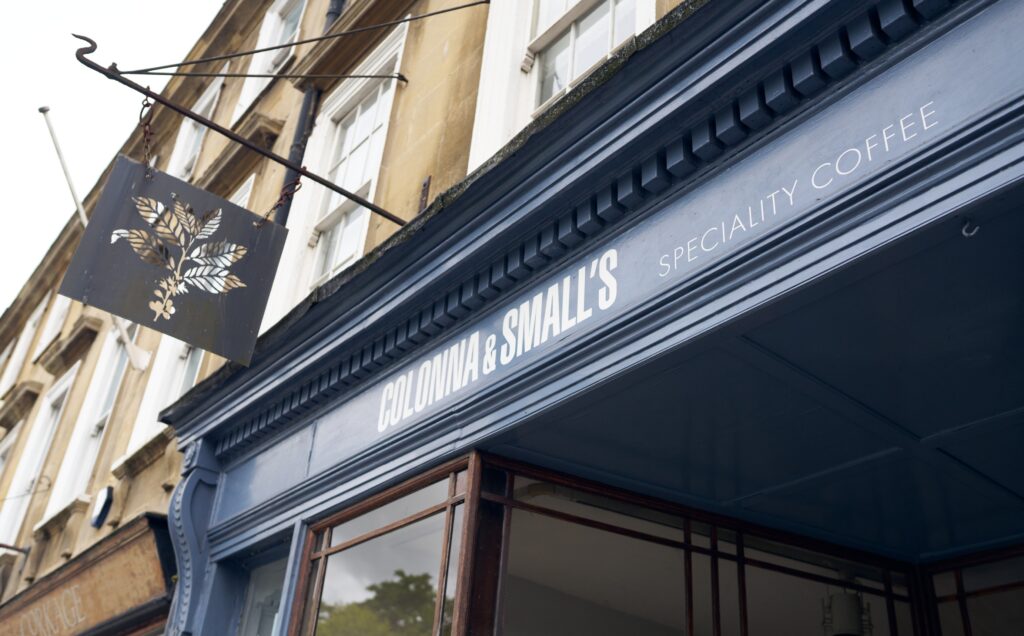
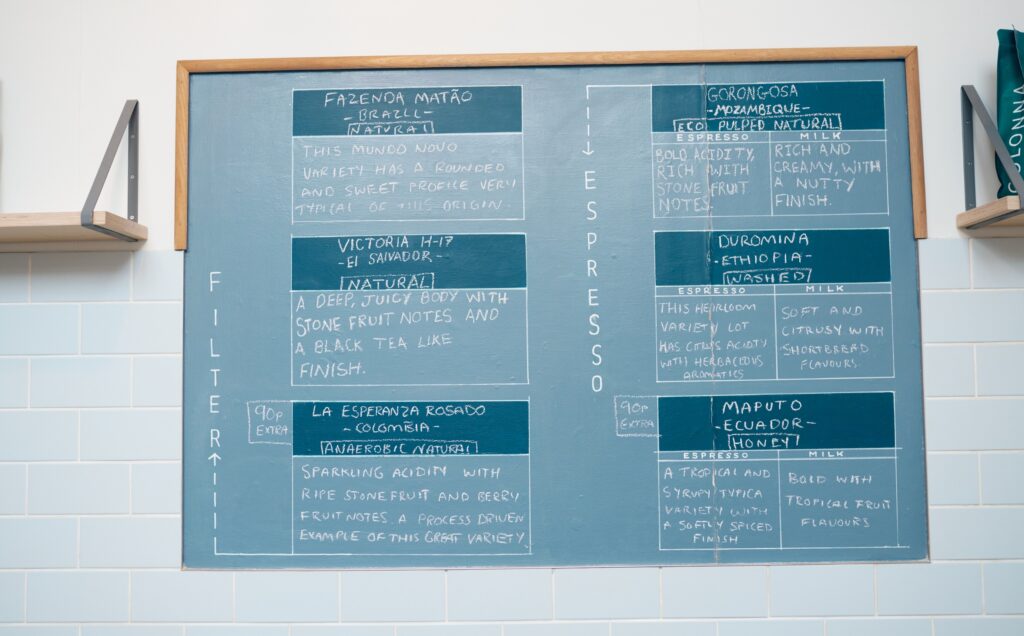
This concept was revolutionary at the time, and it took a while for guests to fully embrace it. “People didn’t get it at first,” Maxwell recalls. “It wasn’t the traditional bar experience they were used to, but eventually they came to appreciate it.” The Bath location has been around for about fourteen years now. In late 2023, Maxwell opened a second location in London. “When people asked me, ‘So, what are you going to do there that’s different from Bath?’, I said, ‘Absolutely nothing!’”
Maxwell’s journey in the coffee industry is inextricably linked to innovation. One of his most influential contributions to the industry is the book *Water for Coffee*, which he co-authored with chemist Christopher H. Hendon in 2014. This book, now a standard reference in the coffee industry, arose from Maxwell’s own curiosity and questions about water—one of the most fundamental yet often overlooked aspects of coffee.
“The idea for the book started with a simple question,” says Maxwell. “Why don’t we understand water—an essential component of coffee—better?” Together with Christopher, he embarked on an in-depth investigation into the chemical properties of water and how they influence the taste of coffee. That quest taught him a great deal personally. And the book changed the way the entire industry viewed water.
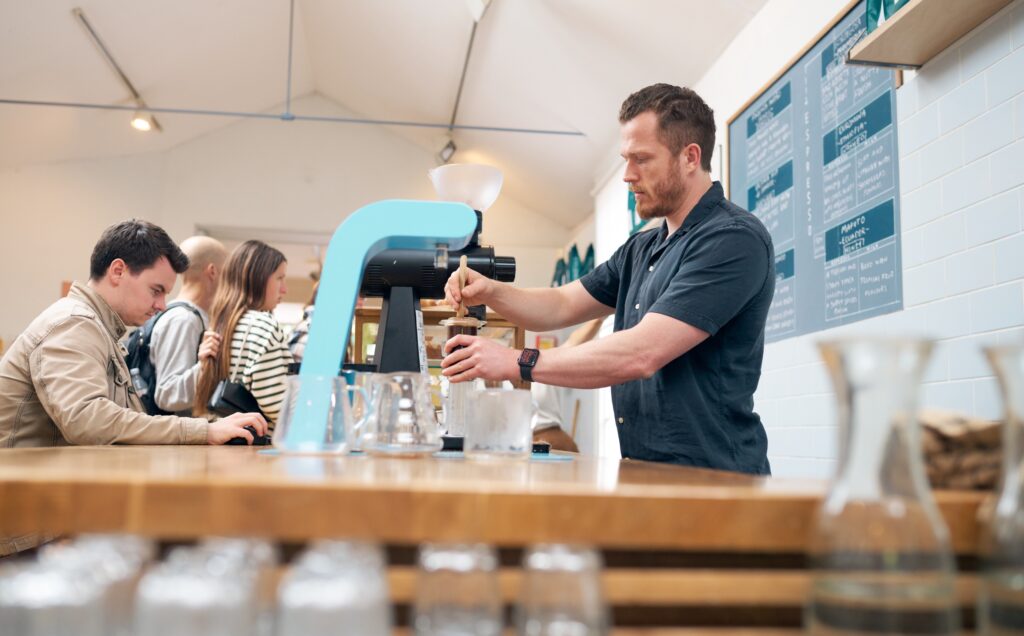
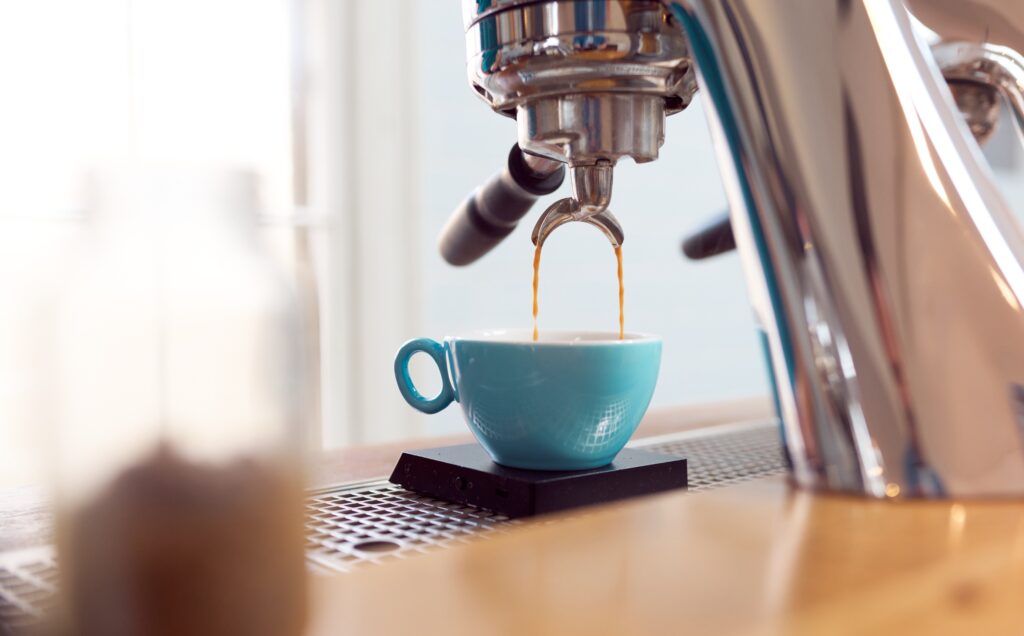
“In 2014, water in coffee was something that was hardly ever discussed. And when it was, it was often in a superficial way. Today, our understanding of water has come a long way. That is partly thanks to the research we’ve presented in this book. No one used to think about the composition of water. What minerals does it contain—or lack? How does that affect the taste? Water in coffee was the elephant in the room: everyone knew it was part of the equation, but no one talked about it. That’s unthinkable now.”
The British coffee entrepreneur isn’t afraid to speak out critically about current trends in the coffee world. For example, regarding the rise of complex processing methods such as fermentation with yeast. Although he acknowledges that innovations like these can be interesting and certainly deserve a place in the industry, he warns against the risks of an overly broad definition of quality.
“Such methods sometimes create flavors that haven’t been found in coffee before. But does that mean higher quality? Then you end up debating whether something is better, even though there’s no fair basis for comparison. Such coffees may well be of higher quality, but for me, the essence of quality remains something that must be precisely and consistently defined. That’s what we need to agree on first. Compare it to how wine connoisseurs evaluate different types of wine. They don’t compare a powerful, full-bodied wine to a dry, crisp wine, but rather to a comparable wine. In the coffee world, however, all kinds of flavor profiles are compared to one another without placing them in the proper context.”
Furthermore, according to Maxwell, the generally accepted idea is that if you buy specialty coffee, you’re on “the right side” and everything tastes great. Commercial coffee is “the evil,” and it tastes awful, too. “I don’t buy into this. Quality has always played a role in coffee cultivation, anyway. If coffee were approached purely from a commercial standpoint and it were all about yield and caffeine, everyone would be growing Robusta.”
Maxwell: “Water in coffee was the elephant in the room: everyone knew it was part of the equation, but no one talked about it.”
An additional problem is the impact of climate change. Demand for higher quality and better flavor is increasing, but climate change is making it increasingly difficult for coffee farmers to meet that demand. There will come a point when the limit is reached, says Maxwell. At that point, producing the highest-quality coffees will no longer be possible, and flavor and quality will decline.
The position of coffee farmers in the global supply chain is an issue that is very close to Maxwell’s heart. In his latest book and in various interviews, he emphasizes that the current models of small-scale coffee farming in countries such as Colombia are not sustainable in the long term. To give farmers a fair chance, he advocates for a revamped coffee economy.
Maxwell: “It’s naive to think that specialty coffee will change the world. In fact, specialty coffee isn’t a sustainable business model for small farmers. Only with ridiculously high prices would it be worthwhile to grow coffee on two hectares. In a coffee-producing country like Colombia, for example, 30 hectares is the ideal size for a plantation. Because of the bleak financial outlook, many children of coffee farmers choose not to take over their parents’ plantations. They’ve often studied in the city and don’t want to return to the countryside to grow coffee. There are simply better opportunities in the cities,” the Brit emphasizes.
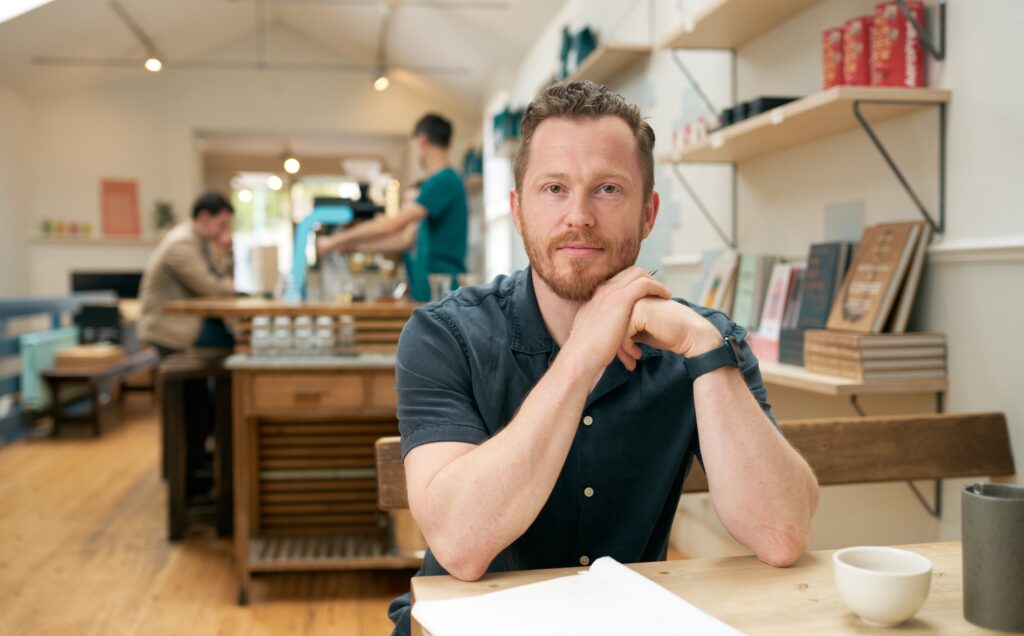
This leads to an interesting discussion about the future of coffee production. Maxwell argues that we may have to accept that large-scale, commercial coffee production—such as in Brazil—is the future, while small-scale, premium coffee production will remain a niche. “The idea that those small-scale farms in developing countries can form the backbone of the coffee industry is romantic but not realistic. We need to find a way to support commercial coffee production and make it more sustainable—while at the same time making room for specialty coffee as a niche market.”
Building on that is another insight that Maxwell Colonna-Dashwood gained while writing his latest book, *The Business of Specialty Coffee*: the importance of scale. He emphasizes that successful coffee companies must either be boutique and premium or operate on a much larger scale to be economically viable. “A small plot of land doesn’t generate enough income for a coffee farmer to build a sustainable business. In many cases, they have to expand their plantations to be economically viable.”
Maxwell: “If coffee were approached purely from a commercial standpoint and it were all about yield and caffeine, everyone would be growing Robusta.”
According to him, smaller businesses can only survive if they deliberately focus on a niche market like specialty coffee. There, they can charge higher prices for a premium product. However, this means that in many cases they have to invest in their business to improve the quality of their coffee. For farmers who are already struggling financially and have little access to financing, this is not easy. Maxwell argues that this is not just a matter of economics, but also of market access. “That access is crucial to the success of any coffee business. You have to find a way to reach people and get your product to the customer.”


But, he argues, don’t confuse reaching people with making the coffee itself more accessible. If you try to make coffee so accessible that it requires no effort on the customer’s part to appreciate it, you run the risk of losing the soul of the product, Maxwell says. “If you only emphasize flavors that appeal to most people, you strip away the nuances and depth. And with that, the ‘wow moment’ disappears too, which means it’s actually no longer specialty coffee. It is precisely that complexity that makes specialty coffee so fascinating.”
Colonna Labs was founded based on his belief that technology and research can transform the world of coffee, as well as on the academic collaboration that emerged while he was writing his book on water. This is the research and development division of his company, Colonna Coffee. Among other things, the division conducts research on topics such as sustainability and compostable coffee capsules.
But Maxwell Colonna-Dashwood is also working on new innovations outside his own company. For example, he is involved in developing a new technology for coffee grinders. “Many problems in coffee brewing are caused by inadequate equipment,” he explains. “By developing better grinding technologies, I hope to revolutionize the way we brew coffee—both at home and in commercial settings.”
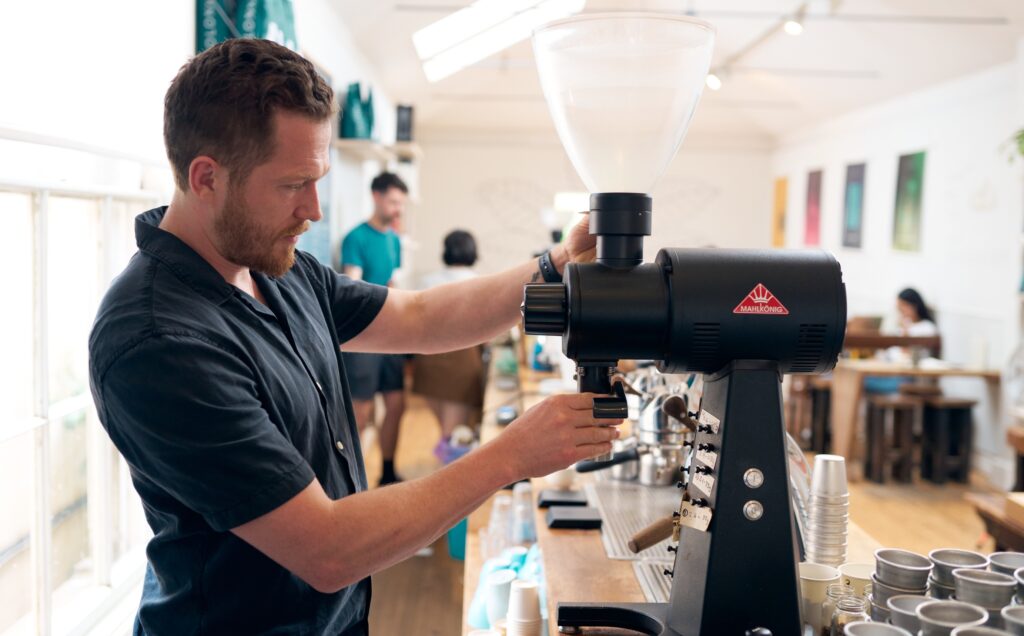
This technology is designed to improve grind consistency and reduce variability in coffee preparation. “If you grind coffee properly, many brewing problems disappear,” he says. “Shot time variability decreases, and you can work with different coffees without having to readjust the distance between the burrs every time. This not only makes the process more efficient but also more accessible to a wider audience.”
According to him, most innovations in the coffee world are often limited to minor adjustments or additions, rather than fundamental changes. “But what we need is a fundamentally different way of looking at coffee as an ingredient. This means we have to rethink everything, from the production process to the brewing method. I don’t know yet what that different approach should look like. But in my view, changes in the coffee world won’t come from even more complex processing or more automated brewing.”
Maxwell: “Many problems with making coffee are caused by inadequate equipment.”
As far as he’s concerned, that different approach is also reflected in how we appreciate coffee. As an example, he cites an experience he had at World of Coffee in Copenhagen in 2024. There, he drank a gesha with someone who had been working in the coffee industry for 30 years and with someone who had only been in the business for 3 years. All three had a different way of looking at that coffee. “The other two were supercritical: this wasn’t right, that wasn’t good. But I sat there, leaned back, and thought: this coffee is very good as green beans; it’s well-roasted and well-brewed. Maybe not exceptional, but definitely very good. It’s easy to be critical of something that’s really good.”
What Maxwell Colonna-Dashwood is saying is: if you can enjoy it without any context, isn’t that fine? Then what does it matter what variety or processing method it is? Perhaps that’s the fundamentally different approach: appreciating coffee again for the taste and quality of the product itself, not for everything surrounding it.










In Amsterdam's Pijp neighborhood, Duikelman proves that expertise, service, and inventory still make all the difference.

Arabica, Robusta, Bourbon, Gesha, or SL28: the plant names on a coffee bag reveal something about the variety, flavor, and origin.

Is a lot of foam a sign of good matcha? Not necessarily.


