


Laatst bijgewerkt op: 18/04/2026
We worked with the classic Baratza Encore for many years. That grinder was known to us as a reliable all-rounder for filter coffee, robust, repairable and fairly priced. Espresso could, but always felt like the extreme edge of its capabilities.
The arrival of the Baratza Encore ESP changed that. And now there is the ESP Pro. So the question is not only whether this is an upgrade over the old Encore, but also: how much better is it than the regular ESP?
We used the ESP Pro extensively for espresso, filter and single dosing and looked specifically at adjustment precision, fines, retention and workflow.
For those who have worked with the standard Encore for years, the ESP Pro feels like a completely next-generation mill.
The classic Encore was primarily a filter grinder. The espresso range was limited and the steps sometimes just too coarse to really make precise adjustments.
The ESP Pro is built fundamentally different:
In practice, that means you can work much more subtly. Small adjustments in grind rate translate predictably to brewing time and flavor.
Anyone who was ever frustrated by just too large jumps on the old Encore will immediately feel the difference here.
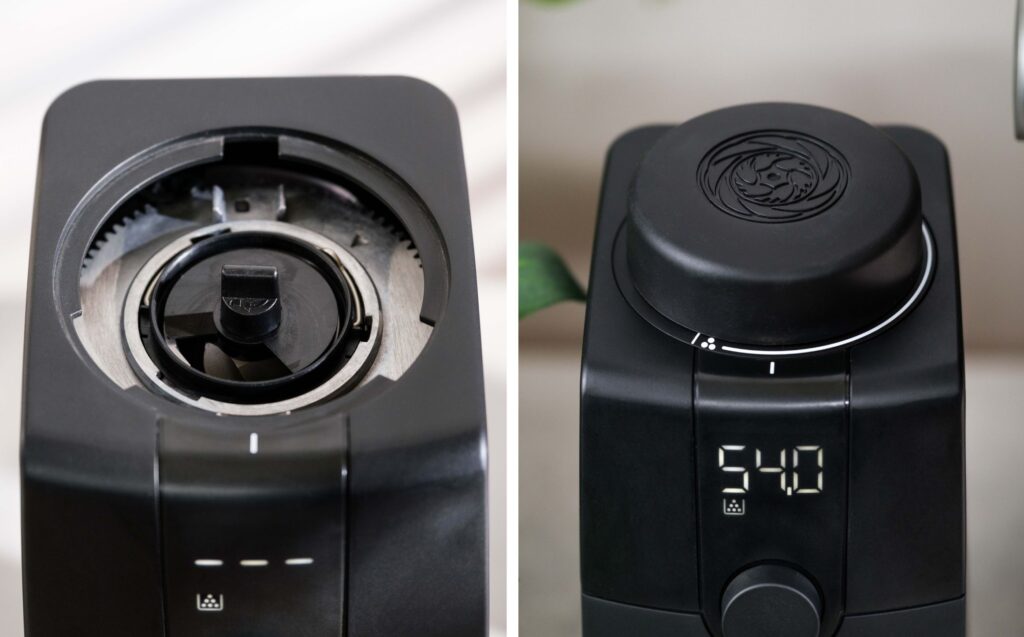
The ESP Pro is clearly quieter than the classic Encore. At around 54 dB without load and around 66 dB during grinding, it is in a comfortable middle range. The motor sounds controlled and not as if it has to fight against the beans as is still sometimes the case with the Encore.
The ESP Pro has an integrated ion generator against static buildup. And this difference from the Encore is huge. Close clumping, few flying fines and less buildup in the spout. Whereas with the Encore you had your countertop full after a few grinds, this is hardly the case here.
Fines are extremely small coffee particles created during the grinding process. Every grinder produces them, but the amount and distribution determine how controllable your extraction becomes.
Too many fines can:
The ESP Pro produces noticeably fewer fines than the classic Encore. The grind pattern is more homogeneous, especially in the espresso range. Even at fine settings, the ground coffee particles remain remarkably airy and relatively free of clumping. This makes it more controllable with modern, lighter roasts.
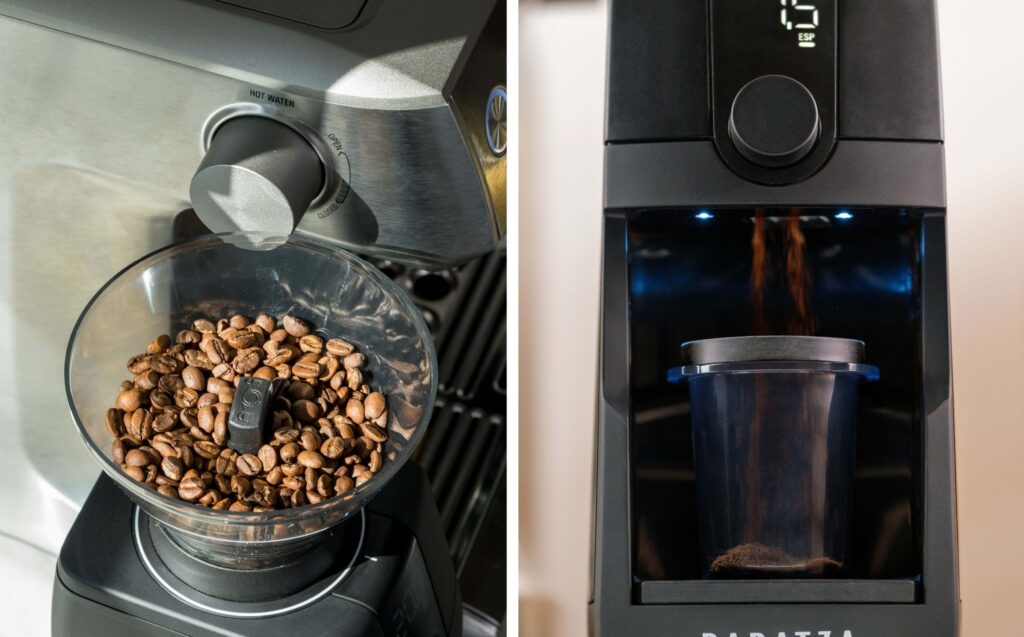
Retention is the amount of ground coffee that remains throughout the grinder.
In our experience and in independent measurements, retention is around 0.5 grams at most. More important is exchange retention, the amount of old coffee that actually ends up in your next shot. That is very low here. Which is nice because the lower, the less chance of “old” coffee in your cup. For a hopper mill without bellows, this is very good (ed. a bellow is a bellows on the mill that you use to blow away all the leftovers).
The ESP Pro also features a flow control disc against popcorning. That is the bouncing around of the last beans through the hopper, this potentially affects the grind. The combination of all these elements; flow control disc, ion generator and low exhchange retention make for a very fine workflow.
The ESP Pro can be used as a hopper mill as well as a single dose mill.
You get:
That auto-stop system is practical. The grinder stops automatically when all the beans have been processed. This allows you to continue preparing your filter routines, such as wetting your filter paper, in the meantime.
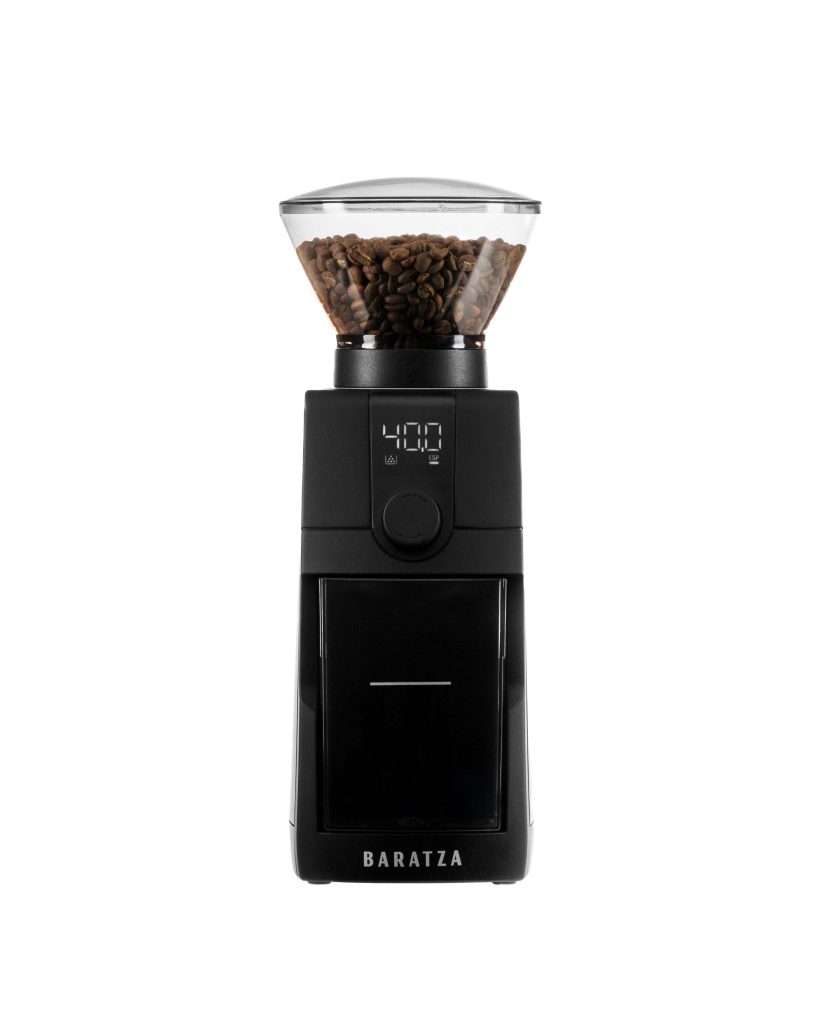
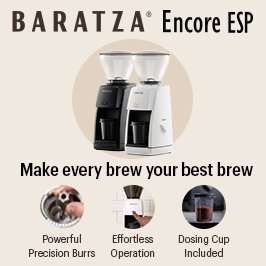
De Baratza Encore ESP Pro is de vernieuwde versie van de populaire Encore, ontworpen voor ultieme precisie bij espresso én filterkoffie. Dankzij het nieuwe metalen ontwerp, de stille motor en de traploos instelbare maalgraad levert deze molen keer op keer constante resultaten.
The Baratza Encore ESP and the ESP Pro share the basics, 40 mm M2 conical grinding discs and the same idea of wide applicability from espresso to filter. But in practice, the difference is mainly in three points that get the most criticism with the ESP: adjustment, clumping and retention at espresso.
The ESP works with fixed click steps and lacks a timer. Tests also describe the output in the espresso zone as lumpy, and retention in espresso can be high, especially if you work single dose. The ESP Pro addresses exactly those issues: infinitely adjustable with digital reference points, two dosing modes (timer and auto-stop), anti-static via an ion generator and a flow control disc for single dosing. Independent tests describe the output at fine grind precisely as fluffy and low clumpiness, and retention as remarkably low for this class.
In short, the upgrade from ESP to ESP Pro is mostly in cleaner, more consistent and more refined work, especially if you often single dose and do a lot of tuning.
What positively surprised us is how well the ESP Pro handles lightly roasted, compact beans. This is not about pure wattage but controlled torque. The grinder turns as hard as necessary and not always at maximum setting. As a result, the grinder effortlessly grinds lightly roasted, high-altitude coffees that make many entry-level grinders sound like they are grinding gravel.
That doesn’t mean it replaces a high-end single dose grinder, but within its price range, this is serious.
| Feature | Encore | ESP | ESP Pro |
|---|---|---|---|
| Positioning | filter oriented, espresso can just | entry mill with espresso zone | entry-level grinder with serious espresso focus and single dose workflow |
| Grinding Discs | 40 mm conical, M3 family | 40 mm conical, M2 | 40 mm conical, M2 |
| Adjustment | stepwise (clicks) | stepwise (clicks), 40 positions with espresso zone | stepless with digital reference points |
| Espresso adjustment convenience | limited, steps sometimes too coarse | well usable, but bound to click | very precise, micro adjustments possible |
| Timer function | no | no | yes, timer mode |
| Auto-stop (single dose) | no | no | yes |
| Single dosing | not designed for | can, but not ideal for espresso | explicitly supported, including in terms of accessories |
| Output at espresso | variable, more often fines and clutter | lumpy in tests, WDT often needed | in tests little clumping, fluffy output |
| Retention in espresso | average | in tests high with espresso, especially with single dose | in tests low, to about 0.5 g called |
| Static charge | noticeable | present, varies by bean | ion generator, clearly less static |
| Flow control disc | no | no | yes, against popcorning at single dose |
| Construction sense | much plastic | much plastic | more metal |
| Sound | relatively loud | in tests on the louder side | not whisper quiet, but acceptable, around 66 dB during grinding in test |
For those who have worked with the classic Encore for years, the ESP Pro is a huge upgrade. It shifts from filter-oriented work grinder to full-fledged espresso grinder with true tuning precision.
Compared to the regular ESP, it is not a revolution, but it is a definite refinement. The Pro feels more precise, modern and consistent in workflow.
Summary:
From Encore to ESP Pro is a leap.
From ESP to ESP Pro is a refinement.
Within its price range, the Baratza Encore ESP Pro positions itself as one of the most complete entry-level espresso grinders for home baristas who are serious about tuning, without going straight to the high-end segment.









Arabica, Robusta, Bourbon, Gesha, or SL28: the plant names on a coffee bag reveal something about the variety, flavor, and origin.

Is a lot of foam a sign of good matcha? Not necessarily.

This bright green tea powder comes from a remote mountain community in China and is perfect for tea and (iced) matcha lattes.


