


Laatst bijgewerkt op: 12/06/2026
When it comes to coffee and tea, topics like beans, roasting, origin, and brewing methods are discussed at length, but the most important ingredient is often overlooked: water. That’s remarkable, because water isn’t just a carrier of flavor—it’s a determining factor in how that flavor develops. As a result, water’s influence is crucial to the final result in your cup of coffee or tea.
Coffee consists mostly of water: about 91% for espresso and up to 98% for filter coffee. Tea goes even further and consists almost entirely of water. So, if you want to better understand why the same coffee tastes different in different places, or why tea sometimes becomes cloudy and bitter, you’ll ultimately have to look at the water.
And that seemingly simple substance is more complex than it appears. Water is never just pure H₂O. It contains dissolved minerals, gases, and acids, and its composition varies by region, by source, and even by season. And you can taste that difference in your cup.
The impact of water starts with its pH level, which indicates how acidic or alkaline the water is. In theory, a pH of 7 is neutral, but in practice, Dutch tap water is often slightly higher, around 8 (more alkaline). The SCA considers water with a pH between 6.5 and 8 to be ideal for brewing coffee. That may seem like a small difference, but it has a major impact on the taste. Water that is too acidic intensifies sharp, unpleasant acids in coffee, while water that is too alkaline results in a flat, sometimes even soapy taste.
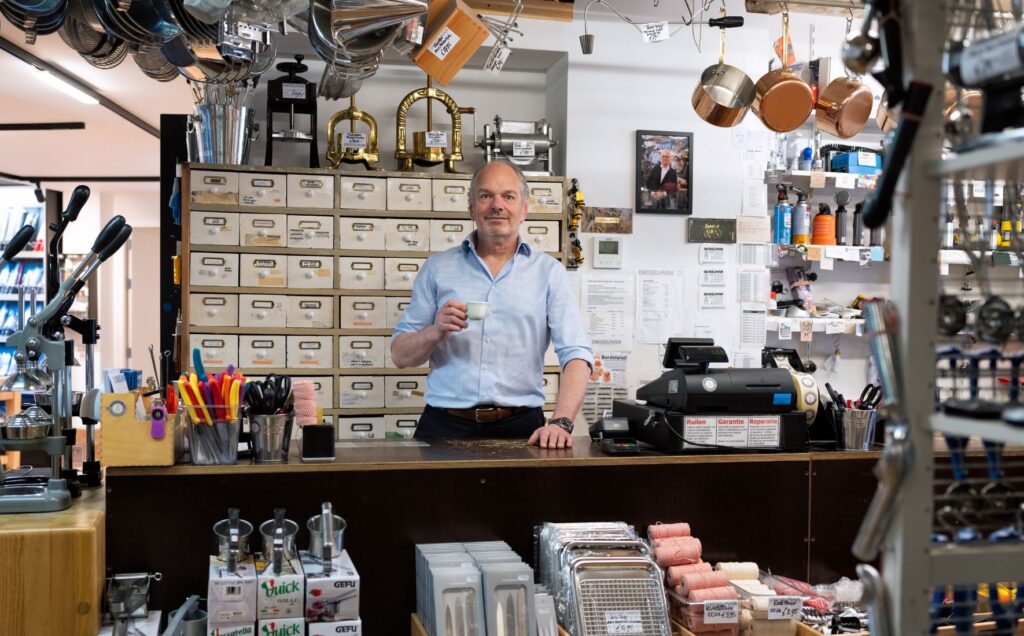
Jeroen: “The pH level actually has no effect on taste at all”
Still, according to Jeroen van den Bossche of water filter manufacturer BRITA, pH is a confusing concept. “The pH value actually has no effect on taste at all,” he says. “It is often the case that when the pH value is lower, you get a more acidic taste. But that’s due to the lack of bicarbonate, not the low pH value itself.”
Bicarbonate acts as a kind of buffer: it binds the acids naturally present in coffee, thereby neutralizing them. So, more bicarbonate means coffee that tastes less acidic. In short: hydrogen carbonate doesn’t determine how much acid is actually present, but how much acid you taste.
At the same time, there is a connection between that bicarbonate and the pH level: if you remove the bicarbonate from the water, the pH level drops, and it will therefore taste more acidic.
Incidentally, the pH level also changes when heated, something few people realize. In an espresso machine, the pH rises as dissolved gases like CO₂ escape. This means that water from the boiler tastes different by definition than fresh water straight from the tap.
PH at a glance
• Water that is too acidic (low pH) → coffee becomes sharp and unpleasantly sour
• Water that is too alkaline (high pH) → coffee can taste flat and even soapy
With specialty coffee, where fresh acidity is actually part of the flavor profile, the acidity level is critical. Van den Bossche: “In specialty coffee, that bicarbonate is incredibly important. If you remove too much of it, that lovely fruity acidity turns into acetic acid. If you leave too much in, I can’t even taste that lovely acidity.” With coffee that has darker, chocolatey notes, that matters less: “Because you don’t taste that acidity anyway. It’s not in that coffee.”
In addition to acidity, minerals play a crucial role. Calcium and magnesium are the key players here. Together, they determine the hardness of water and have a direct impact on how flavors are extracted from coffee and tea. Magnesium is known for enhancing fruity and fresh notes, while calcium adds body and creaminess. But here, too, balance is essential. Too much magnesium makes coffee dry and astringent, while an excess of calcium leads to bitterness and a heavy mouthfeel.
Jeroen: “Forget about the ppm and look at the hardness”
Van den Bossche does, however, qualify that distinction. “I find it difficult to say that magnesium does this and calcium does that.” According to him, in practice, the focus is primarily on the overall profile of hardness, calcium, magnesium, and bicarbonate. “You balance these values to prevent limescale buildup and to improve the taste.”
The total amount of dissolved solids in water is measured in TDS (total dissolved solids) and expressed in ppm (parts per million). According to the SCA, the ideal range for coffee is roughly between 75 and 175 ppm. At a lower ppm value, under-extraction occurs, causing flavors to dissolve insufficiently and leaving the coffee sour and flat. At a higher value, over-extraction occurs, resulting in bitter and heavy flavors.
Coffee Guidelines (SCA)
Ideal: 75–175 ppm
Too low (<50 ppm): under-extraction → sour, thin
Too high (>175 ppm): over-extraction → bitter, heavy
Still, a ppm figure doesn’t tell the whole story. Van den Bossche: “It indicates the total number of particles in the water. But a number alone doesn’t tell me anything. I need to know what those particles are.” That’s why he prefers to look at hardness and carbonate content. “Forget about those ppm values and look at the hardness.”
It’s interesting to note that some baristas deliberately choose softer water, for example, to bring out more acidity. This shows that water is not just a technical variable, but also a creative tool.
With tea, it works a little differently. While coffee benefits from a certain level of mineral content, tea generally requires softer water. Tea leaves react strongly to calcium and magnesium. Hard water can cause tea to become cloudy, develop an oily film, and taste bitter. Soft water, on the other hand, allows tea to appear clear and fresh, with more room for floral and subtle aromas.
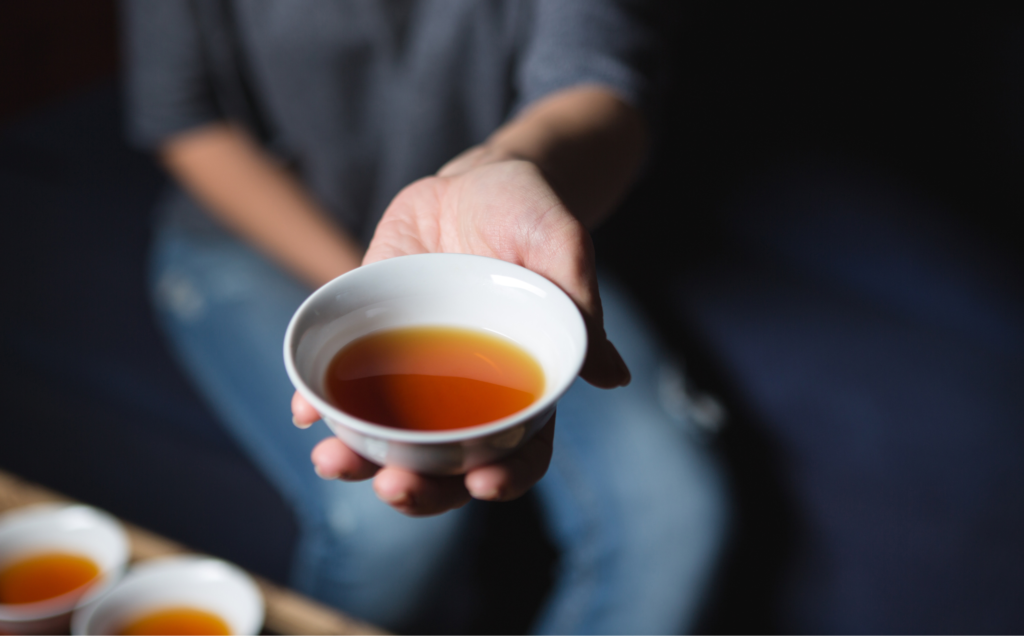
According to Van den Bossche, the essential oils in tea leaves react with calcium and magnesium, which can cause the tea to become cloudy. But here, too, “softer” doesn’t automatically mean better. Brita worked with international tea specialists to test which water works best for tea. “Fortunately, fully demineralized water was ruled out,” says Van den Bossche. He is quick to add that producing osmosis water is often a more expensive solution, making it unavailable to everyone.
In the end, they settled on 3 degrees of carbonate hardness as a good target. For tea in general, he considers a range of 2 to 5 degrees of carbonate hardness to be ideal. “For white tea, you’d aim for closer to 2 degrees; for oolong, closer to 5 degrees.”
However, some nuance is needed here as well. Extremely soft water, containing virtually no minerals, can actually result in undesirable flavors. In tests, a sulfur-like odor was even detected in green tea brewed with very soft water. Just as with coffee, it is not about extremes, but about balance.
The influence of water is most evident during extraction. This is the process by which water extracts flavors from coffee or tea. How this process unfolds depends on several factors, including temperature, contact time (pressure), and contact surface area (grind), but water plays a central role in it.
The temperature of the water, in particular, has a major impact. For coffee, the ideal brewing temperature is between 85 and 95 degrees Celsius. Below that threshold, sugars do not dissolve sufficiently and the coffee remains sour. Above that threshold, flavors can burn, resulting in a bitter, charred taste. Water acts as a carrier in this process, but it also determines which substances are carried along and which are not.
When brewing tea, temperature is just as important. Van den Bossche says, “If the water is too hot, you’ll scald the tea, making it bitter.” For tea, the ideal temperature depends on the type of tea.
Types of tea and their ideal water temperatures
• green tea: 60°–80°C
• white tea: 70°–80°C
• oolong: 80°–95°C
• black tea: 90°–95° C
• pu-erh: 95°–100° C
• herbal infusions: 100° C
In practice, another factor plays a major role, especially in the hospitality industry: the difference between fresh water and stagnant water in an espresso machine. Water used through the brew group is fresh and constantly moving. It comes directly from the tap, is filtered, and has a relatively stable composition. The water in the boiler, on the other hand, sits still, is repeatedly heated, and therefore changes in character. This is often called “dead water.” It looks clear, but tastes musty and flat.
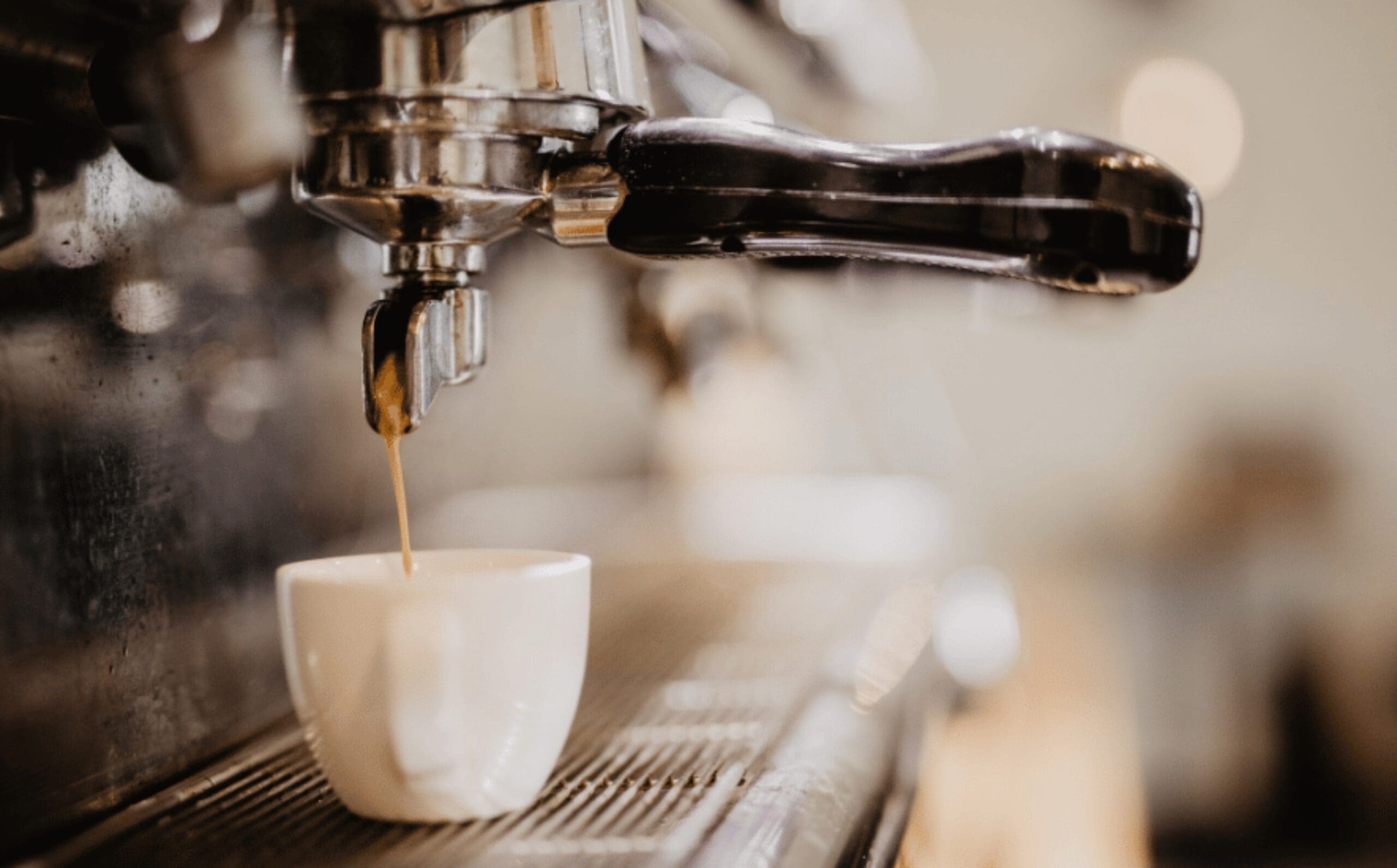
Van den Bossche explains the problem: minerals build up in such a large boiler. “Half is filled with water, half is steam. That steam is pure, high-quality water. You release that steam every time, and the minerals from the water remain in the boiler.” Eventually, he says, a layer of mineral sludge can even form at the bottom. Yet that water, from the hot water tap of the espresso machine, is regularly used in restaurants and cafes for tea or Americanos, which has a direct negative impact on the taste.
That negative effect is also due to the temperature: the water from the steam boiler is about 100 degrees Celsius. That’s too hot for tea, which turns bitter. And even if you pour this water over espresso to make an Americano, the coffee burns and becomes bitter.
A better solution is to use water from a brewing group for tea or an Americano, for example. This is fresh, “living” water whose temperature can (often) be adjusted, which enhances the flavor. Be sure to choose a group head that isn’t used for espresso, otherwise there will be flavor transfer. For example, on a three-group machine, you can designate one group for hot water only.
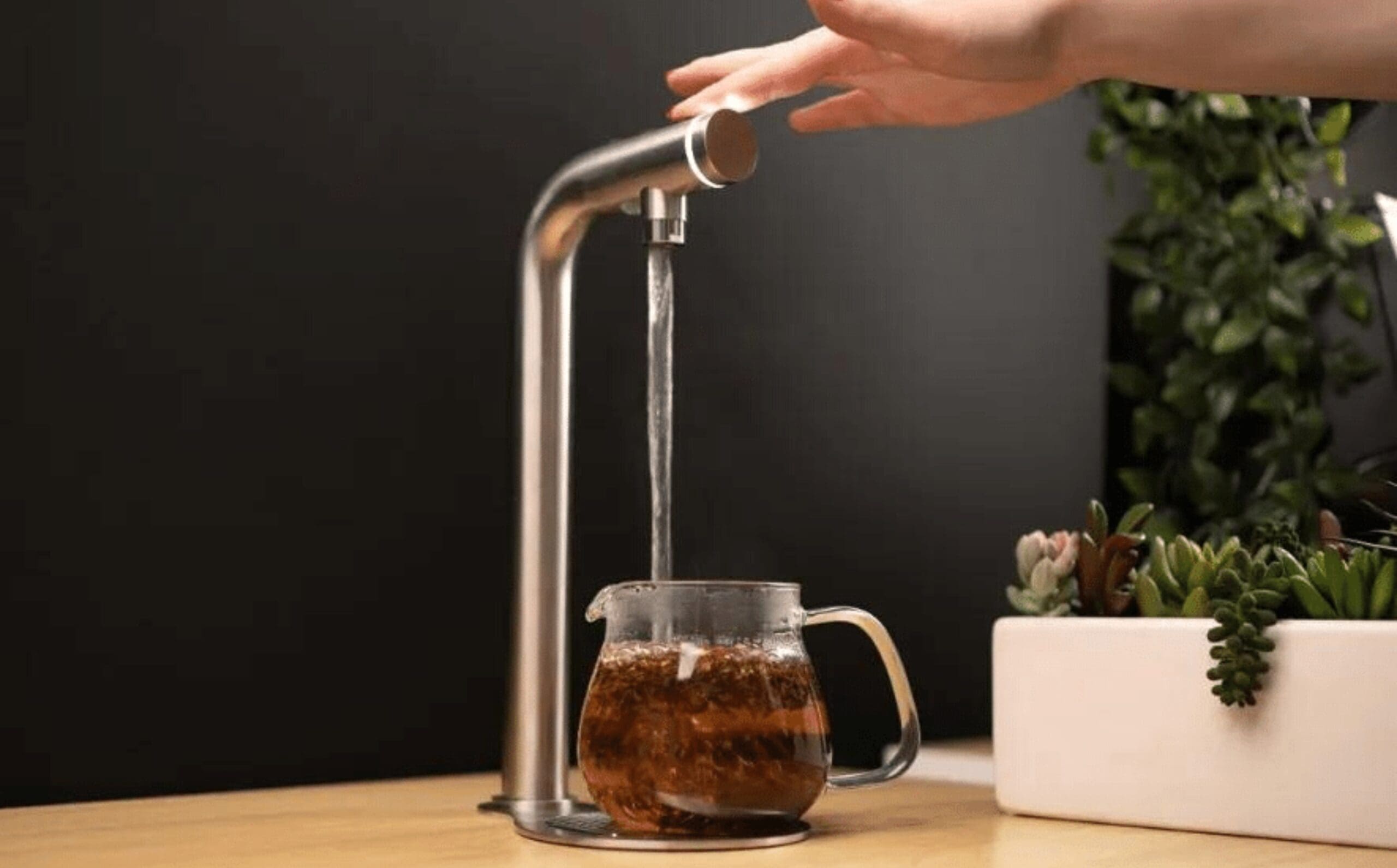
A separate hot water source, such as a kettle or a hot water tap, is also an excellent choice—provided it uses filtered water and has an adjustable temperature setting.
This brings us to an often-overlooked aspect of coffee preparation: water filtration. Many business owners invest in high-quality espresso machines and grinders, but skimp on the water filter. This is surprising, because water affects not only the taste but also the lifespan of the equipment. Scale buildup, caused by calcium and magnesium, begins to form at temperatures above 35 degrees Celsius. At temperatures of 65 degrees Celsius and above, the buildup accelerates significantly, making boilers, heating elements, and heat exchangers particularly vulnerable. Without filtration, this can lead to clogs, malfunctions, and costly repairs.
Jeroen: “Business owners invest in a very expensive espresso machine, put two super-expensive grinders next to it, and then a €200 water filter is suddenly too expensive.”
Van den Bossche is adamant about this: “Limescale forms at temperatures of 65 degrees and a water hardness of 3.5.” And regarding saving on filters, he says: “They invest in a very expensive espresso machine, put two exorbitantly expensive grinders next to it, and then suddenly a water filter is too expensive. If you break down the cost of that filter per liter or per cup of coffee, it really costs next to nothing. And it’s so important.”
But the role of a water filter goes beyond protection. It is also a way to actively control the water. Modern filters can not only remove unwanted substances but also add minerals to optimize the taste. This makes water a variable that you can tailor to your coffee or tea. That’s necessary, because not every appliance requires the same water. While coffee benefits from a certain level of hardness, tea actually needs softer water. A dishwasher or steam oven, on the other hand, has entirely different requirements.
There’s a common misconception that bottled water is inherently better for coffee or tea, but that’s not true. Some mineral waters actually contain too many dissolved substances, while others are too low in minerals. Even demineralized water, which is completely “pure,” doesn’t produce good results. Without minerals, extraction barely gets started, and coffee often tastes extremely sour. This shows that purity isn’t the same as quality.
According to Van den Bossche, bottled water can work, but only if you know what you’re choosing. “If you like the taste of your coffee with soft bottled water (such as Spa Blue, ed.), then that’s fine. At least you won’t get limescale in your machine, because this water has a very low ppm value. But if you use harder waters (such as Vittel or Evian, ed.), your machine will be full of limescale within two weeks. Bottled water is also not a very sustainable solution. If you do want to use bottled water, you need to know how to read the label.”
You might think: the purer the water, the better. But that’s not true either. Demineralized water (osmosis water, filtered using reverse osmosis) contains no minerals. The result: poor extraction, extremely sour coffee, and flat tea.
Minerals are essential for flavor development. The trick isn’t to remove everything, but to strike the right balance.
Van den Bossche puts it nicely: “Reverse osmosis water is chemically neutral water. But that doesn’t mean it’s flavor-neutral.” According to him, people experience reverse osmosis water very differently. “Some find it sour, others find it sweet, and still others find it bitter. That water tastes different to everyone.”
As a result, water is increasingly being treated as a full-fledged ingredient. In professional settings, water is measured, adjusted, and even formulated. Some coffee shops use their own water recipes, in which demineralized water is enriched with specific amounts of minerals. This creates a consistent base, regardless of location or season.
The conclusion is clear. Water is not a secondary factor, but one of the most important building blocks of coffee and tea. It determines how flavors are extracted, how aromas come into their own, and how a beverage is ultimately experienced. Anyone concerned with quality cannot ignore the influence of water. In fact, understanding water means understanding flavor. And that is what makes the difference between a good cup and an exceptional one.












Arabica, Robusta, Bourbon, Gesha, or SL28: the plant names on a coffee bag reveal something about the variety, flavor, and origin.

Is a lot of foam a sign of good matcha? Not necessarily.

This bright green tea powder comes from a remote mountain community in China and is perfect for tea and (iced) matcha lattes.


