


Laatst bijgewerkt op: 04/06/2026
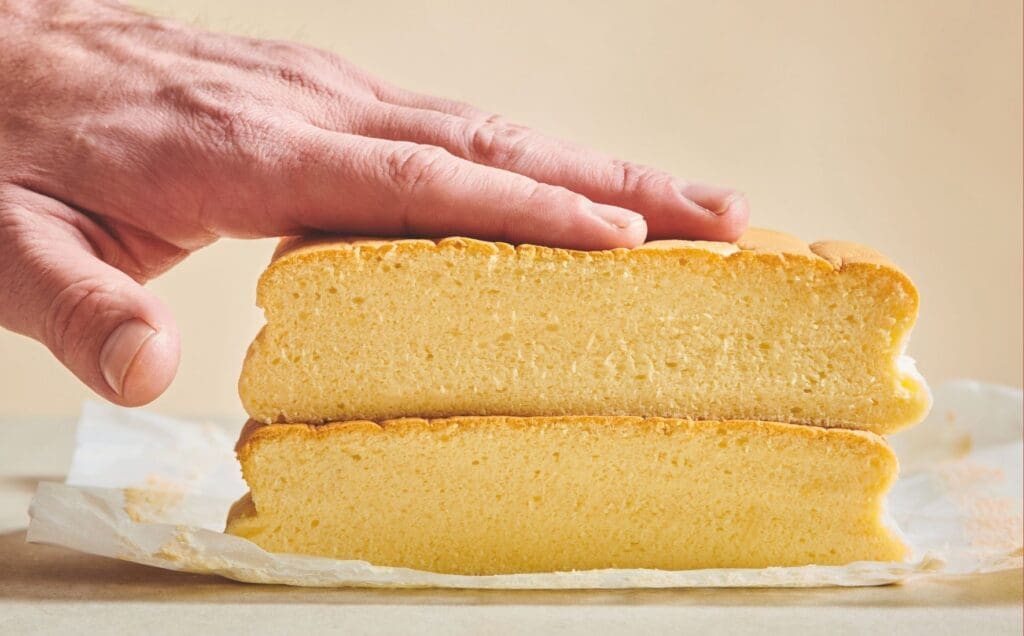
For his new book The Art of BakingHidde de Brabander deliberately returns to the basics of patisserie. Not dozens of individual recipes take center stage, but one fundamental technique: cookie batter. From that base, he builds further toward madeleines, financiers, brownies, macarons and other classic preparations.
During our interview with Hidde de Brabander, it is striking how often he comes back to the same word: foundation.
Not trends. Not decoration. Not Instagram-worthy finishes. But foundation. Understanding why something works. Knowing what a technique does. And above all, keep learning.
With his new book The Art of Baking, Hidde deliberately returns to the basics of patisserie. Instead of dozens of individual recipes, the book revolves entirely around one technique: sponge cake batter. From that base, he builds further toward madeleines, financiers, brownies, macarons, carrot cake and more classic preparations.
But during the interview, it quickly becomes apparent that the book is actually about much more than baking. About flavor perception. About texture. About tradition. About craft. And about the difference between following a recipe and really understanding what you’re doing.
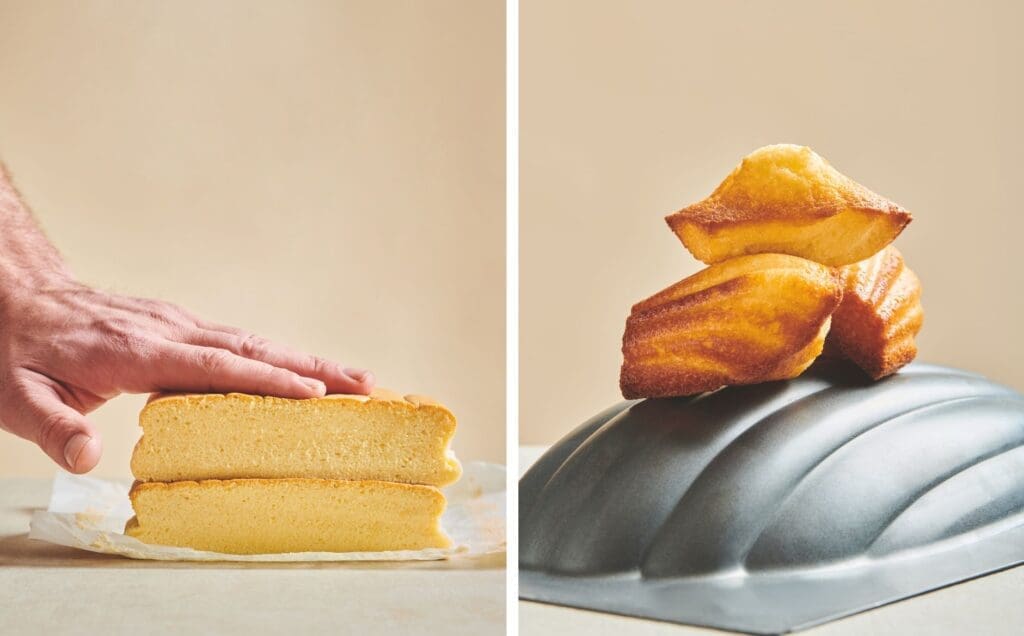
When we ask Hidde if sponge cake batter might be to him the same as espresso is to a barista, a base in which to show character and technique, he doesn’t have to think long.
“You can mainly divide this preparation into two groups,” he explains. “One that we can eat like this, think madeleines and financiers. But also cookies that serve as a foundation for a cake with several other preparations. That makes it diverse, but also so important.”
“Learn to understand it, dive in and make it your own.”
That thought runs like a thread through The Art of Baking. Not the loose end result is central, but the technique underneath. According to Hidde, many home bakers nowadays are mainly looking for speed and simplicity, whereas it is depth that gives so much more freedom.
“Maybe that’s exactly why,” he says when we ask him if the book is also a reaction to that development. “We are in a time where simplicity is also a thought process for many, I want to get away from that. Learn to understand it, dive into it and make it your own.”
It’s a striking statement at a time when social media is full of quick recipes, hacks and “always good” formats. Hidde seems to be moving in just the opposite direction: less tricks, more craftsmanship.
Baking is also increasingly about flavor experience. Not just about sweetness, but rather about tension, contrast and layering. Developments that have also become increasingly important within specialty coffee, tea and bean-to-bar chocolate.
According to him, patisserie has clearly changed in that in recent years.
“Oh sure,” he says when we ask if patisserie is moving toward more complexity and elegance. “And fortunately so. Sweet is of course the most beautiful basic flavor, but it can be flat. You need balance, and especially dynamics and character.”
“Sweet is obviously the best basic flavor, but can be flat”
It is precisely this balance, he says, that makes pairing interesting. Some recipes in the book lend themselves almost naturally to coffee or tea. Others, on the contrary, call for experimentation.
“The long fingers, of course, are the basis for a good tiramisu,” he says. “With that comes a nice spicy coffee. But the Biscuit Savoie, for example, in all its elegance, actually lends itself more to more refined teas. Experimenting in this is perhaps the most fun of all.”
That experimentation, he says, does not stop at taste alone. Texture, temperature and even our own expectations also influence how we experience something.
“Texture and mouthfeel are certainly important,” he says. “But even more so: our consciousness, our perception and imagination. That’s where taste is really formed.”
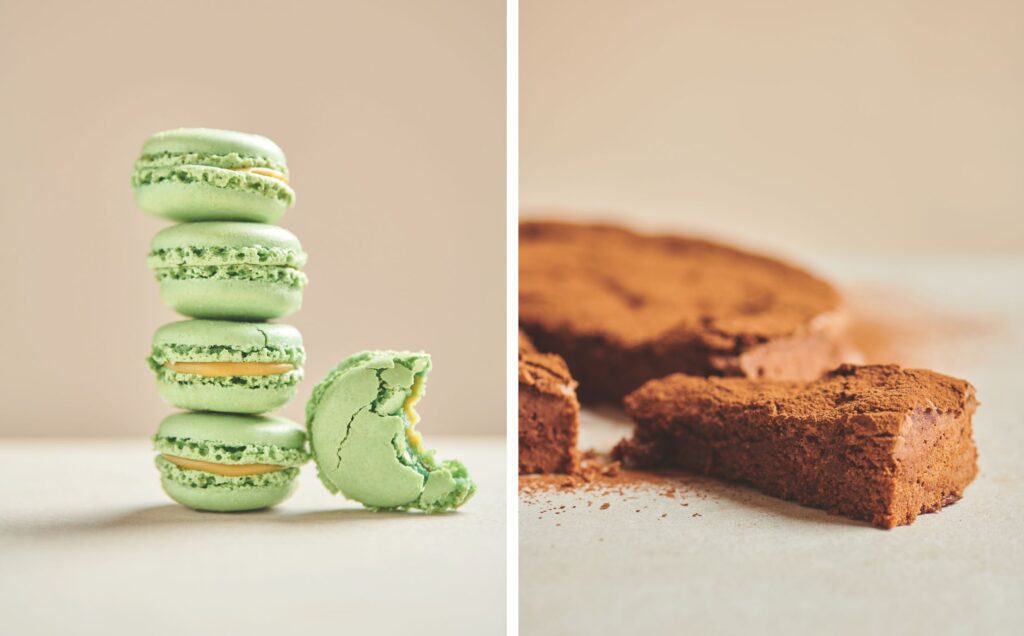
Remarkably, Hidde lists not macarons or complicated desserts as the most underrated recipe in the book, but brownies.
“That one is very often made too airy and therefore becomes too dry,” he says directly. “A real brownie shouldn’t be airy, it should be sticky and creamy. And it should be rammed with chocolate.”
“A real brownie shouldn’t be fluffy, it should be sticky and creamy. And it should be rammed with chocolate”
It sounds simple, but that very simplicity, he says, often turns out to be insidious. The better you learn to understand something, the more critical you also become about details.
He notices this himself. Despite nearly three decades of experience, he feels he is still learning.
“More critical,” he replies when we ask if his broad experience has made him freer or more critical. “The more you discover, the more you find out you don’t know anything.”
He laughs for a moment.
“I’ve been a pastry chef for 28 years now and still learn so much every day. By sawing through everything, you start getting more and more answers, but even more questions.”
The foreword to The Art of Baking was written by Cees Holtkamp, a name almost synonymous with tradition and craftsmanship within Dutch patisserie.
For Hidde, that collaboration feels natural.
“Cees is the embodiment of the foundation I keep talking about,” he says. “You can’t build something beautiful until you have a good foundation.”
“No young dog can flourish without realizing from what soil he sprung.”
That foundation, he says, goes beyond recipes or techniques alone. It is also about generations of professionals passing on knowledge.
“This carpet pad consists of knowledge and skill and comes from a generation before you. The trajectory of apprentice, journeyman and master in practice. Cees is such a master. No young dog can flourish without realizing from what soil he sprung.”
It actually sums up perfectly what The Art of Baking is about. Not about nostalgia or looking back, but about understanding where craftsmanship comes from before trying to build something new.
At the end of the interview, we ask Hidde if perhaps baking has also become a form of rest for him. A counterbalance to a world that seems to be spinning faster and faster. Just as coffee, tea or chocolate are for many people more than just a product.
His answer is more honest and less romantic than you might expect.
“No,” he says, laughing. “Not really, well as a home baker, but not in the pro world. That’s where you just have to pop.”
Still, he does believe that craft can add something to how we live and work.
“I do believe that if we realize more what we do as true professionals, we can also find more depth. In our minds, living and working.”
Want to try some of the recipes from The Art of Baking? Check them out via our review article.










Arabica, Robusta, Bourbon, Gesha, or SL28: the plant names on a coffee bag reveal something about the variety, flavor, and origin.

Is a lot of foam a sign of good matcha? Not necessarily.

This bright green tea powder comes from a remote mountain community in China and is perfect for tea and (iced) matcha lattes.


