Gepubliceerd op: 02/07/2025
High in the Peruvian Andes, in the remote Inkawasi district of the Cusco region, coffee grows at impressive altitudes ranging from 1,600 to 2,400 meters above sea level, spread across steep slopes and lush valleys. The region is gaining increasing recognition worldwide, not only for the quality of its coffee but also for the unique way in which it is produced.
Landscape
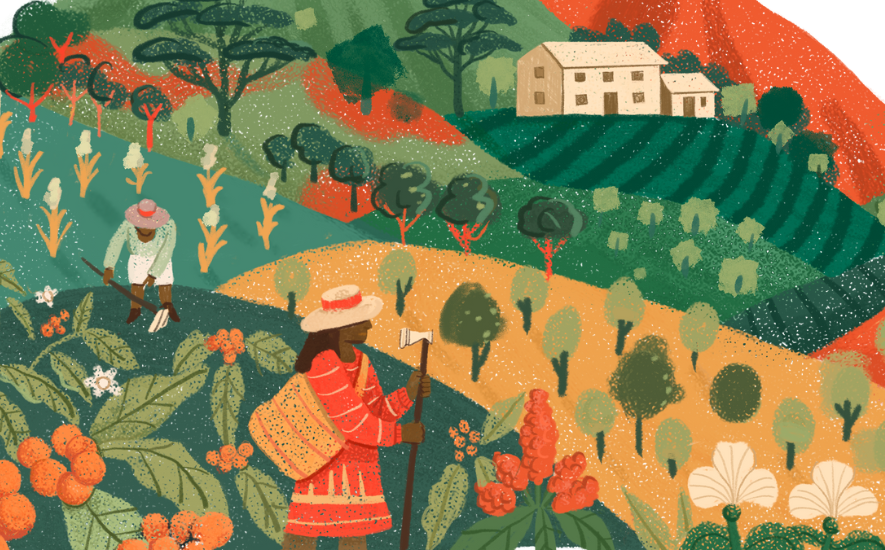
Inkawasi is located in one of Peru’s most fertile regions. The mineral-rich soil of the Andes provides the perfect foundation for agriculture. More than 3,000 varieties of potatoes grow here, along with beans, corn, and, of course, coffee. Inkawasi’s landscape is a mix of steep slopes and green valleys, where small coffee plantations are surrounded by wildflowers and native fruit trees. The highest point in the region lies at approximately 4,200 meters above sea level, making it one of the highest-altitude areas in Peru.
Climate
The Choquesafra Glacier creates a variety of microclimates. Although most of the year is dry, the rains between December and March bring the vegetation to life. On average, daytime temperatures hover around 20°C year-round, ideal for growing tropical crops such as coffee. Due to differences in elevation and climate variations, each zone produces coffees with unique flavors: ranging from fresh and floral to deep and tropical.
Harvest
As is the case throughout Peru, the washed method is the most popular way to process coffee here as well, although a relatively large number of natural coffees are also produced in Inkawasi. Thanks to the dry, sunny climate and good air circulation at an altitude above 1,600 meters, coffee cherries can dry perfectly in the sun here. This slow drying process enhances the complexity and depth of the flavors.
Plantations
The average farmer in Inkawasi cultivates about 1.5 hectares of land, often together with family members, following the ayni principle: a centuries-old system of mutual aid. Tools such as the Quituchi —a traditional hand plow—are used to keep the soil healthy and prevent erosion. Popular varieties such as Gesha and SL09 grow on the highest-altitude plots. In addition to coffee, farmers often grow potatoes, beans, and corn.
Flavor Profile
The coffees are generally smooth and sweet, with notes of caramel, citrus, and peach. They often feature tropical flavor profiles such as mango and passion fruit, with a lively citrus acidity and a silky-smooth mouthfeel. This complex profile stems from the local terroir and aligns well with the growing demand for specialty coffee. As a result, farmers can offer a unique product that is popular with international buyers, while benefiting from an affordable and sustainable processing method.