


Laatst bijgewerkt op: 13/10/2026
Different coffees are prepared in different ways, with the amount of coffee, milk, and foam—as well as the preparation method—determining the final result. Want to learn the difference between a flat white and a latte once and for all? We’ve listed 10 coffees for you.
Renowned for its intense flavor, an espresso by forcing hot water under high pressure through finely ground coffee beans. On average, baristas use a brew time of 25–28 seconds for this.
What sets espresso apart from regular filter coffee is the grind size (coarse for filter coffee) and the brewing method. The high pressure causes the water to seep through the coffee, extracting the oils, fatty acids, and flavor compounds. This results in a concentrated, full-bodied brew with a rich crema layer.
An espresso is served in a small cup—no larger than 90 milliliters—and can be enjoyed black or used as the base for a cortado, espresso macchiato, cappuccino, flat white, latte, or latte macchiato. A standard espresso typically has a volume of about 30 to 35 milliliters.
A ristretto is a shortened espresso. This type of coffee was invented in Italy—where else? The word “ristretto” literally means “restricted” in Italian. This refers to the limited amount of water used when brewing this coffee. Unlike a regular espresso, the brewing time for a ristretto is shortened, resulting in an average of 20 milliliters in the cup. A ristretto is therefore a concentrated and intense flavor experience that will often contain more acidity. This is because acids are released during the first phase of the brewing process, while the bitter notes emerge later.
An Americano is an espresso diluted with hot water. It is made by adding twice as much hot water to a shot of espresso. The Americano owes its name to American soldiers, who, after arriving in Europe during World War II, decided to dilute the strong—and, to them, bitter—espresso with water.
A nice layer of velvety-smooth foam can almost turn a perfectly brewed espresso into a dessert. But how do you actually froth milk properly? Read the article here.
An espresso macchiato consists of a shot of espresso topped with a dollop of milk foam. You prepare an espresso macchiato by adding a small amount of milk foam to a well-brewed espresso using a spoon.
A lungo—also known as a “long black”—is made by allowing the water to flow through the ground coffee for longer than with a regular espresso. Because the brewing time is extended, the lungo also has a greater volume. In fact, serving a lungo is now considered “a no-no” in the hospitality industry. After all, it results in over-extraction of the coffee. This introduces too much bitterness into the coffee and makes it nearly impossible to maintain a balanced flavor. The Americano is a good substitute for the lungo.
A cortado is an espresso with a small amount of warm milk. A cortado contains less milk than a cappuccino and no foam. The ratio for a cortado is usually 1:1, meaning equal parts espresso and milk are used. This ensures that the flavor of the espresso is preserved, while the warm milk softens the sharpness.


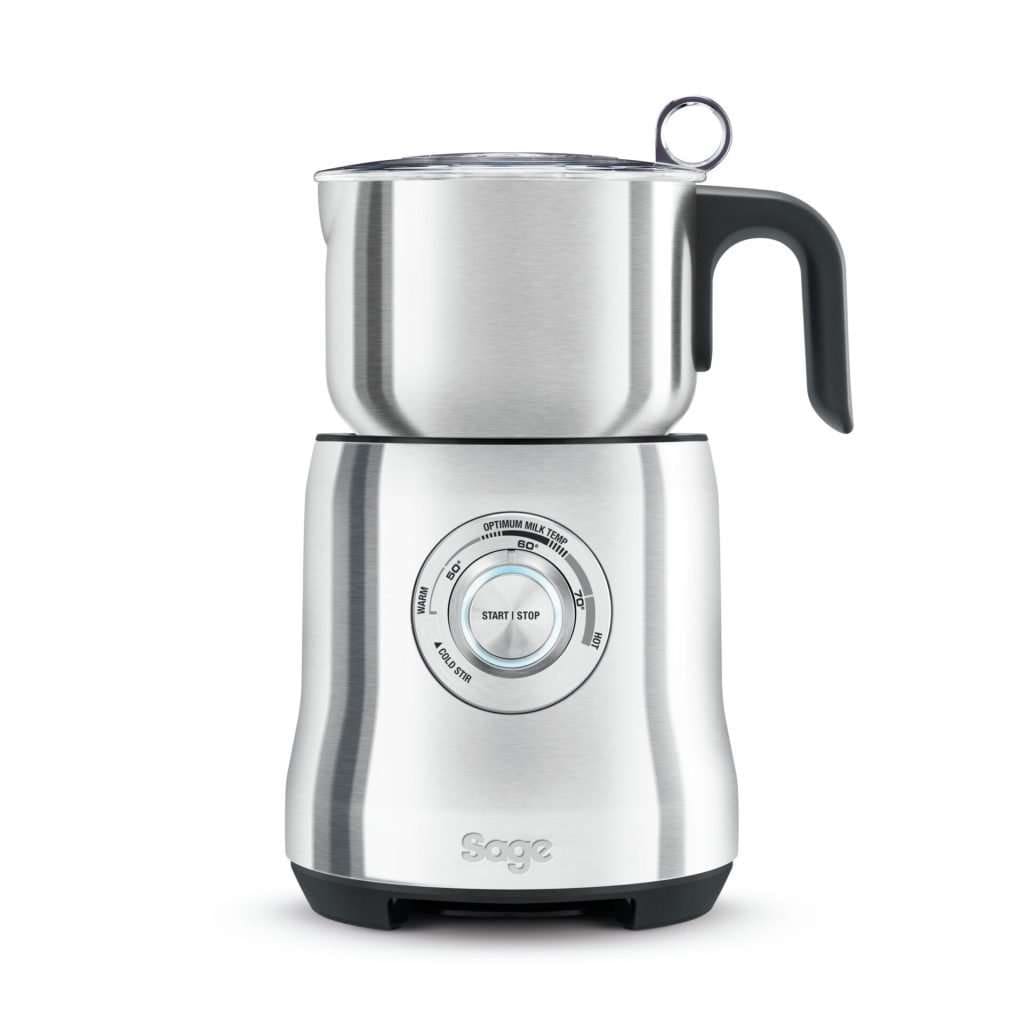
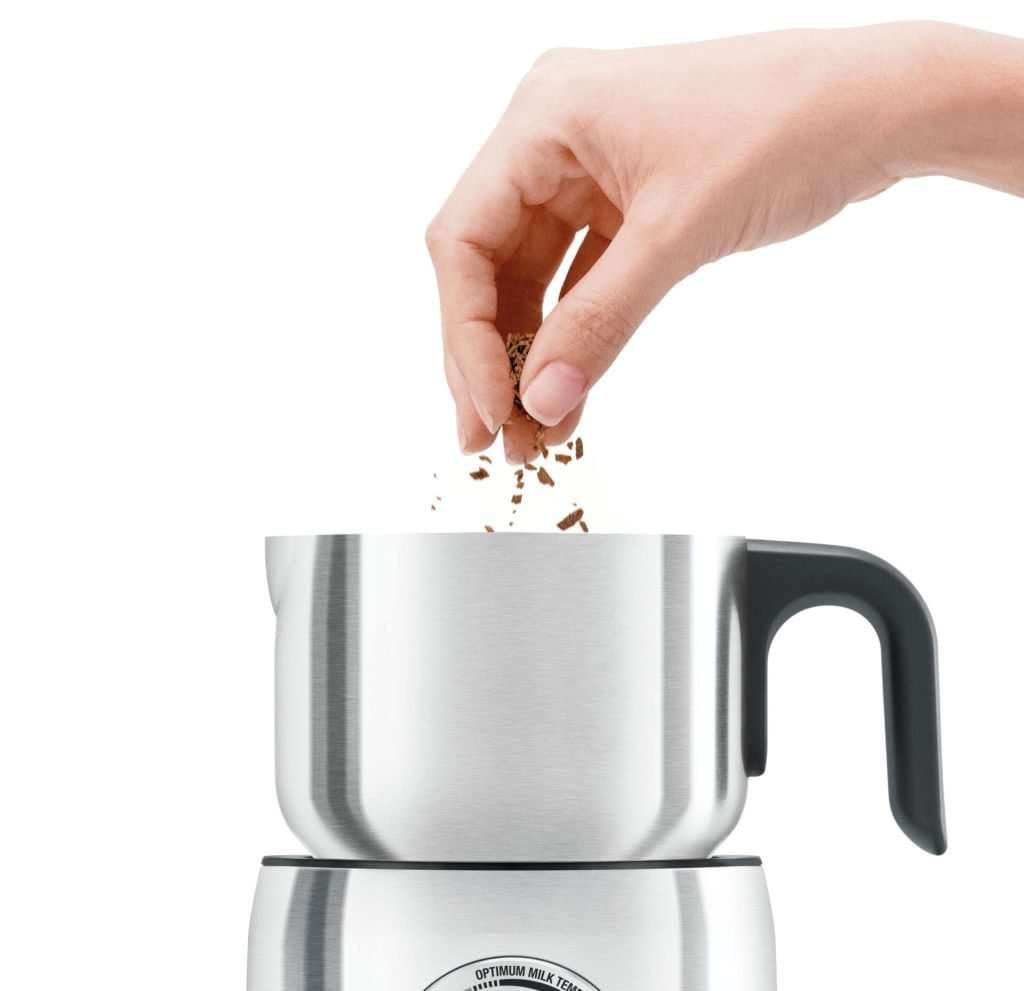

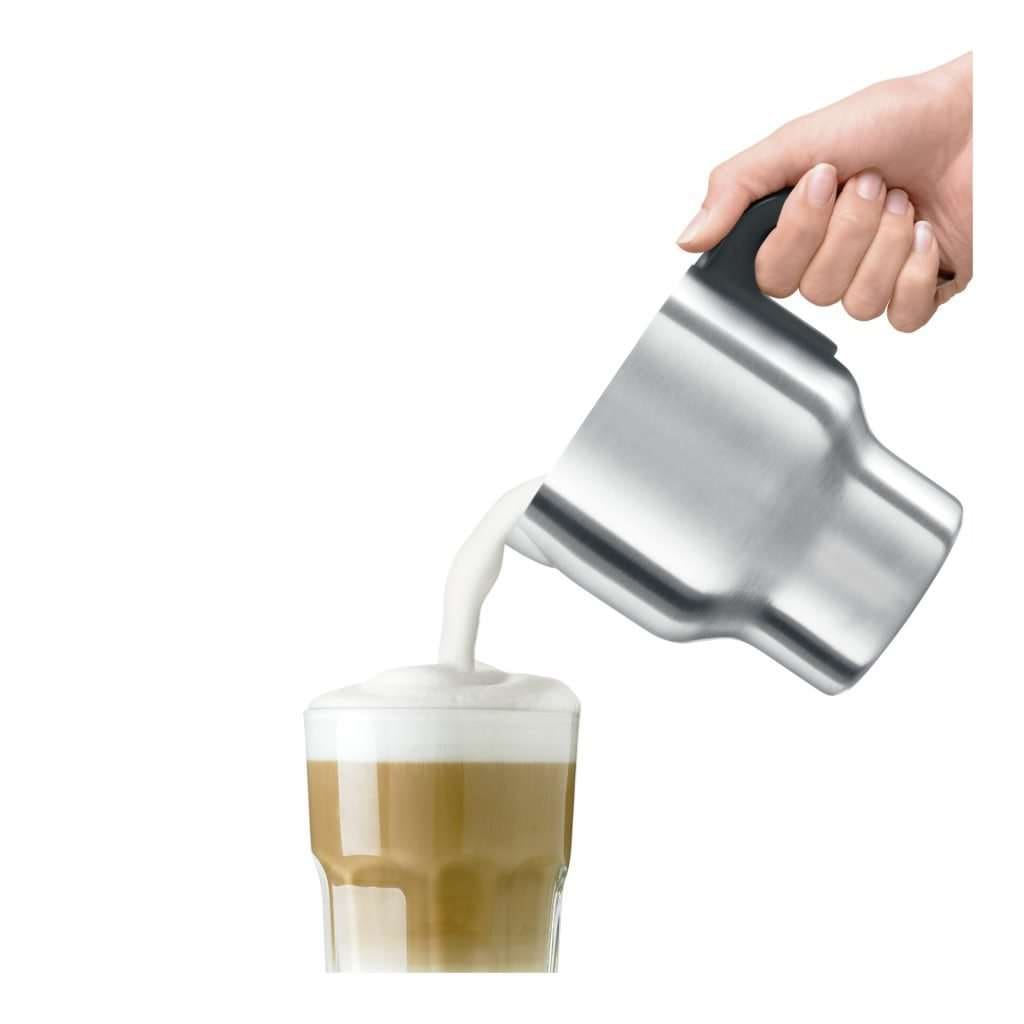
Wil je thuis net zulke lekkere cappuccino’s, latte macchiato’s of andere warme melkdranken maken zoals in je favoriete koffiebar? Dan mag de melkopschuimer The Milk Café van Sage niet ontbreken in jouw keuken.
Belangrijkste kenmerken:
Among milk-based coffees, the cappuccino is by far the most popular. The total volume of a cappuccino is approximately 150 milliliters, with a ratio of one-third espresso, one-third milk, and one-third milk foam. To make a cappuccino, pour a shot of espresso (some coffee shops use a double shot by default) into a cup with a maximum capacity of 180 milliliters, and then froth the milk or plant-based beverage. The trick is to stretch the milk just a little longer than you would for a cortado, latte, or flat white, so that you have some milk foam left over. Then swirl the milk well and pour it close to the espresso. The milk foam on a cappuccino is about 1–1.5 centimeters thick.
The flat white originated in Australia and New Zealand, spread to the United Kingdom and the United States, and can now be found on the menus of specialty coffee shops worldwide. The flat white is essentially a cappuccino, but without the large amount of foam. However, there is no standard recipe for this type of coffee, and you might find it served slightly differently everywhere—with a double espresso as the base, smaller, slightly larger… anything goes. This espresso is mixed with milk that has a texture similar to a latte but contains a slightly thinner layer of microfoam (0.5 centimeters thick).
While a cappuccino consists of equal parts espresso, milk, and milk foam, a latte (caffè latte) contains more milk than coffee. To make a latte, slowly pour the warm milk over the espresso so that it mixes evenly. A latte is served in a cup or glass holding about 200 milliliters and has a layer of milk foam no more than 1 centimeter thick.
The difference between a latte and a latte macchiato lies in the order in which you add the ingredients. With a latte, the milk is poured over the espresso, whereas with a latte macchiato, you first pour the frothed milk into the glass and then let the espresso run “through” it. This immediately creates the famous three layers in the glass.
Curious about the different types of cold coffee? Read about the main differences between iced coffee and cold brew coffee here.



















According to Spencer Hyman, founder of the artisanal chocolate platform Cocoa Runners, we need to learn to eat chocolate differently.

Yerevan is best known for its rich history, but is developing into a surprising destination for specialty coffee. On this city trip to the Armenian capital, you’ll discover hidden roasteries, modern coffee bars, and a traditional tea house.

From higher Fairtrade prices and coffee beans for home use to an exhibition on coffee and colonial history: here's what's happening in September.


