Home » How to Make a Cappuccino Without an Espresso Machine
Premium
How to Make a Cappuccino Without an Espresso Machine
Author: Redactie
Laatst bijgewerkt op: 13/10/2026
A cappuccino consists of a well-brewed espresso and frothed, velvety-smooth milk. Baristas rely on their shiny semi-automatic machines to make it. Is it possible to make a cappuccino just as creamy at home, at work, or while traveling? And if so, what do you need to do that?
The foundation of a cappuccino is the espresso. This concentrated burst of flavor must have a full body, a beautiful crema layer, and a perfect balance between sweetness and acidity. For these reasons, espresso unfortunately cannot be replaced by a strong brewed filter coffee or coffee from a French press. The effect of pressure means that, when making an espresso, very different—and, above all, more—substances are extracted from the coffee. With a strong filter coffee, you’ll end up with a watery coffee with milk. Still, there are ways to make an espresso without a semi-automatic machine, but using freshly ground coffee. These alternatives vary in price, from less than ten euros to a few hundred euros.
Convenient Espresso Makers
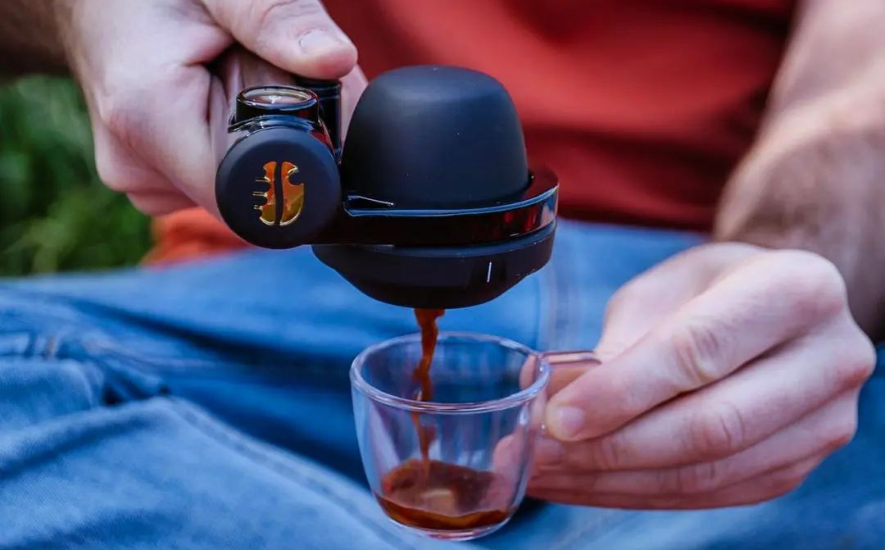
Handpresso lets you make espresso with your favorite freshly ground coffee, ESE pods, and even capsules. There are various models available, operating on 12, 24, or 220 volts—or even cordless. For example, there’s an electric model that regulates water temperature and pressure, as well as a model where you have to add hot water yourself and build up pressure using a hand pump.
With this last method, it’s very important that the water is piping hot. When pouring it into a cold water reservoir, you’ll quickly lose a lot of heat, resulting in a very sour espresso. You can prevent this by using water at 92–96°C. The Wacaco Minipresso works on the same principle.
A second useful option, which works in a similar way, is the ROK Presso, the Flair Espresso Maker, and the most recent invention, the Superkop. With these, you pour hot water over the freshly ground coffee in the filter holder, pull the double lever up, and then back down to press the hot water through the coffee.
Italian-Style Cappuccino
You can always rely on the good old Bialetti moka pot, which many Italians still use to make coffee at home. Alfonso Bialetti invented the moka pot in 1933. The principle is simple.
The moka pot consists of three parts. Cold water goes into the bottom section, coarsely ground coffee goes into the filter, and the coffee eventually ends up in the top section. Bringing the water in the bottom section to a boil on the stove creates excess pressure. The water can then flow through a small tube, passing through the coffee bed, and into the top section.
The result isn’t an espresso, but it is a decent alternative—as long as you use the right coffee (not too lightly roasted), with the right grind size (not too fine), and don’t let the brewing process go too fast.
Frothed Milk
The second component of a cappuccino is milk. With an espresso machine, you froth milk using a steam wand, which produces a powerful jet of steam because the water in the steam boiler is heated to 120–130°C. If frothed correctly, you’ll end up with glossy milk foam with a very fine texture—what’s known as microfoam. If you don’t have an espresso machine with a steam wand, can you achieve the same quality of foam using, say, a whisk? No. You’ll get foam, but the texture will always remain too coarse (no matter how long you whisk) to blend properly with the milk and espresso.
The secret to a delicious cappuccino lies in the uniform blend of espresso, milk, and foam. By combining these three elements, you get not only great flavor but also a wonderfully smooth and velvety mouthfeel. Fortunately, there are several ways to make good foam without an espresso machine.
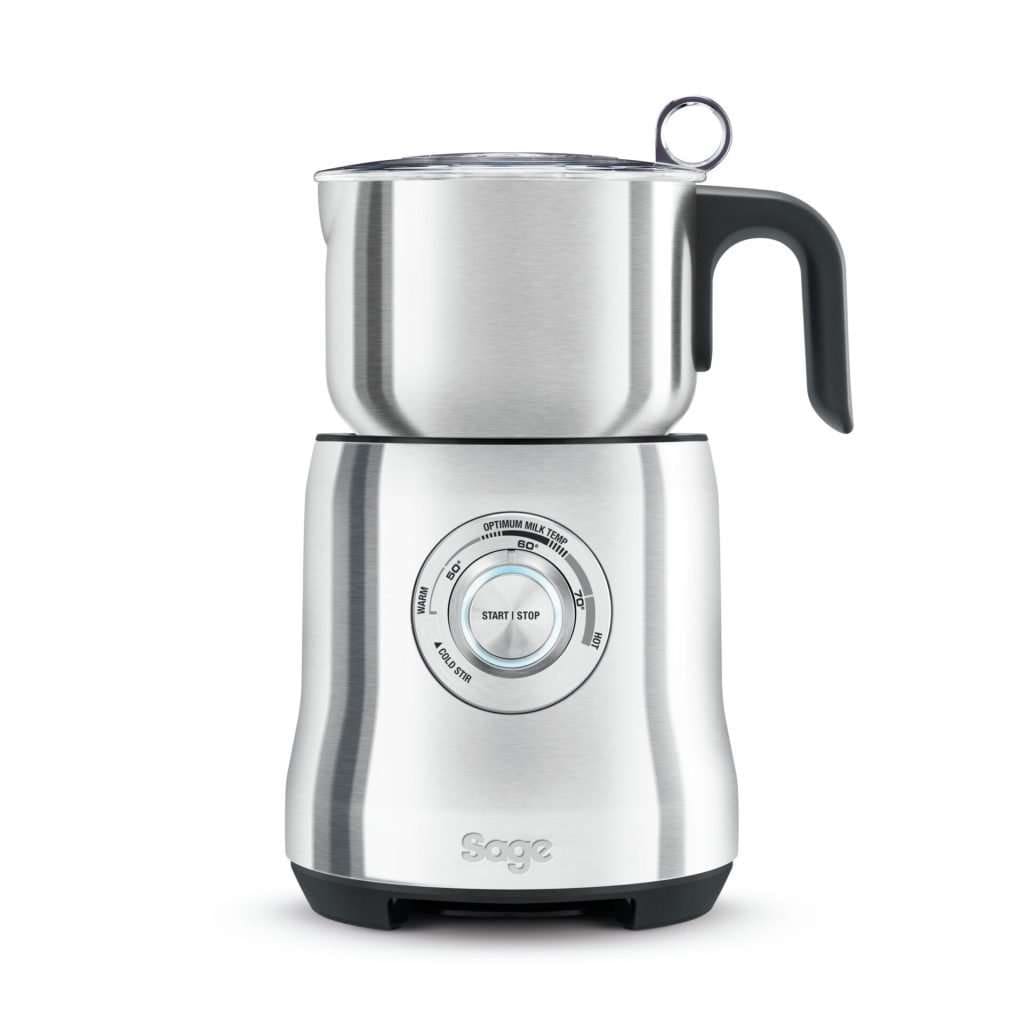
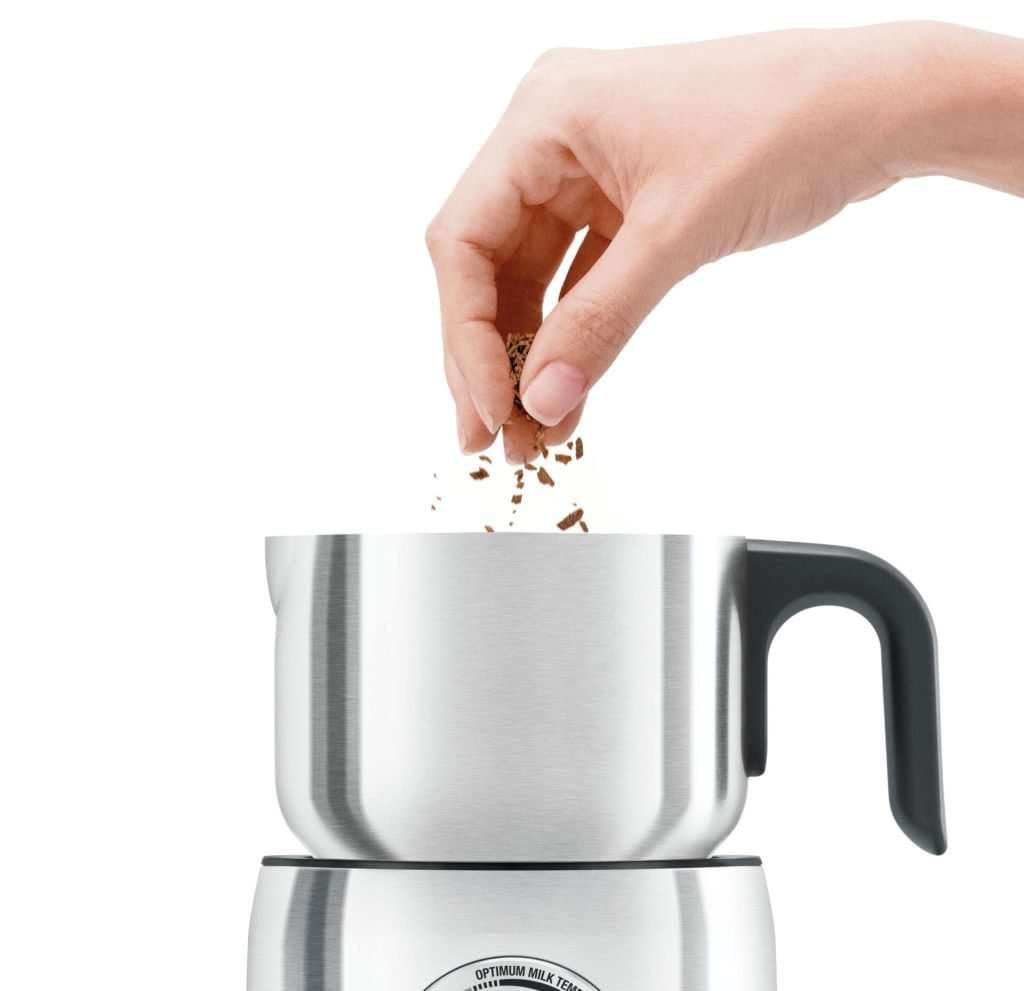
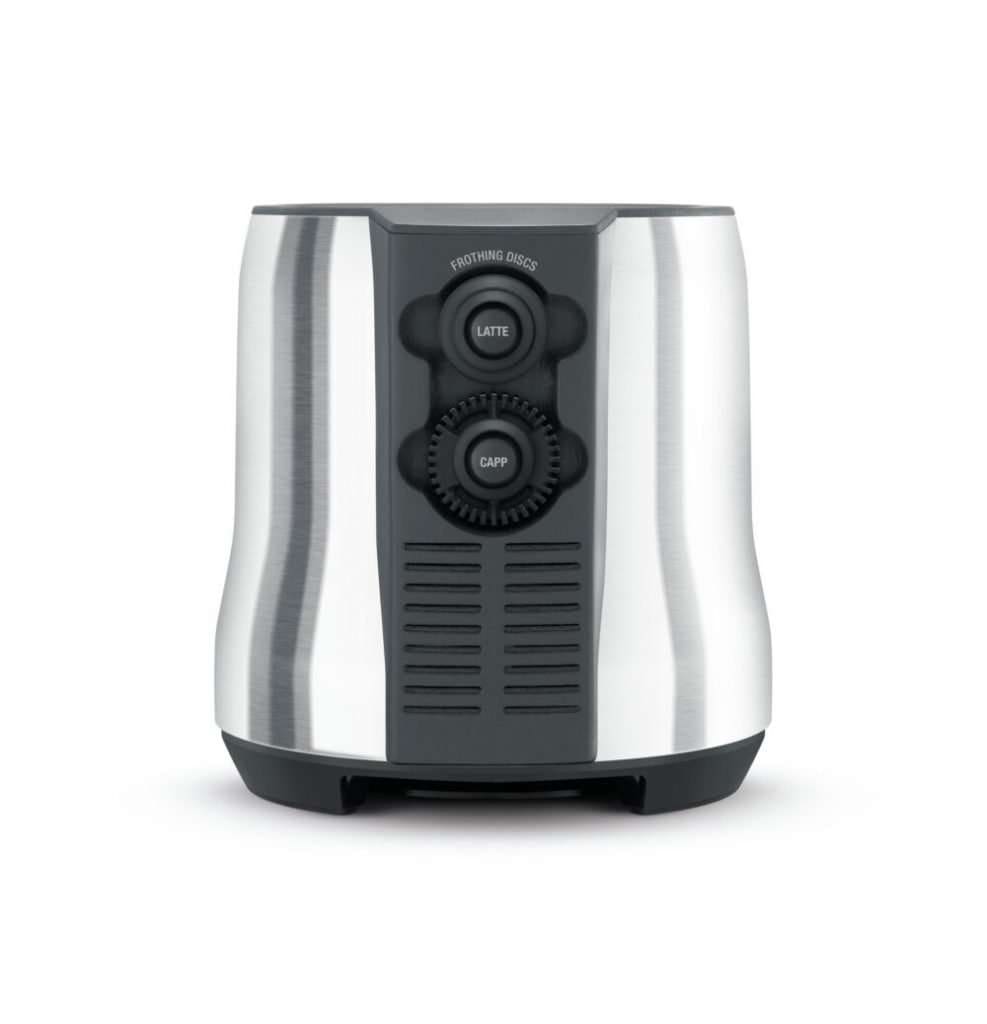
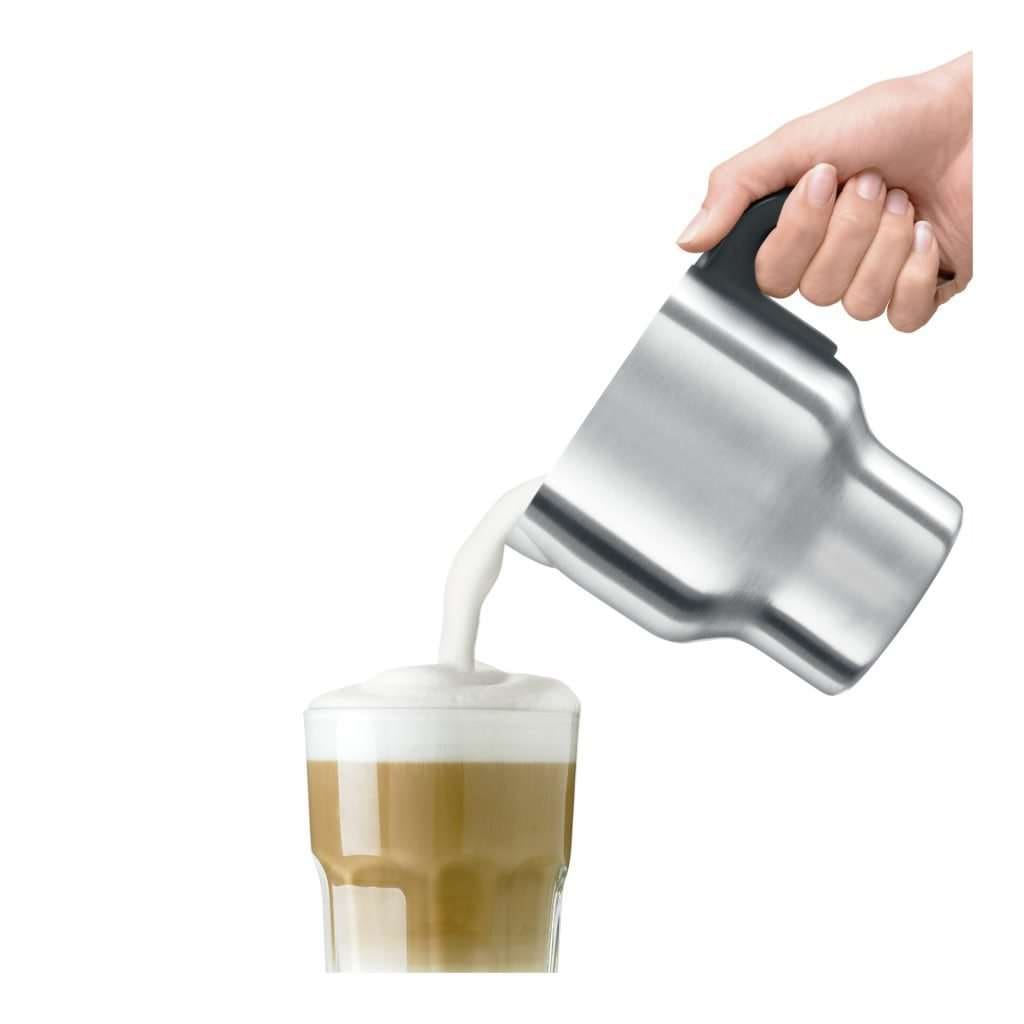
Wil je thuis net zulke lekkere cappuccino’s, latte macchiato’s of andere warme melkdranken maken zoals in je favoriete koffiebar? Dan mag de melkopschuimer The Milk Café van Sage niet ontbreken in jouw keuken.
Belangrijkste kenmerken:
Gelijkmatige warmteverdeling door inductieverwarming
Automatisch uitschakelen bij gewenste temperatuur
Vaatwasserbestendig
Maatbekerdop voor extra toevoegingen tijdens mixen
Maakt tot drie kopjes opgestoomde melk
Looking for a milk frother for home use? Check out the Milk Café milk frother from Sage.
The simplest one, on the other hand, might just be the Nespresso Aeroccino. This milk frother does two things at once. It heats the milk to the right temperature and, using a small spiral at the bottom, creates beautiful microfoam. It’s essential, though, to pour the frothed milk directly into a milk pitcher.
If you froth the milk right away, you can even use it to make latte art. Waiting too long causes the milk and foam to separate, so you end up pouring the milk from beneath the foam. The foam then remains in the pitcher. Brands like Philips and Inventum make similar appliances.
Making Cappuccino Without Electricity
If you don’t have electricity, there are other ways to make nice milk foam. For example, you can buy a milk frother at Hema or Blokker for a few euros. They look (suspiciously) a lot like a French press: a glass cylinder containing a fitted strainer that you can move up and down using a handle. This creates fine milk foam.
For best results, pour boiled milk at about 65°C into the cylinder. Move the strainer up and down until a good amount of foam forms. Be careful not to let the milk get too hot, though. This will cause the proteins to break down, resulting in an unpleasant smell and taste.
Finally, there are the small manual milk frothers: a battery-powered spiral attached to a handle. By holding the spiral against the surface of the milk, you create a layer of foam. The big advantage of this device is that you can also froth cold milk, for example, for an iced cappuccino or latte.
Want to learn more? Join koffieTcacao and get access to exclusive articles, interviews, and tips on specialty coffee, tea, and cacao. That way, you’ll always stay up to date on trends, gear, and events.
Yerevan is best known for its rich history, but is developing into a surprising destination for specialty coffee. On this city trip to the Armenian capital, you’ll discover hidden roasteries, modern coffee bars, and a traditional tea house.