


Laatst bijgewerkt op: 13/10/2026
V60, AeroPress, and Chemex: three beloved filter coffee brewing methods used by every professional. With this filter coffee guide in hand, you’ll never skip a step at home again and you’ll learn how to brew the most delicious slow coffee. Want a sneak peek? It’s all in the wrist!
More than a decade ago, the Japanese company Hario designed the V60, which takes its name from the 60-degree angle of the V-shape of the conical dripper. There’s a large opening in the center, allowing you, as a barista, to influence the flavor by adjusting the speed of the water flow. The V60 has ribs on the inside that allow the coffee to expand and let oxygen escape.
Other brands have since adopted the Hario V60’s design principle, such as the Kalita Wave and the Origami Drippers. Just as there are various coffee drippers made from different materials, there are many different recipes for the V60. Every coffee calls for a different recipe. So go ahead and experiment—after all, tastes vary!
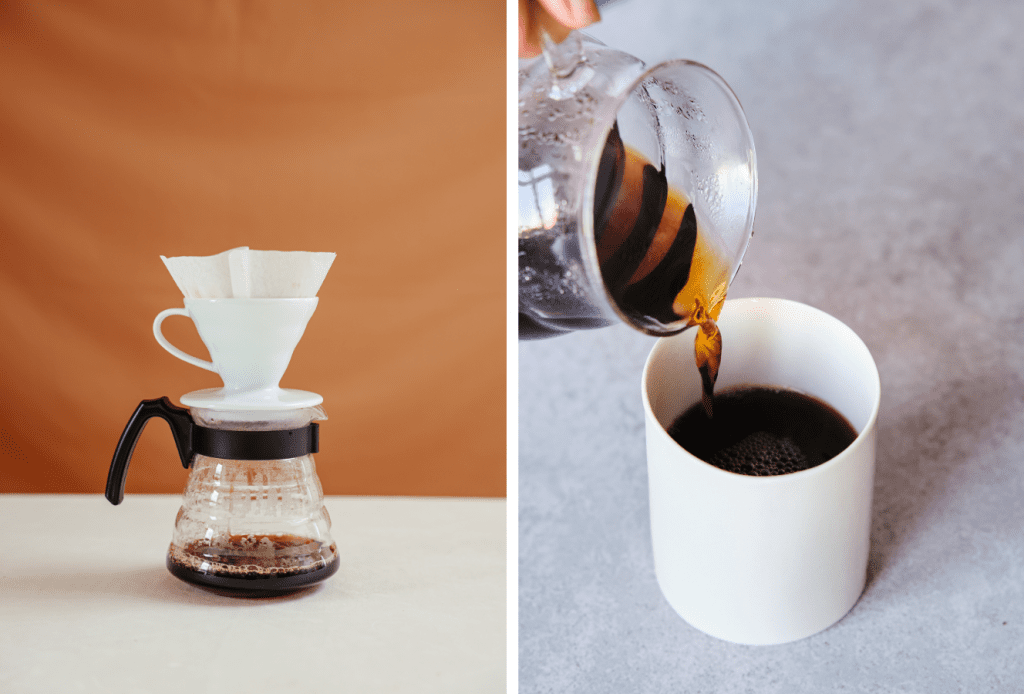
• coffee
• V60
• V60 filters
• water
• glass carafe, porcelain serving pitcher
1. Rinse the filter with hot water to remove the paper taste. Discard this water.
2. Place the glass carafe or other serving pitcher with the V6o and filter on top of it on the scale and set it to zero.
3. Add 25 grams of freshly ground filter coffee for 2 people and reset the scale to zero. A good rule of thumb is 50 to 65 grams of coffee per liter of water. However, deviating from this can lead to interesting results.
4. Add 50 to 60 milliliters of hot water at 92–98 °C before the blooms. The lower the temperature, the fewer aromas are extracted from the coffee, but the coffee will also taste less bitter. So if you want to bring out fruity notes in your coffee, experiment with a water temperature between 89–92 °C. Blooming allows the carbon dioxide in the coffee to escape. During blooming, you pour approximately twice the amount of water compared to the amount of coffee. This is because one gram of coffee absorbs two milliliters of water.
5. After about 30 seconds, pour the coffee again in a circular motion. Over the course of about 1.45 minutes, pour another 400 milliliters of water evenly over the coffee. Stop pouring when the total weight on the scale reaches 460 milliliters.
The AeroPress is a simple, easy-to-use method that lets you brew fresh filter coffee or espresso in no time. The AeroPress Original and AeroPress Go are all-in-one “immersion-style” coffee makers. Unlike the French Press, finely to medium-ground coffee is steeped in the “AeroPress chamber” for a short time. The pressure created as the plunger is pushed down through the chamber results in a flavorful, sediment-free coffee thanks to the paper microfilter.
The AeroPress is so popular that world championships are held annually. In the Netherlands, Keen Coffee organizes the Dutch AeroPress Championship.
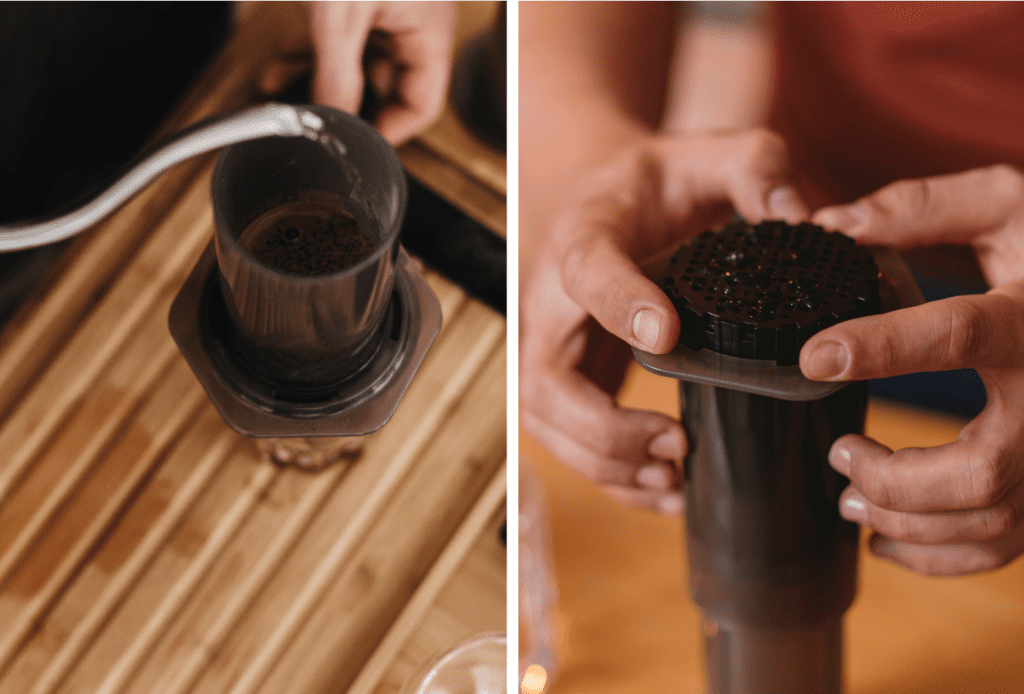
• coffee
• AeroPress
• AeroPress filters
• water
• drinking cup
1. Bring water to a boil until it reaches the desired temperature.
2. Place the filter in the black filter holder and moisten it with a little warm water.
3. Place the plunger in the AeroPress up to the 4 mark.
4. Place the AeroPress upside down on the scale.
5. Grind 12–18 grams of coffee and add it to the AeroPress. The grind size should be between that used for a filter and a French press. The finer the grind, the more extraction you’ll get, but the greater the risk of bitterness.
6. Gently pour 30 milliliters of water at about 80 °C over the ground coffee and start timing as soon as the water touches the coffee. Let it sit for 30 seconds blooms Then pour in another 170 milliliters of water.
7. Ten seconds for hot coffee and 60 seconds for cold brew; stir gently so that all the coffee comes into contact with the water.
8. Screw the filter holder onto the AeroPress.
9. When the time (about 2 minutes) has elapsed, flip the whole thing over and place the AeroPress with the filter side down on the preheated coffee mug. Gently push the plunger down; this should take about 50 seconds. Continue pushing until you hear a hissing sound.
This iconic coffee maker was invented in 1941 by German chemist Peter Schlumbohm to brew the perfect cup of slow coffee. Since you add the water yourself, you have control over the amount of water and the brewing time. The original Chemex is made of borosilicate glass, which means it doesn’t impart any flavor, and features a distinctive “wooden collar and tie” handle. At the factory in Massachusetts, the team still inspects, polishes, and ties each coffee maker by hand, and cuts each filter. The accompanying Chemex bonded filters are made of special paper that blocks unwanted oils, bitterness, acidity, and sediment.
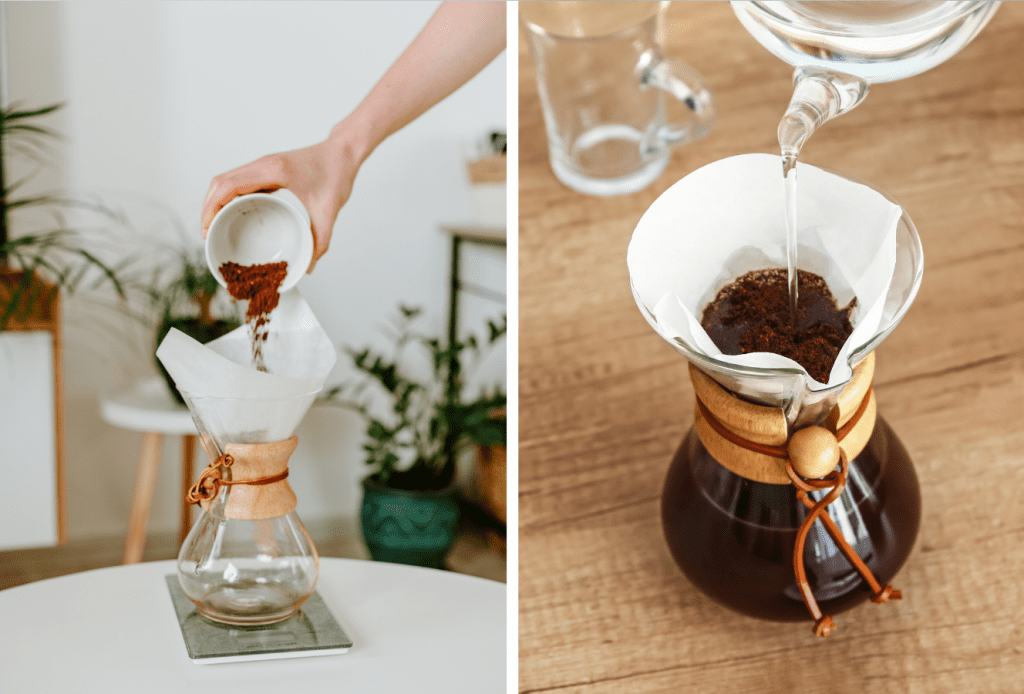
• coffee
• Chemex
• Chemex bonded filters
• water
• drinking glasses
1. Place the filter in the Chemex, then pour a generous amount of boiled water over the filter to remove any paper taste. Pour this water away and place the Chemex on a scale.
2. Weigh out the correct amount of coffee beans. Between 15 and 18 grams for one cup, 30 to 34 grams for two, and 50 to 55 grams for three. Coarsely grind the coffee beans using a manual or electric grinder and add them to the Chemex. Then reset the scale to zero.
3. Pour off some of the water to let the coffee blooms. For one cup, that’s about 30 milliliters; for two cups, 60 milliliters; and for three cups, 100 milliliters. The same applies to the Chemex: you determine the water temperature based on the flavors you want to bring out in the coffee. Water at a temperature between 92–98 °C is a good starting point.
4. Pour the rest of the water—180 milliliters for one cup, 390 milliliters for two cups, and 500 milliliters for three cups—over the coffee in a circular motion.



















According to Spencer Hyman, founder of the artisanal chocolate platform Cocoa Runners, we need to learn to eat chocolate differently.

Yerevan is best known for its rich history, but is developing into a surprising destination for specialty coffee. On this city trip to the Armenian capital, you’ll discover hidden roasteries, modern coffee bars, and a traditional tea house.

From higher Fairtrade prices and coffee beans for home use to an exhibition on coffee and colonial history: here's what's happening in September.


