

Gepubliceerd op: 03/02/2023
During the communist era, Georgia had a thriving tea industry, which supplied 95% of all tea to the Soviet Union. In fact, in 1899, it even won the gold medal at the Paris World’s Fair. At its peak in 1985, 70,000 hectares of Georgia were covered with tea plantations, which produced 150,000 metric tons of tea per year. The collapse of the Soviet Union in late 1991 marked the end of profitable tea production. Hundreds of tea plantations were abandoned, as were the massive factories scattered throughout western Georgia. The most successful tea farmers left for Turkey to share their knowledge there.
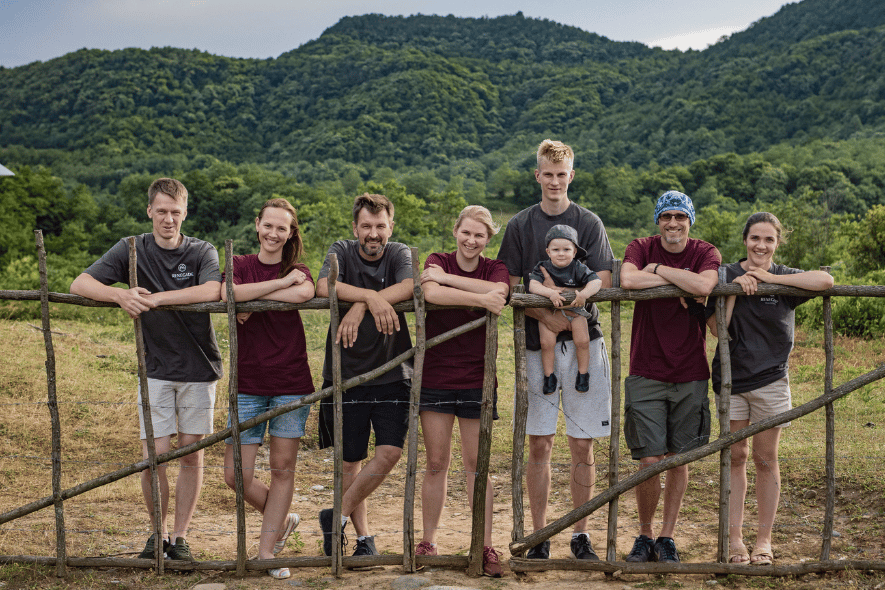
Nevertheless, there are still tea plantations in full operation in Georgia. Such as the 17.5-hectare Renegade Tea Estate, the even more idyllic Mandikori Estate, and the latest addition, the Rioni Estate with its own tea factory. The three tea plantations near one of Europe’s oldest cities, Kutaisi, were taken over by the Renegade Tea Farmers: Hannes Saarpuu, Kristiina Mehik, Priit Lavits, Miina Saak, and Tomas Kaziliunas. When the five, from Estonia and Lithuania, discovered the abandoned tea bushes scattered across the hills of western Georgia, they traded their ties for rubber boots.
“Georgia has excellent conditions for growing high-quality organic tea,” Hannes explains. “Thanks to the warm summers and cool winters, there’s no need to protect the bushes from diseases and pests with pesticides or other chemicals.” Tea lovers around the world were delighted by this, as evidenced by the massive support the Renegades’ international crowdfunding campaign received. The names of the most prominent supporters are inscribed on wooden nameplates. They stand firmly upright among the large wild tea bushes on the mountainside.
Want to visit the Renegade Tea Farmers yourself?
The Renegade Tea Estate plantations are located in the hills of the Caucasus, about a 20-minute drive from the city of Kutaisi. You can visit the plantations from April through September. The Renegades offer tours during the season, during which you’ll be given a guided tour of the plantations and the tea factory. Learn all about the history of tea in Georgia, see how it’s made, and get a glimpse of what life is like in Georgia. Reservations can be made via the website: renegadetea.com.
When you think of Scotland, you think of countless castles, perpetual fog, lochs, whiskey, and… tea? That last thought probably isn’t the first thing that comes to mind, and that’s not surprising. The conditions in Scotland aren’t ideal. Nevertheless, the country is home to dozens of female tea farmers who, with their fledgling initiatives and young tea plants, produce modest quantities of tea.
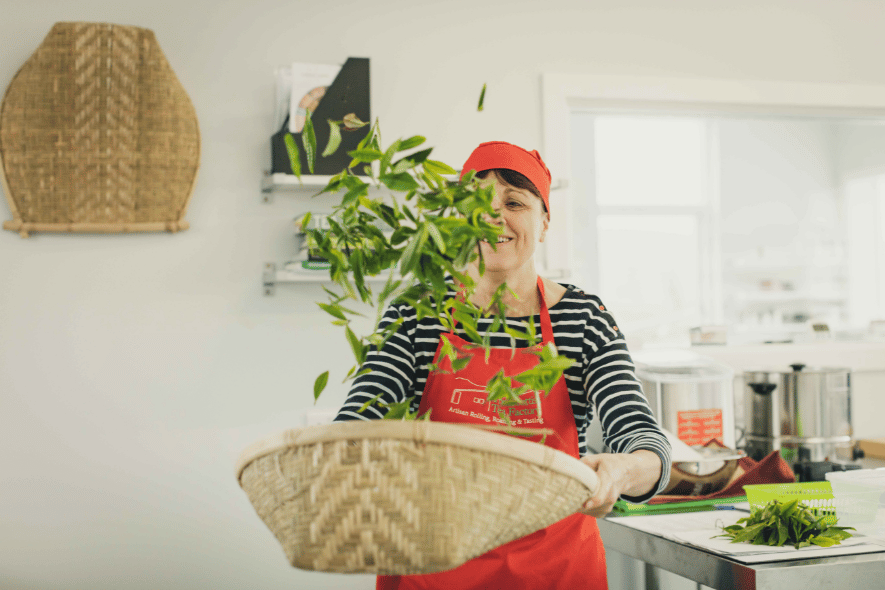
Some of these female tea farmers joined together to form the Tea Gardens of Scotland, with the goal of creating a unique Scottish tea. They grow tea plants on a small scale from home. “Although there are many growers, most of them have only a limited number of tea plants. It’s a cottage industry. So you won’t see tons of tea coming out of Scotland,” says Beverly Wainwright, the group’s guide. For that reason, Scottish tea will always be produced on a small scale and must therefore be of high quality to be profitable. Beverly: “So what we need to do is create unique, high-quality teas that highlight the flavor profile of the Scottish hills, soil, and climate.”
One of these teas comes from the walled tea garden of group member Susie Walker-Munro, whose tea adventure began in 2007. The walls surrounding the Kinnettles Tea Garden keep out the cold, creating a microclimate that is ideal for tea. In 2015, her first tea hit the market: “Our first tea came from cuttings that we had initially planted outdoors, but Scotland gets quite cold during the winter months. The cuttings weren’t hardy enough to withstand that. So in 2010, we moved everything into polytunnels, where they were protected and thrived much better.”
Want to visit the Kinnettles Tea Garden yourself?
Kinnettles Tea Garden is located in the hills of Angus, about an hour and a half’s drive from Edinburgh. The best time to visit the farm is from April through September. During a tea tour of the tea garden, you’ll see the different ways tea is grown, how it’s picked and rolled, and learn about the Tea Gardens of Scotland project. You can book guided tours through the website: teagardensofscotland.co.uk.
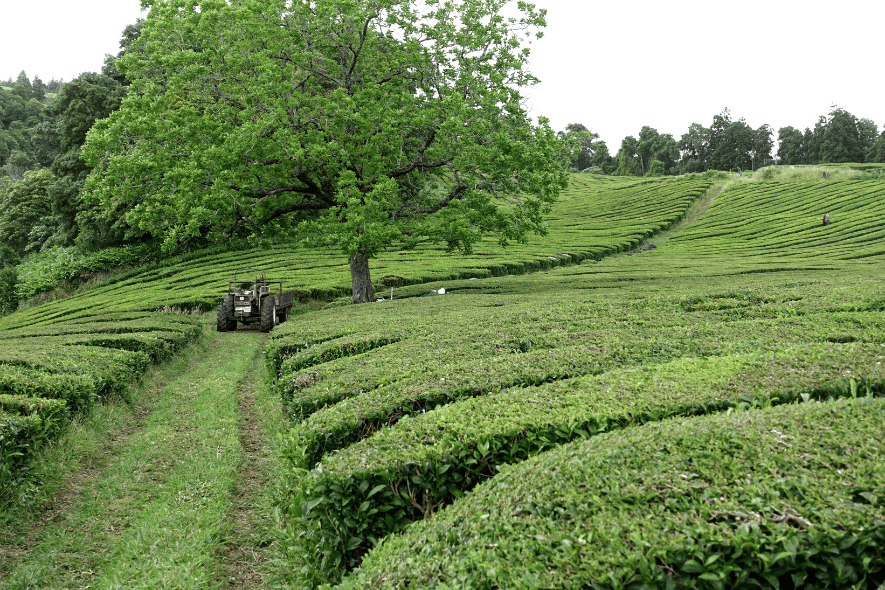
In the middle of the Atlantic Ocean, about 1,500 kilometers from the Portuguese mainland, lies São Miguel, the largest of the nine volcanic islands that together make up the Azores. At Europe’s oldest tea plantation, Chá Gorreana, tea has been produced continuously for over 130 years. The tea thrives on the fertile volcanic soil in this mild climate. Each year, the plantation—run by sisters Madalena and Sara Mota—produces 40 metric tons of black and green tea, as well as small quantities of oolong and white tea. All of it is organic, as the island’s isolated location means it is naturally free of tea diseases and harmful insects.
The story of Chá Gorreana sounds like a gripping play. “São Miguel had always thrived on its prosperous orange industry, but citrus disease changed all that in the mid-nineteenth century,” Madalena explains. “So my great-great-grandmother decided to plant tea using seeds from Brazil and opened the factory in 1883.”
The most significant innovation came 40 years later when Madalena’s great-grandfather built a hydroelectric power plant to power the new British machines. When tea imported from the Portuguese colonies suddenly became a cheaper alternative and an energy shortage also arose, the hydroelectric plant proved to be Chá Gorreana’s salvation. To this day, the Chá Gorreana factory is still partially powered by hydroelectric energy.
Want to visit Chá Gorreana yourself?
Gorreana is located on the north coast of the island of São Miguel, about a half-hour drive from the capital, Ponta Delgada. The best time to visit is from April through October. Although work continues year-round at the plantation, you’re welcome to visit daily to stroll freely among the tea fields and through the factory. In the boutique, you can sample a cup of freshly picked tea for free. You don’t need to make a reservation, but if you’d like a guided tour, please contact us.
It was the Chinese who first came up with the idea of making a beverage from tea leaves. It was the Dutch who, in 1610, from their outpost in Java, were the first to begin importing tea to Europe. Four hundred years later, in a small village in Brabant, Linda Rampen founded Het Zuyderblad —the first tea plantation on Dutch soil.
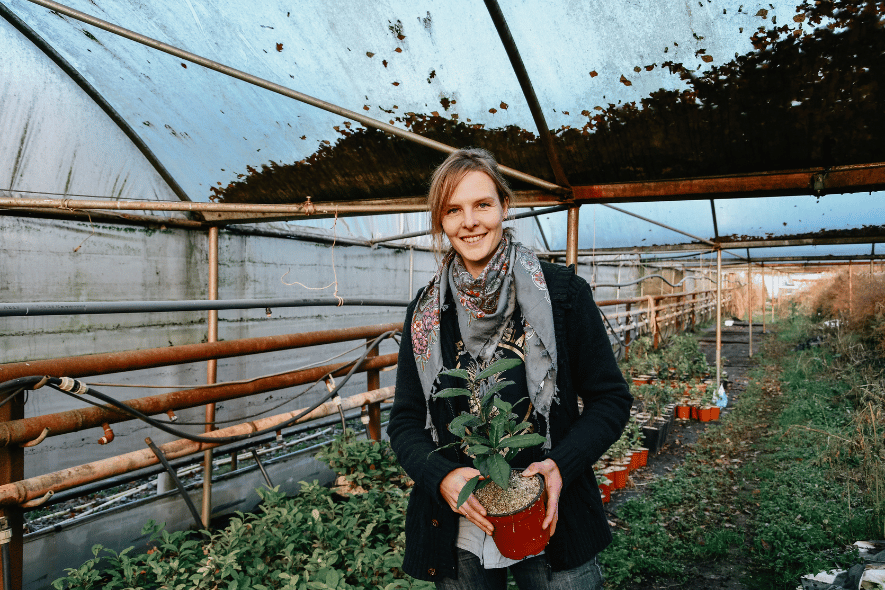
She certainly had an affinity for tea, but knowledge? “No,” says Linda, “I didn’t even know if tea could grow in the Netherlands at all, but at my parents’ farm I had the space, the soil, and the barns. It met my requirements.” She brought the first plants to the Netherlands and planted them in the ground. In the years that followed, more plants were added, all of the Camellia sinensis sinensis variety. There are now thousands of tea plants in the ground, spread across three tea gardens. Linda has planted a hedge around the tea gardens. It’s a natural, wide row of native trees and shrubs that provides welcome biodiversity and attracts all kinds of birds.
The Netherlands is not, of course, a traditional tea-growing country, so we are still figuring out which tea varieties thrive and grow best in the Dutch climate. For that reason, Het Zuyderland has a full-fledged “nursery”: a test garden where young plants of various varieties are cultivated.
Want to visit the Zuyderblad in person?
Het Zuyderblad is located in Soerendonk, a village in the municipality of Cranendonck in North Brabant. In the Netherlands, the tea season begins in April and ends in September. Throughout the year, Het Zuyderblad organizes tea tastings and high teas that include a guided tour of the tea garden. During peak season, Linda also offers dinners and workshops. You can find all the information on the website of Het Zuyderblad.
Curious about tea plantations outside of Europe? In her book *Tea Routes*, Deirdre takes you on a journey to the most beautiful tea-growing regions in the world.



















According to Spencer Hyman, founder of the artisanal chocolate platform Cocoa Runners, we need to learn to eat chocolate differently.

Yerevan is best known for its rich history, but is developing into a surprising destination for specialty coffee. On this city trip to the Armenian capital, you’ll discover hidden roasteries, modern coffee bars, and a traditional tea house.

From higher Fairtrade prices and coffee beans for home use to an exhibition on coffee and colonial history: here's what's happening in September.


