


Laatst bijgewerkt op: 17/06/2026
Cacao can help mitigate biodiversity loss and climate change through our food systems and land use. Studies in Central America show that regenerative agriculture has a positive impact on nature, the environment, the climate, food security, and quality of life. In Costa Rica, sustainability expert Margo Potma saw the effects with her own eyes.
From the Archives
This article previously appeared in the paper KTC, but we think it’s too good to let sit in that archive. Every now and then we browse through the 55 editions and pull out the best gems not previously published online.
The need to reconcile agricultural production with nature conservation is growing by the day. Conventional agriculture is responsible for 85 percent of global deforestation and accounts for a quarter of greenhouse gas emissions (Reuters, 2021). Due to the growing global population and economic growth, the demand for food production is also increasing, with all kinds of negative consequences for the climate.
As a result of climate change and associated extreme weather events such as droughts, hurricanes, storms, heavy rainfall, and floods, cocoa production is also under pressure, and the plant itself is becoming more vulnerable to disease. But cocoa can also help combat deforestation.
Cacao is a shade-loving crop that thrives best in a humid climate. To secure its future, adapted production methods are needed to make cacao more resilient to changing weather conditions and guarantee farmers a harvest. The use of ground covers, intercrops, crop diversification, and—in particular—agroforestry—an age-old agricultural technique that mimics nature to grow food—can offer a solution.
In Costa Rica, people are experimenting with regenerative agricultural systems to become climate-resilient, with cacao playing a leading role. This South American country is home to nearly 6 percent of the world’s biodiversity. The government is actively working on nature conservation and mitigating the effects of climate change. This has resulted in such strict environmental policies that many small-scale farmers have found themselves in a difficult situation.
On the isolated Osa Peninsula, on the Pacific coast in the southernmost part of Costa Rica, farmers have come together under the name OSACOOP. The cooperative previously supported farmers by providing supplies and equipment for palm oil production. In recent years, OSACOOP has been helping farmers establish regenerative agricultural systems to reduce agricultural risks, partly due to climate change.
Monoculture turns into a vicious cycle of threats to both people and nature
Agriculture has long been an unstable source of income in the region. Due to fluctuating market prices, farmers often switch crops: from cocoa to corn, from beans to rice, and later to palm oil. Growing a single crop (monoculture) increases the risk of pests and soil depletion. As a result, farmers are more likely to turn to pesticides and use them in greater quantities. They try to acquire new fertile land and increase their production to compensate for low market prices.
Monoculture thus becomes a vicious cycle of threats to both people and nature.
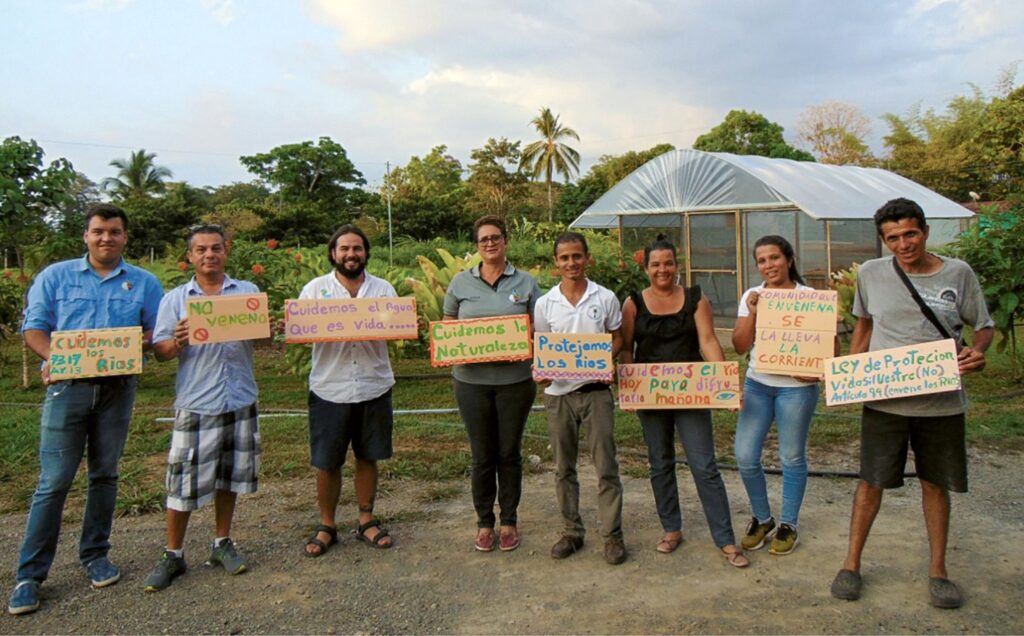
“Costa Ricans are naturally concerned about nature and want to protect it. We must find alternative, climate-friendly production methods; otherwise, we’ll end up living in a region with a lot of biodiversity, but also a lot of poor people,” emphasizes Alexander Solórzano, director of the OSACOOP farmers’ cooperative.
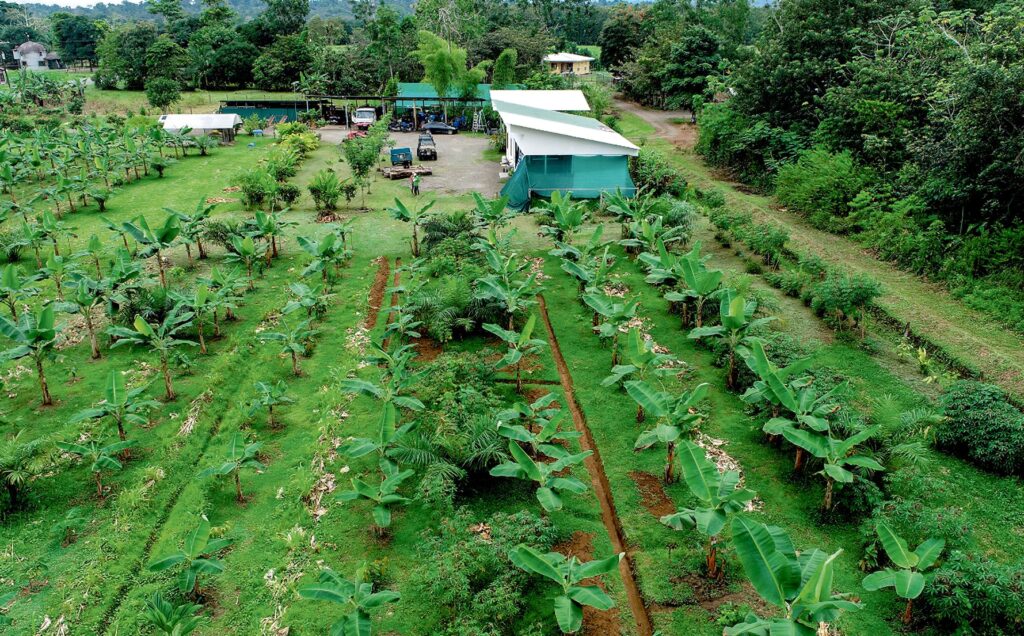
After receiving the necessary training, and with determination and hard work, the farmers of OSACOOP decided to supplement their palm oil fields with woody crops and various fruits and vegetables. Some also added vanilla as a crop, despite the risky harvest, because of its high selling price on the world market. “When the pandemic made access to the market more difficult, farmers even started planting rice and beans, as well as corn for animal feed. As a result, some farmers are now almost entirely self-sufficient,” Alexander adds.
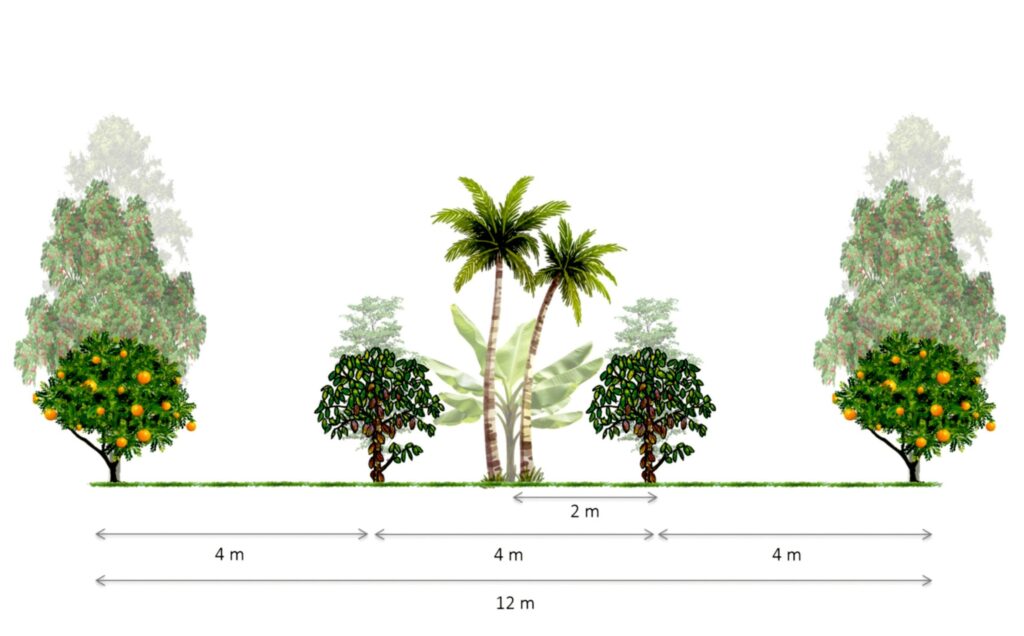
Within this agroforestry system, oil palm and banana plants provide shade for the cacao, while the cacao itself serves various functions within the system. For example, it is a stable source of income that offsets the fluctuations in vanilla production. The cacao fruit also brings in money. Cacao juice, just like cacao butter, is highly sought after in the cosmetic and pharmaceutical industries.
Stanford University conducted research into the effects of this regenerative agriculture. The researchers concluded that this combination yields higher yields—both in terms of quantity and quality—for both palm oil and bananas compared to individual cultivation. This suggests that soil quality has improved and fertility has increased, which also benefits the quality of the cocoa.
Regenerative Agriculture
Regenerative agriculture is the umbrella term for various agricultural systems in which soil conservation is central to contributing to various ecosystem services. Ecosystem services are the benefits that nature provides us, such as food, clean water, biodiversity, and CO2 sequestration. A healthy, living soil is the starting point for this. Soil improvement ensures long-term production, optimizes food quality, and contributes to a healthy ecosystem and, consequently, the climate.
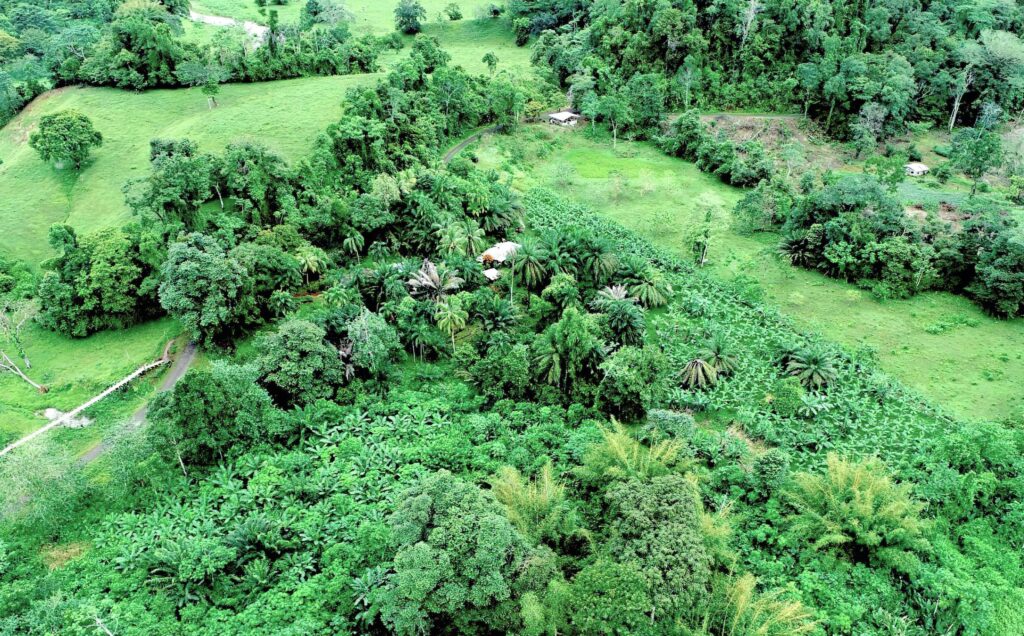
In southern Costa Rica, the indigenous Bribri communities live largely in the primeval forests that stretch from the South Pacific to the Caribbean coast. Like the OSACOOP farmers, the Bribris take a holistic approach to cocoa diversification to build climate resilience. Unlike the farmers, however, this tradition among the Bribris dates back centuries.
“In Bribri culture, there is a strong belief in spreading life across the earth and respecting all that exists. Their god, Sibò, created the earth so that life could exist and evolve. Destruction is therefore a threat to everything that exists, but also to themselves,” explains Natalia López Espinoza, a Peruvian journalist. While in Costa Rica, she is delving into ancient cultures and their knowledge of nature.
The Bribris do not plow the land and do not use agricultural chemicals
In a typical agroforestry model, crops are distributed across various levels to protect the ecosystem and the soil. This involves a combination of trees at the upper levels, fruit trees in the middle, and tubers, vegetables, and grains close to the ground. The Bribris take it a step further. For example, they do not plow the soil and do not use agricultural chemicals. They allow dead plant matter to decompose, so that it returns to the earth.
Cacao has a special meaning. “The Bribri believe that the cacao tree was once a woman who was transformed by Sibö̀. That is why branches from the cacao tree are never used as firewood, and only women are allowed to prepare and serve the sacred drink,” says Natalia. There are several Bribri women’s associations that produce organic, handmade chocolate, which helps them make a living.
Although the positive effects of regenerative agricultural systems —both for farmers and for nature—are evident even beyond the cocoa sector, there are still a few obstacles standing in the way of large-scale implementation. Currently, the investment required to make farming more sustainable exceeds the price farmers receive for their products. This is because seedlings are expensive, making it too costly for many farmers to set up such systems—especially when there is no market demand for agroforestry products.
Furthermore, agroforestry systems are complex; each product requires a different market. Who will bear the investment costs? Should the cocoa importer also invest in setting up banana production? Or should importers start collaborating? What if consumers are unwilling to pay a premium for these products? Various industry conferences have shown that many private-sector players are still reluctant to take this risk.
Agro…what?
Agroforestry is an example of a regenerative agricultural system in which farmers combine trees and shrubs with annual crops and/or livestock on the same plot of land. Agroforestry provides ecological, social, and economic benefits. This combination of crops can enhance biodiversity and soil fertility and make the system more resilient to climate change.
It is clear that more incentives are needed if the private sector is to invest in agroforestry systems and if consumers are to purchase sustainable products. Governments have an important role to play in bearing the initial risks when establishing new agricultural systems. New technologies can help demonstrate the impact on the ground and increase transparency and traceability in the (cocoa) supply chain. For example, satellites can accurately map deforestation and reforestation and measure CO2 sequestration. This can create economic incentives for emissions credits on the CO2 market and compensate farmers for CO2 sequestration.
In addition, it is possible to digitize all players in the supply chain, allowing consumers to know exactly where the product they are buying comes from, how and by whom it was produced, and what prices were paid for it.
Only through strong collaboration among all stakeholders in the supply chain can we transform cocoa supply chains into sustainable, transparent, and fair practices. And only then can we continue to enjoy chocolate in the future!
About the Author
Margo Potma is an expert in sustainable and innovative agri-food chains. She lived on the Osa Peninsula, where she worked with the OSACOOP farmers’ cooperative. A few years ago, she visited the Yorkin Bribris to promote the exchange of knowledge.















Arabica, Robusta, Bourbon, Gesha, or SL28: the plant names on a coffee bag reveal something about the variety, flavor, and origin.

Is a lot of foam a sign of good matcha? Not necessarily.

This bright green tea powder comes from a remote mountain community in China and is perfect for tea and (iced) matcha lattes.


