


Laatst bijgewerkt op: 15/07/2026
Fully automatic machines are not a replacement for an espresso machine. They’re an option—for convenience, speed, and consistency, without having to delve into extractions, grind size, or milk texture. With that in mind, you should also consider the Philips Cafe Aromis with LatteGo Pro 8000 series. And that’s exactly how we tested this machine.
This isn’t a machine for the hobby barista. It’s a machine for someone who wants to enjoy good coffee at home, with as little hassle as possible, but with control and guidance.
The Cafe Aromis 8000 series looks like a step up toward the higher-end segment. Clean lines, a combination of plastic and stainless steel accents, and a finish that’s clearly a step above entry-level models. The drip tray has a stainless steel cover, and even the brew group is finished with a walnut top—a detail that clearly aims to evoke that “barista feel.”
It’s still a fully automatic machine, so plastic is the dominant material, but it never feels cheap. It’s more functional, with a touch of luxury.
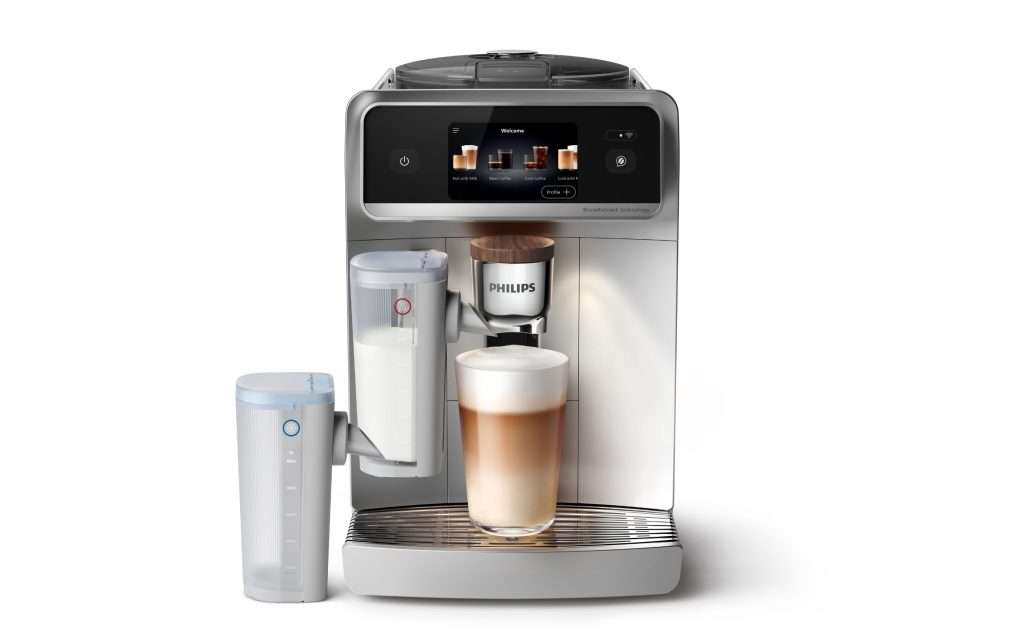
The touchscreen is one of this machine’s strongest features. It’s clear, fast, and intuitive. You can navigate effortlessly through the various drink options and settings.
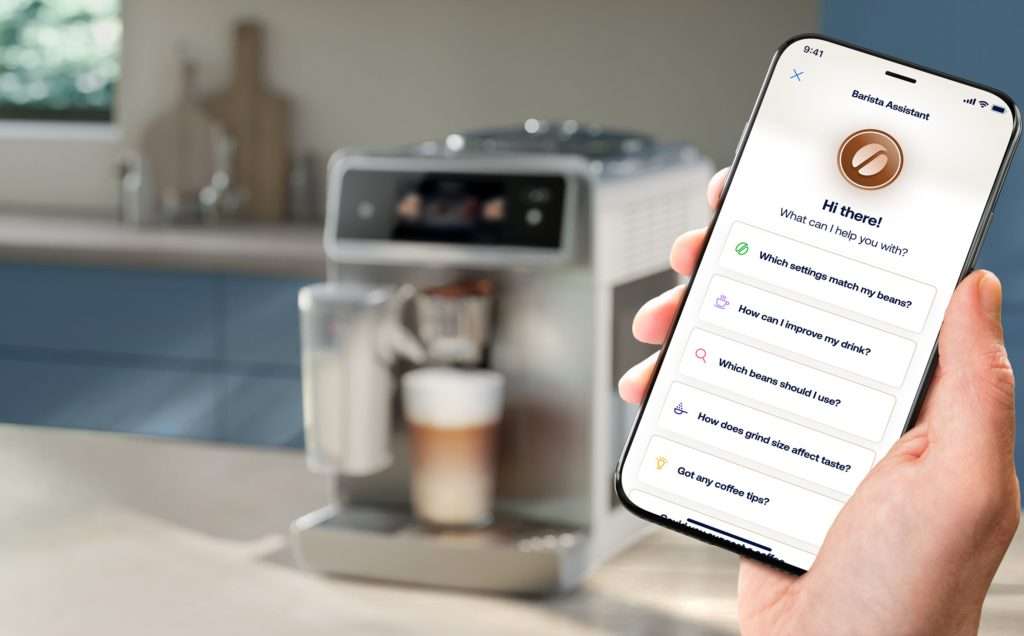
It also features app integration, including a form of “barista support.” You can specify which beans you’re using, and the machine will then make suggestions to optimize the settings. This is especially helpful for beginners. It significantly lowers the learning curve and helps you achieve a better cup of coffee faster, without trial and error.
Working with profiles is also well-designed. By default, there are categories such as:
That sounds logical, and it is in practice, too.
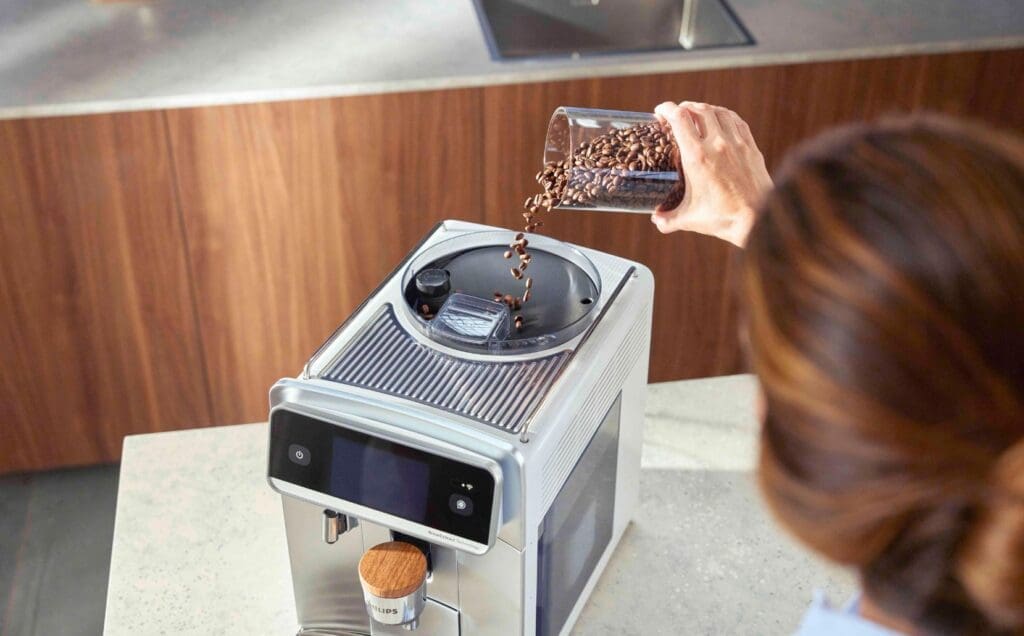
The variety of beverage options is impressive: from ristretto to lungo, from americano to red eye, and even drip-style options. You can customize many aspects, such as strength, temperature, and volume.
But this is also where one of this machine’s biggest weaknesses comes in: the settings don’t always match what actually ends up in your cup.
Here’s an example:
The same goes for milk. If you ask for 120 ml, you’ll get about 80 ml.
For a beginner, this is confusing. For an advanced user, it’s frustrating. It means you have to learn to “adjust by feel” instead of relying on the numbers, and it’s difficult to get a drink with the right proportions out of the machine.
The LatteGo method is all about convenience. No hoses, easy to clean, and quick to use.
But the result is clearly different from what you get from a steam nozzle. The foam is coarser—more like bath foam than microfoam. That means:
Interestingly, you can actually improve the result. If you pour the milk foam into a small pitcher first and “swirl” it briefly, the texture will already improve. If you then pour it over the coffee yourself, you’ll get a much better result.
Still, you can’t help but feel that with a machine in this price range, you shouldn’t need a workaround.
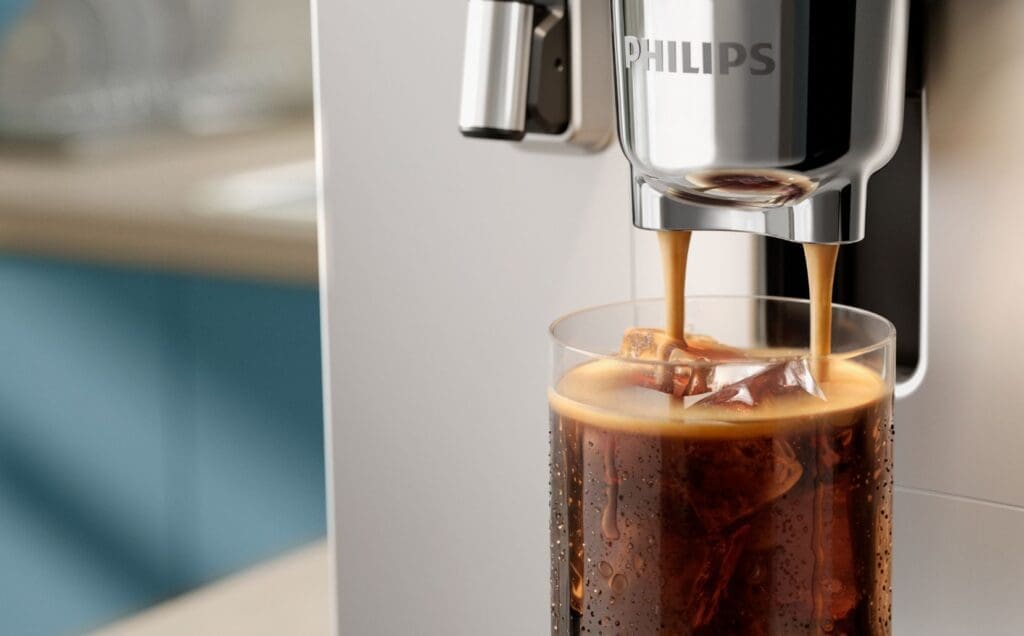
The “iced coffee” feature is actually pretty basic. The machine heats the milk just a little less than usual and combines it with hot coffee. If you add ice yourself, you get an iced coffee.
It works, but don’t expect a real cold brew or sophisticated cold extraction.
As with virtually all fully automatic machines, the extraction strength is lower than that of a semi-automatic machine. The measured TDS values are around 450, whereas an espresso machine can easily reach double that.
Simply put, that means fewer dissolved coffee compounds, and therefore a less intense flavor.
But in the context of a fully automatic machine, the quality is good. The coffee is consistent and clean. With a light-roast coffee, you even get a pleasant hint of acidity in your cup when using the finest grind setting.
And for the target audience—people looking for convenience—that’s exactly what you want.
This is where the machine really shines.
The brewing unit is easily accessible from the side and easy to rinse. The app includes clear videos that show you what to do step by step. Everything is designed to make maintenance as easy as possible.
And that’s important, because a clean machine directly affects both taste and lifespan. Philips seems to understand this better than many of its competitors.
The Philips Cafe Aromis with LatteGo Pro 8000 series is a smart, user-friendly fully automatic coffee machine that excels in guidance, ease of use, and maintenance.
At the same time, there are clear concessions:
But those are exactly the compromises you make when you choose a fully automatic machine.
Who is this machine for?
Who isn’t it for?
This is a machine for great coffee every day, with as little hassle as possible.









Coffee and tea experts share seasonal recipes and practical ideas for restaurant menus. The workshops take place at a pick-your-own garden in Stoutenburg.

These classic madeleines from The Art of Baking by Hidde de Brabander combine a soft texture with a rich buttery taste.

In this article, we debunk 10 persistent fables and myths about coffee. From caffeine to Kaldi and from oil to dehydration. What is really true, and what is mostly a persistent misconception?


