


Laatst bijgewerkt op: 13/10/2026
People drink lots of cappuccinos and lattes not only at coffee shops but also at home. That’s why more and more households have a milk frother on their countertop. Which frother deserves a spot in your kitchen? koffieTcacao found out in this milk frother test.
Due to the growing popularity of cappuccino, latte macchiato, and café latte, more and more people are experimenting at home with milk, whisks, hand mixers, and electric milk frothers. We teamed up with barista, roaster, and winner of Coffee Masters London 2019 Rob Clarijs.
But what exactly is “perfect” milk foam? “Good milk foam has a very fine texture—what’s known as microfoam, ” Rob explains. “These are tiny bubbles in the milk that you can’t see with the naked eye. Microfoam creates a beautiful glossy layer, blends well with the coffee, and is therefore perfect for pouring intricate designs. If too much air is blown into the milk, or if the milk gets too hot, the milk foam becomes lumpy and thick.”
The best way to create microfoam is with steam. Baristas often rely on an espresso machine with a steam wand for this. We’re curious to see if you can achieve a similar result at home using an electric milk frother.
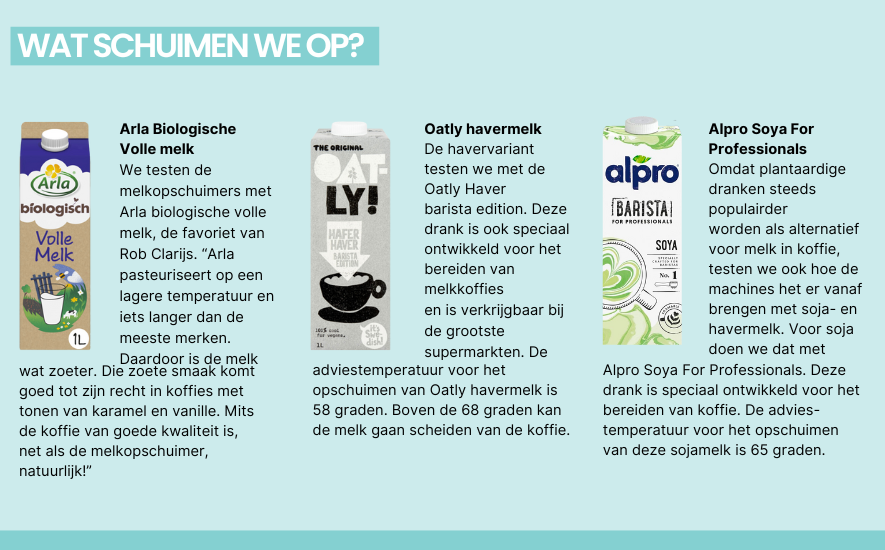
In this test, we’re reviewing the milk frothers from Philips, Jura, Inventum, Bialetti, Nespresso, illy, Hema, WMF and Bodum under the microscope. For each milk frother, the recommended maximum milk capacity. For each machine, we test the frothing time, texture, temperature, and taste of the frothed milk, as well as the ability to pour it into shapes. We also assess whether the machine is easy to clean. We rate these criteria on a scale of 1 to 5. We provide further details on some of these criteria.
Texture and Latte Art
In our test, we rated the texture and the ability to create designs separately, but these two factors are, of course, closely related. To create designs effectively, the texture of the milk is crucial. Good milk foam texture consists of microfoam.
Poor-quality milk foam is lumpy and often contains a thick “lump” of milk. Milk frothers rated a 1 therefore produce very thick, lumpy milk with large bubbles, while those rated a 5 produce a beautiful, glossy microfoam. The ability to pour designs is determined not only by the texture of the foam but also by the presence or absence of a spout.
The milk frothers that score on all five points have that kind of spout (and good milk foam); the ones that score a 4 usually do have foam that lets you pour a design, but only if you first pour the milk into a milk pitcher.
Flavor and Temperature
The best milk foam has a neutral flavor. This has a lot to do with the temperature of the milk. When milk gets too hot, the milk sugar caramelizes, creating a cloying taste. Think of that glass of hot milk you might have drunk before bed when you were a kid.
According to Rob, the best temperature for milk foam is 65°C. “In any case, the temperature shouldn’t exceed 70°C; otherwise, the milk gets too hot and the taste suffers.” In our opinion, milk frothers that score a 2 or 3 for “taste” are too milky; a 4 indicates a fairly neutral taste but still with a hint of milkiness; and a 5 means the taste is neutral and good.
A few things stand out when it comes to electric milk frothers. After frothing, all machines leave a layer of thickened milk that you first have to stir out. “The texture of the milk is very different from when you froth milk with steam. The foam seems to float on top of the milk rather than blending into it. You notice this when pouring latte art, too. The designs collapse very quickly. Except with Bodum—the milk holds up well with that one,” says Rob. So it’s important to swirl the milk thoroughly after using the milk frother: gently swirl it in circles to remove the thickened layer. With some milk frothers, this leaves behind a nice foam, which you can sometimes even use to create designs.
It’s worth noting that oats and soy generally produce a better foam compared to milk. Soy milk, in particular, performs well, often with a nice texture and a good, neutral flavor. With oats, the texture is often good, but we detect too much umami—or, more specifically, a mushroom-like flavor—in the smell and taste. It’s worth noting that the frothers that use induction (Jura, WMF, and illy) deliver the best results. It therefore seems that induction distributes the heat more evenly, resulting in a more neutral flavor. However, this isn’t reflected in the results for regular milk. Want to use a plant-based alternative in your latte? Then, for most milk frothers, soy milk is the safest choice.
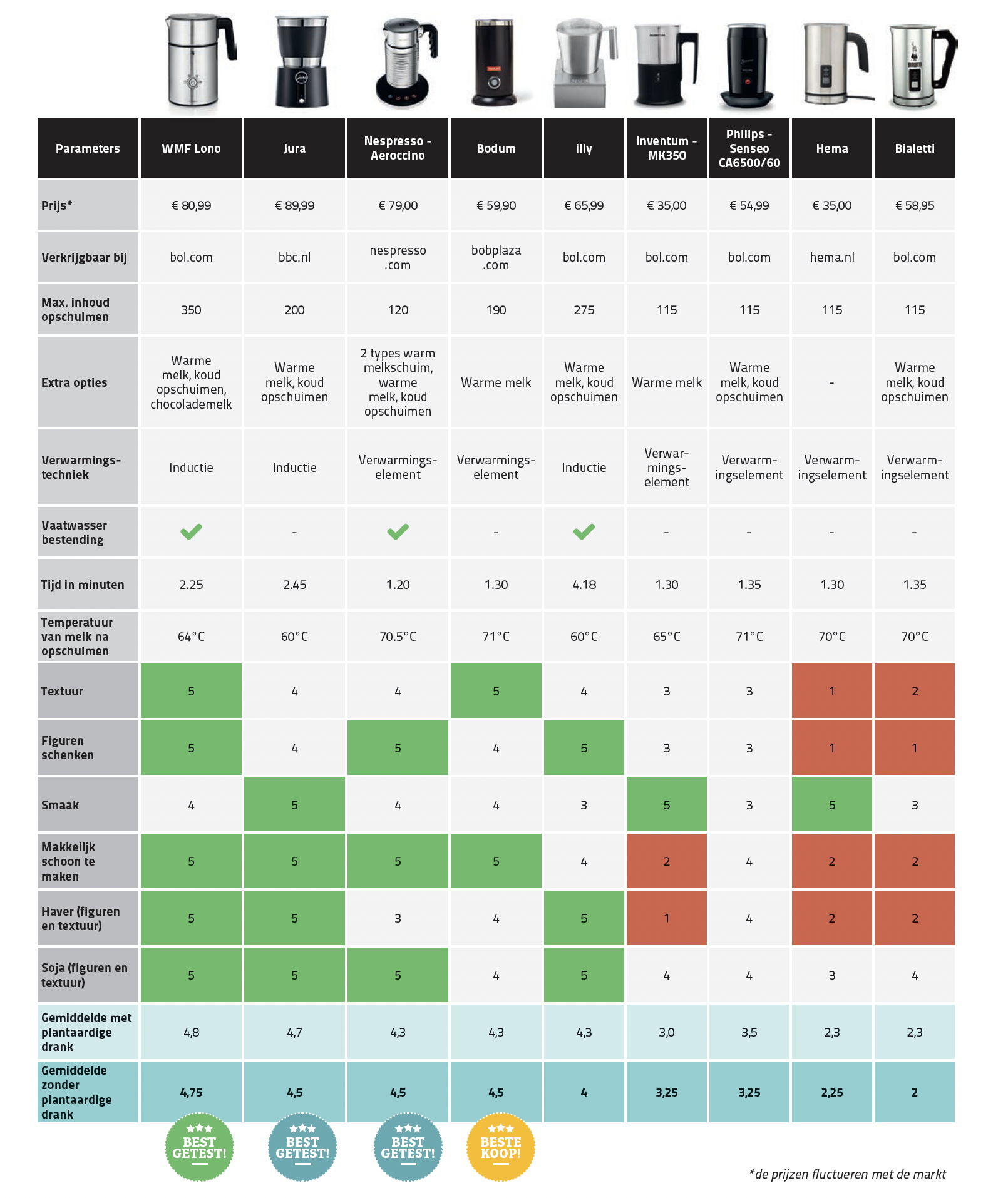
At the bottom of the list are the milk frothers from Bialetti and Hema. The Hema frother produces milk that’s almost milkshake-like—much too thick. The foam collapses very quickly. Still, the milk’s flavor is remarkably neutral. As a result, it scores better than the Bialetti, which comes in last. With this frother, the milk contains a thick “ball” of foam, and a milk residue tends to stick to it during cleaning. This likely means the milk is heated too quickly. It’s not entirely surprising that these two milk frothers both finish at the bottom of the rankings, as they have similar interiors and bases.
The best milk frother test was conducted completely independently in 2020. Through affiliate links in the text, koffieTcacao may receive commissions.



















According to Spencer Hyman, founder of the artisanal chocolate platform Cocoa Runners, we need to learn to eat chocolate differently.

Yerevan is best known for its rich history, but is developing into a surprising destination for specialty coffee. On this city trip to the Armenian capital, you’ll discover hidden roasteries, modern coffee bars, and a traditional tea house.

From higher Fairtrade prices and coffee beans for home use to an exhibition on coffee and colonial history: here's what's happening in September.


