


Laatst bijgewerkt op: 30/07/2026
Houjicha is Japanese green tea, but with a twist: after the usual processing, the tea is roasted. This darkens the leaves, gives the tea in your cup an amber glow, and shifts the aroma from grass and seaweed to roasted nuts, wood, grain, and caramel. At first glance, houjicha hardly looks like green tea anymore. Yet that’s where the story begins.
De uitleg in dit artikel is gebaseerd op de praktijkervaring en het lesmateriaal van Richard Schukkink, oprichter van de International Tea and Coffee Academy.
Whether a tea is green or black depends on oxidation. In black tea, substances in the leaves react with oxygen. That enzymatic process darkens the leaves and changes the flavor. Japanese green tea is usually steamed shortly after picking, which stops that oxidation.
Houjicha starts out as a steamed green tea. Only then are the leaves placed in the roasting drum. Roasting is therefore not oxidation, but a reaction to dry heat. During this process, sugars and amino acids in the leaves react with each other: the Maillard reaction. You’re probably familiar with this from bread crusts, roasted coffee beans, and grilled meat.
In houjicha, that heat produces, among other things, pyrazines—aromatic compounds that can evoke notes of roasted grain, chestnut, popcorn, and caramel. The grassy notes of green tea largely recede into the background. What remains is warmer, drier, and rounder.
How far that goes is up to the producer. A light roast retains some of the green character and can be surprisingly complex. With a dark roast, notes of wood, cocoa, and dark sugar dominate. The line between well-roasted and burnt is very fine. That’s why many Japanese roast masters still rely on their sense of smell: the aroma of the beans changes constantly during roasting and sometimes reveals what’s happening inside the drum more precisely than a thermometer.
Compared to matcha or sencha, houjicha is a relatively new tea. It likely originated in Kyoto in the 1920s. Tea merchants were looking for a good use for material that was too coarse or too bitter for high-quality sencha or gyokuro: large leaves from later harvests, tougher parts of the leaf, and stems.
Once roasted, those leaves suddenly turned out to be much softer. In the heat, the stems developed sweet aromas of nuts and caramel. That’s how a low-value harvest was given a second life.
For a long time, houjicha remained primarily an everyday tea. In Japanese households, simple restaurants, and ryokan—traditional inns—it was served at mealtimes. The tea was also served to children and the elderly, as its flavor is mild and classic houjicha generally contains less caffeine than tea made from young top leaves.
During the years of scarcity around World War II, houjicha became even more important: even inexpensive tea leaves could be made quite drinkable through roasting. Since the 1990s, the landscape has been changing once again. Some Japanese producers are increasingly treating houjicha much as coffee roasters treat their beans, using temperature curves, different roast levels, and sometimes leaves from a single cultivar.
Nowadays, young sencha is also roasted, and even tencha—the shaded leaves normally used for matcha. This type of houjicha can have notes of cocoa, warm milk, and soft caramel, and is popping up in specialty tea bars. The ordinary, everyday houjicha still exists as well, and it is precisely this diversity that makes the category so interesting.
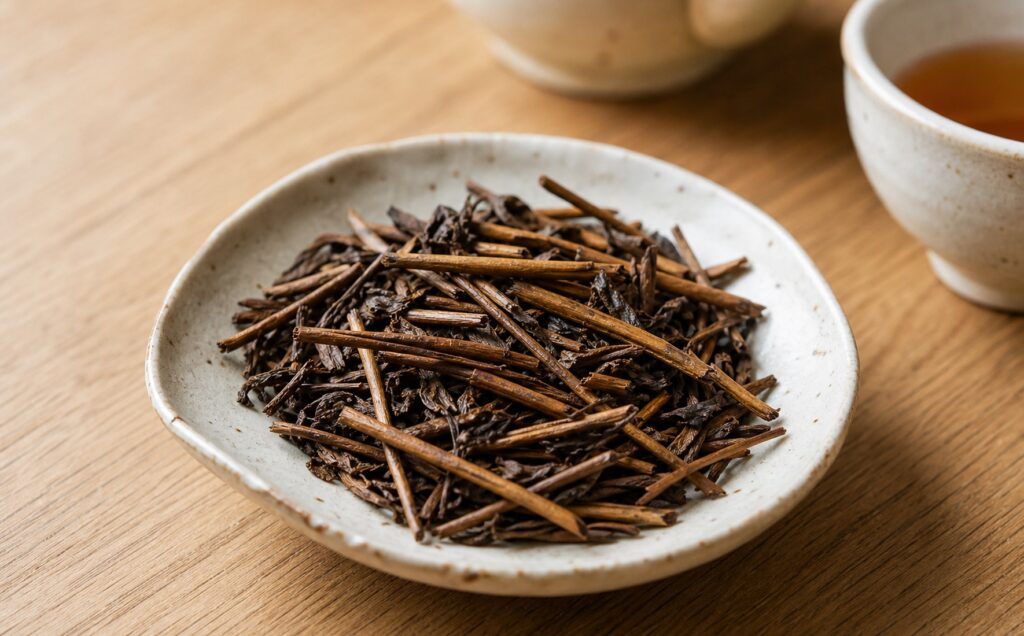
Within the houjicha category, stem teas occupy a unique place. When Japanese tea is sorted, the stems and leaf veins are separated from the leaves. This material is called kuki. Stems contain fewer bitter compounds than leaves and a relatively high amount of carbohydrates. As a result, when roasted, they quickly develop sweet, rounded aromas without becoming harsh or bitter.
In the Ishikawa region, a distinct tradition developed: Kaga boucha. For those who find dark roasts too strong, a houjicha with plenty of stems is often the gentlest way to get acquainted with this style.
Houjicha is often marketed as low in caffeine. That’s true, but there’s more to it than that. Roasting does reduce the caffeine content to some extent, but not as dramatically as some packaging suggests. How much caffeine ends up in your cup depends mainly on the raw material.
Older leaves and stems naturally contain less caffeine than young leaves. A classic houjicha made from bancha or kuki therefore does indeed have a lower caffeine content. A modern houjicha made from young sencha does not necessarily have to be that way.
The fact that houjicha is known in Japan as an evening tea and a tea for children is therefore not only due to its chemical composition, but also to its mild flavor. Furthermore, the amino acid theanine—found in matcha and gyokuro—decreases during roasting because it participates in the Maillard reaction.
Houjicha isn’t very picky when brewed in a teapot, which is a nice quality to have at home. Sencha quickly becomes sharp and astringent when brewed with water that’s too hot, because catechins and amino acids dissolve rapidly under those conditions. With houjicha, many of those compounds have already been altered during the roasting process. As a result, the tea can withstand hot to boiling water without immediately becoming bitter.
In Japan, they often don’t use a thermometer: loose leaves, hot water, a short steeping time. Dark-roasted houjicha actually benefits from boiling water, as this fully releases the roasted aromas. Only with light, more expensive houjicha made from young leaves is it worth being a bit more careful with the amount and using slightly cooler water.
A good start:
A second infusion is often perfectly fine. Just use hot water again and keep the steeping time short.
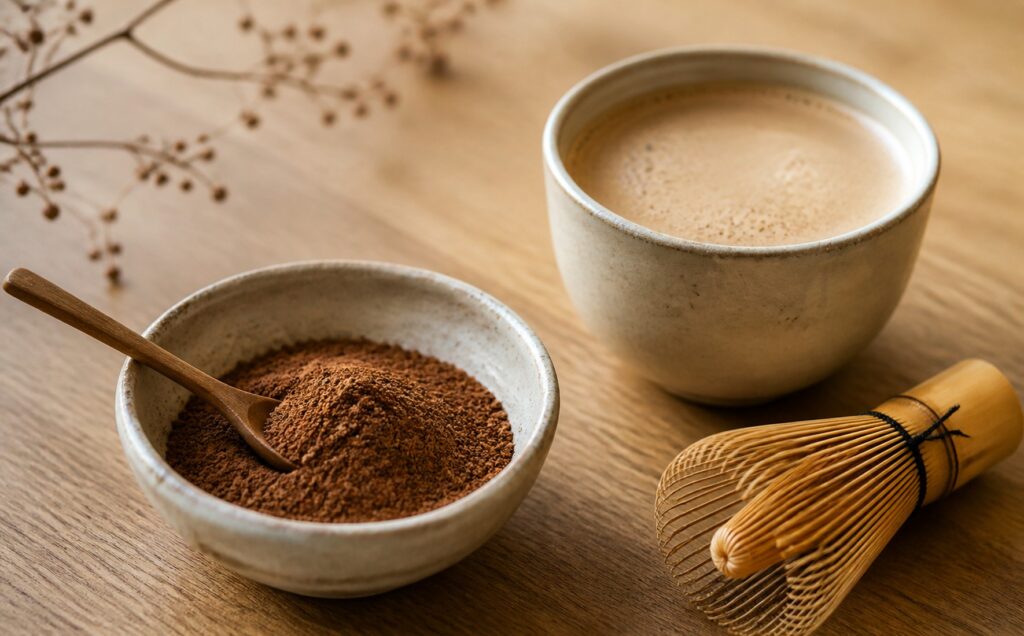
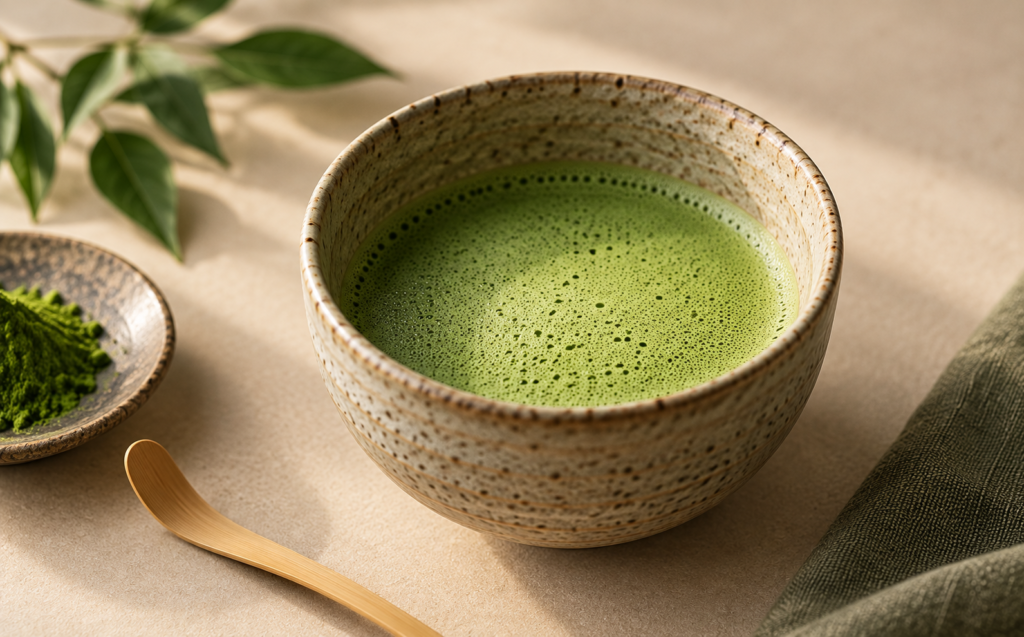
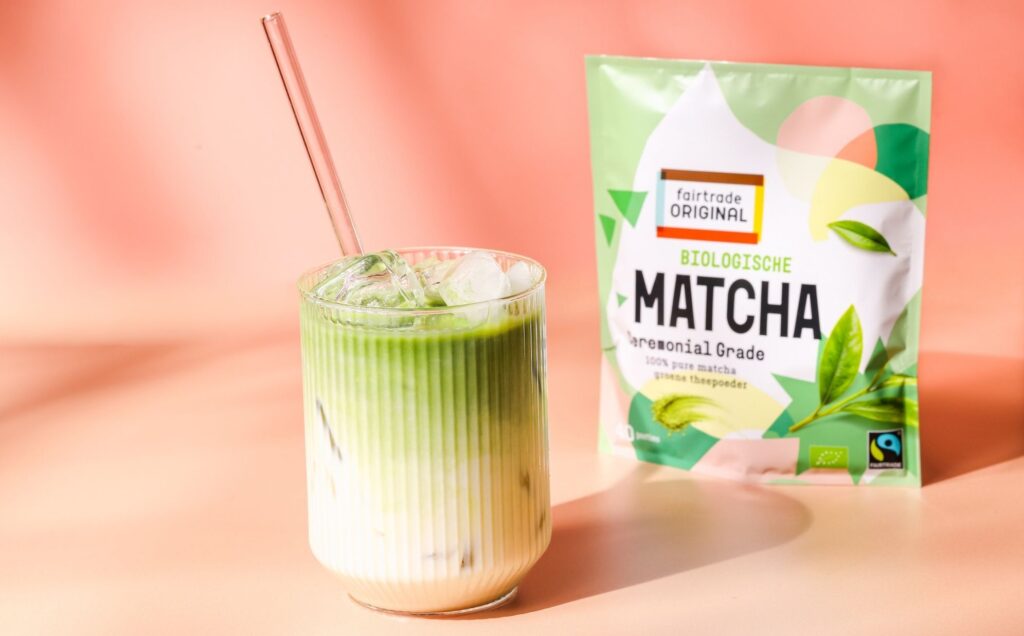
Outside of Japan, many people have come to know houjicha not as loose-leaf tea, but as a latte. To make it, roasted tea is finely ground into a powder. That powder is sometimes called “brown matcha,” but that comparison is flawed.
Matcha is made from specially cultivated, shade-grown leaves from which the veins and stems have been removed. Hojicha powder is made from roasted leaves or roasted stems. The powder doesn’t really dissolve like sugar, but is dispersed in water or milk. For lattes, producers usually use a dark roast, because otherwise the tea flavor gets lost behind the milk and sugar.
As a result, a houjicha latte doesn’t taste like a milder version of matcha, but like something unique: roasted, warm, nutty, and sometimes almost like chocolate milk—without actually being chocolate.
Houjicha is perhaps at its best when paired with food. Umami-rich green teas like gyokuro can feel a bit heavy when paired with certain dishes. Houjicha has a drier, more subdued flavor profile and pairs more easily with roasted, savory, and rich flavors.
That’s where the Maillard reaction comes into play again. The same reaction that gives houjicha its aroma also creates the aromas found in bread crusts, chocolate, roasted nuts, and grilled dishes. Tea and food then literally share part of their aromatic world. At the table, we often experience such overlapping aromas as harmony.
In practice, houjicha pairs well with grilled and roasted foods, as well as with soy sauce, miso, mushrooms, fried dishes, creamy desserts, chocolate, and fatty fish. Its dry mouthfeel cuts through fat without the strong bitterness of black coffee or astringent tea.
You don’t really need much: just a little tea and some boiling water. A tea with a strong grassy flavor paired with a bar of chocolate is a great way to start. A dark roast served alongside fried snacks immediately shows why the Japanese have been serving this tea with their meals for so long.













Coffee and tea experts share seasonal recipes and practical ideas for restaurant menus. The workshops take place at a pick-your-own garden in Stoutenburg.

These classic madeleines from The Art of Baking by Hidde de Brabander combine a soft texture with a rich buttery taste.

In this article, we debunk 10 persistent fables and myths about coffee. From caffeine to Kaldi and from oil to dehydration. What is really true, and what is mostly a persistent misconception?


