


Laatst bijgewerkt op: 15/06/2026
Part 3 of 3 in a three-part series on origins, interpretation, and significance
At La Reserva de ¡Tierra! Cuba , the community plays a central role in the coffee supply chain. Anyone who looks closely can see that coffee in Cuba is inseparable from daily life. Behind the coffee lies a network of relationships, shared knowledge, and daily routines. For many people, coffee is not just an ordinary product, but a part of the culture and social life.
During a trip organized by Lavazza, baristas, trainers, and coffee professionals from various countries visited plantations, villages, laboratories, and homes in coffee-growing communities. This gave them insight into how coffee production in Cuba is intertwined with daily life, and how collaboration and shared values play a role in the sector’s development.
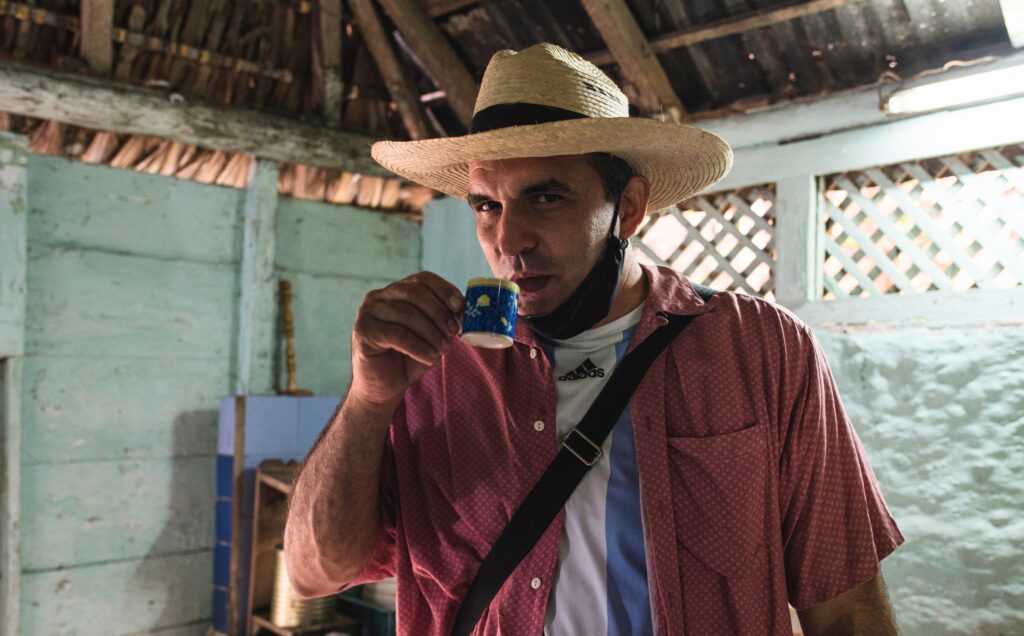
In Cuba, coffee is more than just a drink. It’s an integral part of social gatherings and a way to connect with others. Coffee is offered to guests, shared within families, and enjoyed during moments of relaxation and conversation.
In the morning, coffee marks the start of the day; in the afternoon, it provides an excuse for a break; and after a meal, it often serves as a way to wrap things up. This role of coffee as a social ritual is evident on plantations, in the homes of coffee farmers, at processing sites, and in cafés, including in urban areas such as Havana.
Paolo Tranchida, owner of Fucina Srl, Liguria: “We met the campesinos and their families. Their pride was evident, as was their openness. That’s when I realized just how much work goes into something that we take for granted.”
La Reserva de ¡Tierra! Cuba is part of a supply chain supported by the Fondazione Lavazza’s sustainability program. This program focuses on long-term partnerships with farming communities, knowledge transfer, and the involvement of women and young people in various stages of the coffee supply chain.
The goal is to get more and more people actively involved, not only in cultivation, but also in selection, quality control, and organizational work within cooperatives. During their visit, participants spoke with producers, helped out on the plantations, and were present at the end of the harvest season—moments when work, music, and community come together.
Angelo Musolino, pastry chef, Italy: “I met producers who are focused on the long term. The project is having an impact on the region, but also on how people view their work and their future.”
Within the Cuban coffee sector, the distinction between “producer” and “processor” is less clear-cut. Cooperatives function not only as production units, but also as places where knowledge is shared and decisions are made collectively. There is little hierarchy. Experience is passed on, discussed, and expanded upon.
This approach is reflected in the final product. At La Reserva de ¡Tierra! Cuba, the community is central; every cup of coffee is the result of actions carried out by different people, following established routines and agreements. It is not about a single moment or a single choice, but rather a series of steps within the chain.
For professionals in the hospitality and out-of-home sectors, this means that the coffee they serve can be traced back to specific practices in cultivation, processing, and organization.
This third installment concludes the trilogy. The three articles demonstrate how coffee production in Cuba is shaped by agricultural practices, community collaboration, and decisions made over the long term. The result is a coffee whose origin and production process can be traced without the need for a separate narrative.
This article is part of a three-part series on La Reserva de ¡Tierra! Cuba.
See also:
Part 1: Origin and Cultivation
Part 2: From Harvest to Processing



















According to Spencer Hyman, founder of the artisanal chocolate platform Cocoa Runners, we need to learn to eat chocolate differently.

Yerevan is best known for its rich history, but is developing into a surprising destination for specialty coffee. On this city trip to the Armenian capital, you’ll discover hidden roasteries, modern coffee bars, and a traditional tea house.

From higher Fairtrade prices and coffee beans for home use to an exhibition on coffee and colonial history: here's what's happening in September.


