


Laatst bijgewerkt op: 04/06/2026
CHAPTER 4
Without shade, no matcha. Everything that people recognize as typical matcha, the deep green color, the soft umami, the creamy mouthfeel, originates in shade cultivation.
Shading is not an aesthetic or traditional detail. It is an intervention in the physiology of the tea plant. By taking away light, you force the plant to make different choices. And you taste those choices back in the bowl.
The explanations in this article are based on the practical experience and teaching materials of Richard Schukkink, founder of the International Tea and Coffee Academy.
This article is part of the Matcha dossier. The complete overview of all articles, from cultivation and processing to brewing and applications, can be found on the overview page: Matcha explained: from tea leaf to bowl.
Tea plants use light to make energy through photosynthesis. When you partially remove that light, the plant’s internal balance changes.
In practice, you see under shadow:
Amino acids contribute to umami and sweetness. Catechins are responsible for bitterness and astringency. Shading shifts that ratio. The result is a softer, rounder flavor profile suitable for drinking the whole leaf.
That is the essence of matcha.
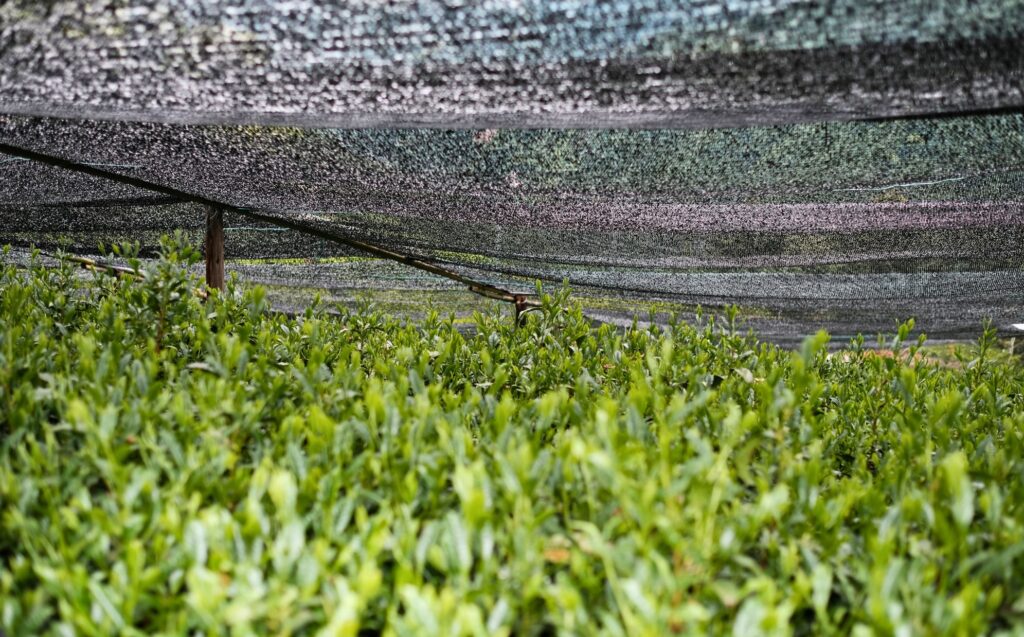
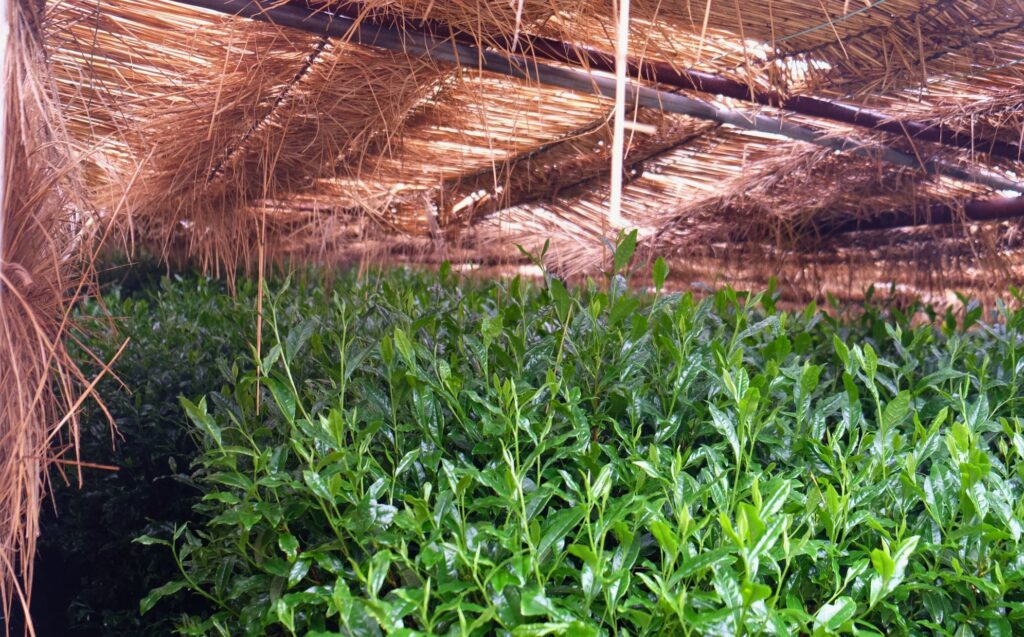
In Japan, roughly two forms of shade cultivation are applied to matcha, each with its own intensity and effect.
Kabuse means partial shielding. The plant still receives filtered sunlight, often for a shorter period of time. The result is more softness and color than unshaded tea, but while maintaining a relatively fresh, open style.
Tana is intensive shade cultivation. Here the field is largely covered, traditionally with natural materials such as straw, nowadays often with nets. This shade period usually lasts longer and has a deeper effect on leaf chemistry.
Tana cultivation is often associated with matcha for usucha and certainly koicha because the umami build-up is stronger and bitterness is better suppressed.
It’s tempting to think that more shade automatically produces better matcha. In practice, it doesn’t work that way.
Shadow is stress. Controlled stress, but stress nonetheless. Shading too long or too heavily can lead to:
Good shade cultivation is therefore always a balance between:
Shade works best only if the plant is strong enough to bear it.
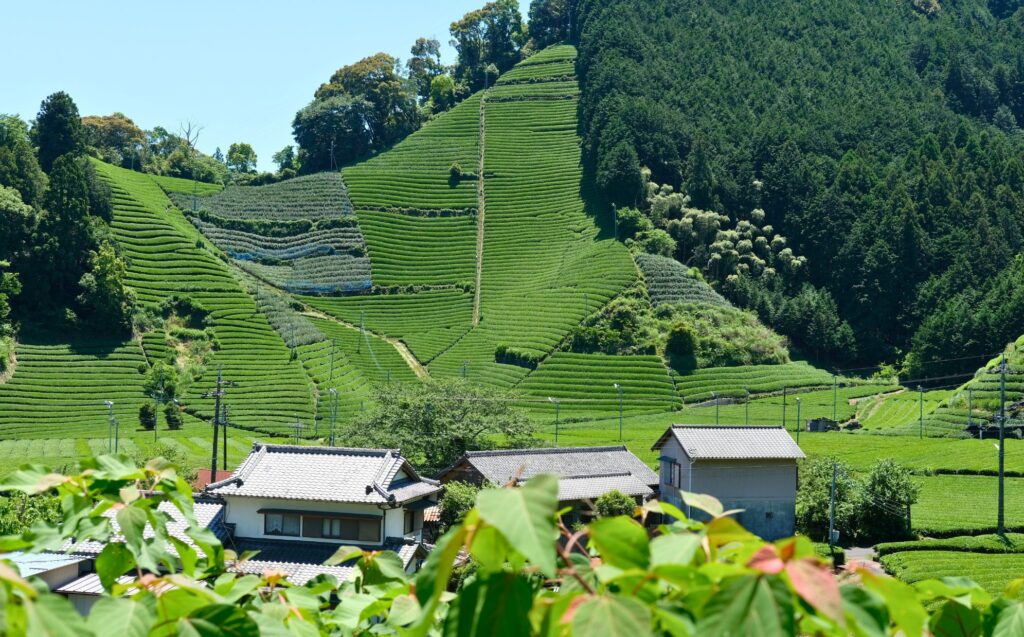
A distinctive aroma with matcha is what is often described as deep green, marine or nori-like. In Japan, this aroma is often referred to as ooi-ka.
This aroma is created not by one substance, but by a combination of volatile components associated with shade cultivation. They are intense, but also fragile. Heat, oxygen and light break them down quickly.
Therefore, a matcha that is strong on paper can still smell flat like:
Shadow creates potential, but maintaining it requires discipline throughout the chain.
Not every cultivar responds the same to shade. Some cultivars build up a lot of umami under shade without sharp side flavors. Others, on the contrary, take on a vegetal or flat tone.
This is why in classic matcha regions you see cultivars that have been selected for decades for shade ability. In more modern growing regions, new cultivars are often used that are more resistant to heat, mechanization and higher yields, but can still provide adequate quality under shade.
So you can never separate shade cultivation from genetics.
The timing of harvesting is crucial. Young shoots contain more amino acids and less coarse structure. Combine that with shade, and you get leaves suitable for fine grinding and high concentrations.
Later harvests often have:
That’s not necessarily a bad thing, but the goal shifts. Such matcha works better in applications with milk, sugar or heat than in a pure bowl.
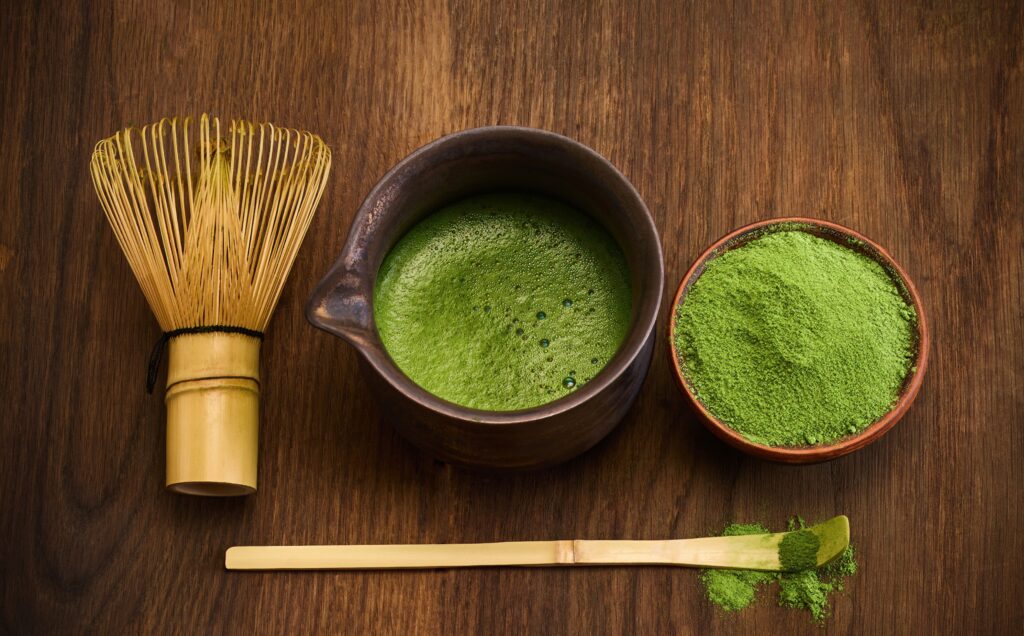
Shadow is not a panacea. It:
Shadow is an amplifier. It magnifies what is already there, positive or negative.
Shade cultivation is at the heart of matcha. Taking away light changes the flavor architecture of the leaf. Umami gains space, bitterness is tamed and color deepens.
But shade only works within a larger system. It requires strong plants, proper cultivars and careful handling. Those who understand shade understand why matcha is not a coincidence, but the result of controlled choices.
In the following articles, we look further into what happens to this leaf after harvesting, in milling and finally in the bowl.
This article is part of the Matcha dossier. The complete overview of all articles, from cultivation and processing to brewing and applications, can be found on the overview page: Matcha explained: from tea leaf to bowl.













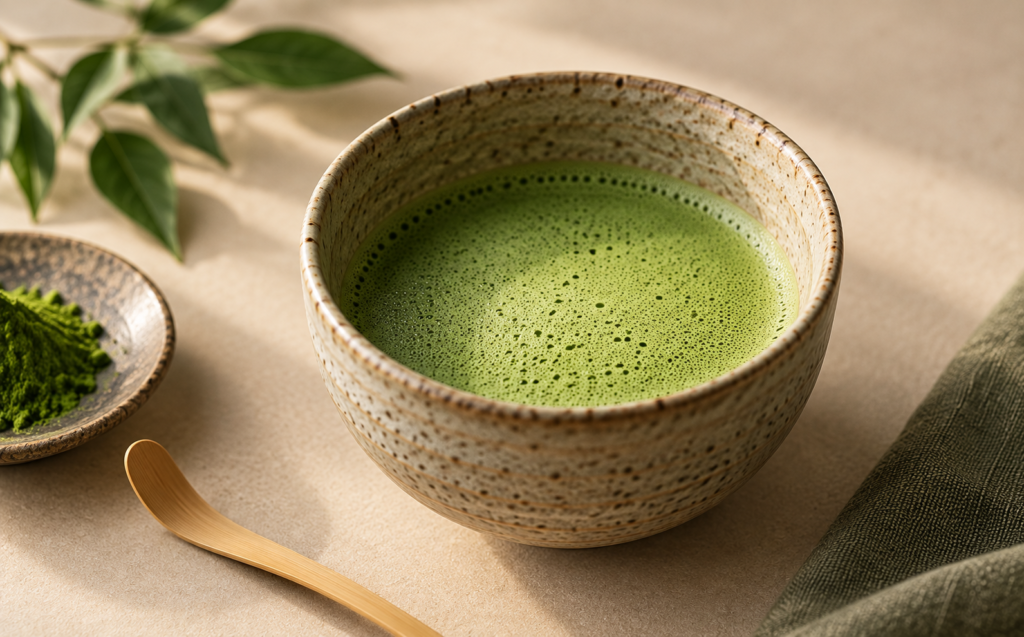


This bright green tea powder comes from a remote mountain community in China and is perfect for tea and (iced) matcha lattes.

Coffee and tea experts share seasonal recipes and practical ideas for restaurant menus. The workshops take place at a pick-your-own garden in Stoutenburg.

These classic madeleines from The Art of Baking by Hidde de Brabander combine a soft texture with a rich buttery taste.


