

Laatst bijgewerkt op: 29/06/2026
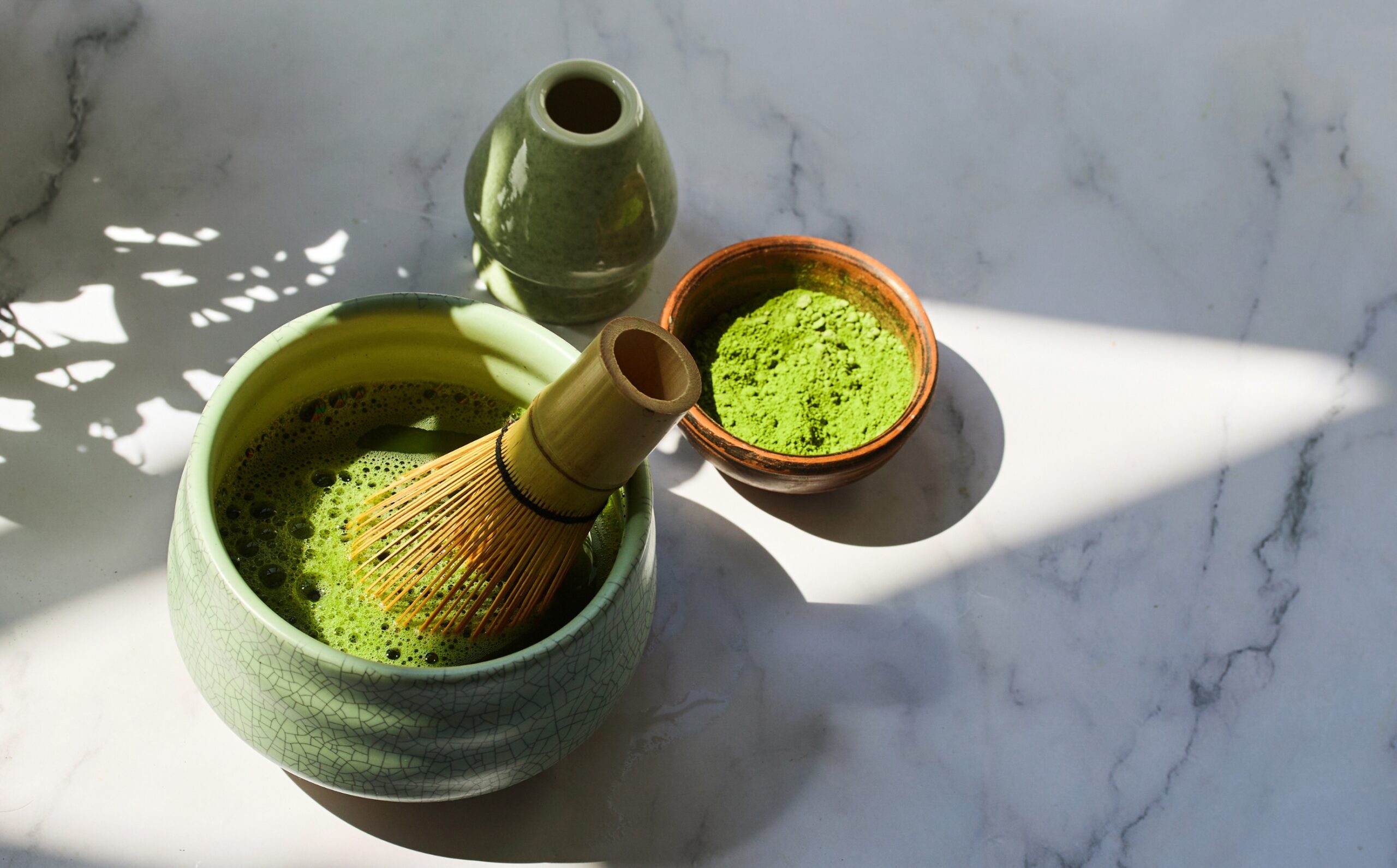
At first glance, matcha seems simple. Green powder, hot water, a quick whisk, and it’s ready. But anyone who really gets to know matcha soon discovers that it’s one of the most precise forms of tea in existence. Not because it has to be complicated, but because you’re drinking the whole leaf. Everything that happens during cultivation, processing, storage, and preparation comes through directly in the bowl.
Matcha is therefore not just a method of preparation, but the culmination of a long chain of choices—from shade cultivation to cultivar, from steaming to de-stemming, from grinding to water and temperature. On this page, you’ll find an overview. From here, you can explore each aspect in greater depth, step by step.
This dossier serves as the starting point for a series of articles based on the work and practical experience of Richard Schukkink, founder of the International Tea and Coffee Academy. This page is intended as an overview and starting point: here you can read the main points and then choose for yourself which topics you’d like to explore in greater depth through the individual articles. No hype, no shortcuts—just explanations that help you truly understand matcha. In the coming weeks, this page will be updated until all chapters are available online, creating a complete and coherent picture—from tea leaf to cup.
In the coming weeks, the chapters will gradually be linked to the in-depth articles.
Real matcha isn’t just any green tea in powder form. Matcha is made from tencha, leaves that are specially grown and processed to be later ground into a fine powder that is pleasant to drink, foams beautifully, and can deliver a deep umami flavor without any harshness.
In practice, terms such as matcha, green tea powder, and ceremonial grade are often used interchangeably. This leads to confusion. The difference lies not in marketing terms, but in leaf quality, shade cultivation, processing, and the purpose for which the matcha is made.
In this in-depth article, you’ll learn exactly what sets real matcha apart from other green tea powders, and why you can’t make up for poor quality once it’s in the bowl.
Without shade, there would be no matcha as we know it. Shielding tea bushes from direct sunlight for weeks alters the chemistry of the leaves. The plant produces relatively more amino acids and fewer catechins, which results in umami, smoothness, and a deeper green color.
There are various forms of shade cultivation, such as kabuse and tana, each with its own effect on flavor, color, and texture. Shade isn’t a simple on-off switch. Too much shade or shade that lasts too long can cause stress and actually lead to a loss of quality.
In the separate article on shade cultivation, you can read about how this balance works and why shade cultivation is always linked to the cultivar, soil, and harvest time.
Because you drink the entire leaf, matcha is extremely sensitive to terroir. Climate, soil, topography, and cultivation practices have a direct impact on its color, aroma, and mouthfeel.
Japan has several matcha-producing regions, such as Uji, Nishio, and Kagoshima, each with its own style and history. However, origin is no guarantee of flavor. The same cultivar can yield a completely different flavor profile in a different region.
Anyone who wants to understand matcha must therefore look beyond just the name of the region.
When it comes to matcha, the cultivar isn’t just a minor detail—it’s a key factor. The plant’s genetic characteristics determine how well it responds to shade, how the leaves grow, how prominent the veins and stems are, and how the powder behaves later in the bowl.
Some cultivars are selected for their umami and smoothness, while others are chosen for their yield or heat resistance. Modern matcha production often uses cultivars different from those found in the traditional regions, though this is not necessarily a bad thing.
In the in-depth article on cultivars, you’ll learn why the term “cultivar” must always be considered in conjunction with terroir and cultivation practices.
Before matcha can be ground, the leaves must first be processed into tencha. This process differs fundamentally from sencha production. The leaves are steamed to stop oxidation, then dried without rolling, and finally stripped of their stems and veins.
It is precisely during this phase that the foundation is laid for mouthfeel, foam characteristics, and smoothness. Poor de-hulling or improper drying can later result in a gritty texture, harsh bitterness, or a dull color.
In the article on tencha processing, we’ll walk you through this process step by step.
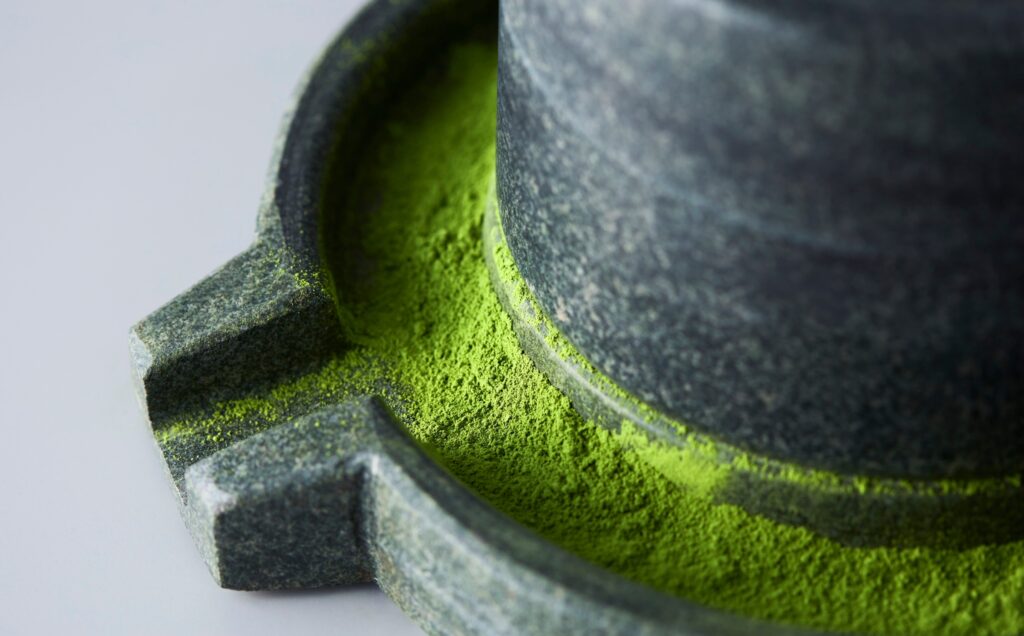
Grinding is one of the most underrated steps in matcha preparation. It determines not only how fine the powder is, but also particle shape, heat buildup, oxidation, and ultimately how matcha behaves in water.
Traditional granite stone mills turn slowly to minimize heat. Modern techniques may be more efficient, but they require strict control. Too much heat or oxygen can quickly lead to a loss of color and a decline in aroma.
In the in-depth article on grinding, you can read why temperature control is crucial here.
Making matcha seems simple, but it requires precision. Water quality, temperature, dosage, and technique all work together to determine the balance of umami, bitterness, and mouthfeel.
Different ratios and techniques apply to usucha and koicha. Not every matcha is suitable for every style. Water that is too hard, too soft, or too hot can still throw even a good matcha off balance.
In the article on brewing matcha, you’ll learn how to achieve consistently good results by following a few basic guidelines.

There are various schools within the Japanese tea ceremony, each with its own approach to foam, movement, and presentation. More foam is not necessarily better. Foam affects texture, aroma, and how bitterness is perceived.
These stylistic differences are not mere folklore, but functional choices that shape the flavor profile and help determine whether a matcha is best enjoyed as usucha, koicha, or in modern applications.
You taste matcha with your eyes before you drink it. The color, sheen, and foam texture already reveal a lot. On the palate, it’s all about umami, bitterness, astringency, and body.
These characteristics also determine how matcha interacts with food. Sweet, fatty, and umami flavors can either soften or, conversely, enhance its sharp edges. What tastes perfect in a bowl may get lost in milk, and what holds up well in desserts may be too harsh when consumed on its own.
That is why matcha always requires context and a specific use.
Due to its global popularity, matcha has become available on the market in many forms. Grades, prices, and claims vary widely and are by no means always clear.
True quality isn’t found in the label, but in transparency regarding origin, processing, freshness, and use. Sustainability and food safety are also playing an increasingly important role, precisely because matcha is consumed in its entirety.
Anyone who uses or sells matcha professionally would be wise to set clear expectations.
In the coming weeks, the chapters will gradually be linked to the in-depth articles.














Arabica, Robusta, Bourbon, Gesha, or SL28: the plant names on a coffee bag reveal something about the variety, flavor, and origin.

Is a lot of foam a sign of good matcha? Not necessarily.

This bright green tea powder comes from a remote mountain community in China and is perfect for tea and (iced) matcha lattes.


