

Laatst bijgewerkt op: 17/06/2026
Vanilla is one of the most beloved flavors in the world, but where does vanilla come from? Its history is rich and fascinating. For example, there was only one people in all of Central America that had mastered the harvesting and processing of vanilla beans after their discovery: the Totonacs of Mexico.
The Totonacs were a highly developed pre-Columbian culture centered around El Tajín and Papantla, cities in the present-day Mexican state of Veracruz. In the 12th century, the Totonacs succeeded for the first time in cultivating the pods of the wild orchid Vanilla planifolia into fermented vanilla pods. They used vanilla not only as a flavoring agent but also as an important ritual element and as a means of flavoring chocolate.
When the Aztecs subjugated the Totonacs around 1450, they imposed biennial taxes. The Totonacs were required to pay these taxes in the form of slaves and vanilla beans.
Vanilla and Cocoa
The Aztecs used vanilla in their chocolate drink, xocoatl. They regarded this chocolate drink as a stimulant and also as a remedy for a wide variety of ailments. Cocoa beans were so highly prized that they were even used as currency. Xocolatl roughly translates to “bitter drink,” and the Aztecs added all kinds of spices to make the drink less bitter. One of the most important additions was vanilla.
The residents of Papantla still consider their town—and rightly so—to be the birthplace of vanilla. They are proud of “the town that perfumed the world.”
Carlos Castaños Lopez is a vanilla producer from Papantla, of Totonac descent. He explains that the Spanish conquistador Hernán Cortés brought vanilla from the Totonacs to his king’s court in Toledo, Spain, around 1528.
The Spanish kept vanilla to themselves for a long time, but when a Spanish princess, Ana of Austria, married the future King of France, Louis XIII, in 1615, she introduced vanilla to Paris. From there, it spread throughout Europe. It was used as a spice, a perfume, and also as an aphrodisiac.
European botanists began experimenting with Vanilla planifolia. It turned out to be a piece of cake to grow the orchid on plantations in the European colonies. There was one problem: the plants grown outside of Mexico did not produce pods. As a result, producers in the area around Papantla remained the world’s sole suppliers of vanilla well into the 19th century.
In 1841, the Mexican monopoly came to an end. It was a enslaved boy on the French colony of Réunion, the twelve-year-old Edmond Albius, who, using a small stick, managed to transfer a bit of pollen from the orchid to the plant’s female reproductive parts.
To everyone’s surprise, Edmond had a few nice vanilla beans just a few weeks later. As early as 1889, Madagascar, the Comoros, and the Seychelles together accounted for 80 percent of the world’s vanilla production.
KTC magazine is published four times a year and brings you the latest news on specialty coffee, artisanal tea, and bean-to-bar chocolate.
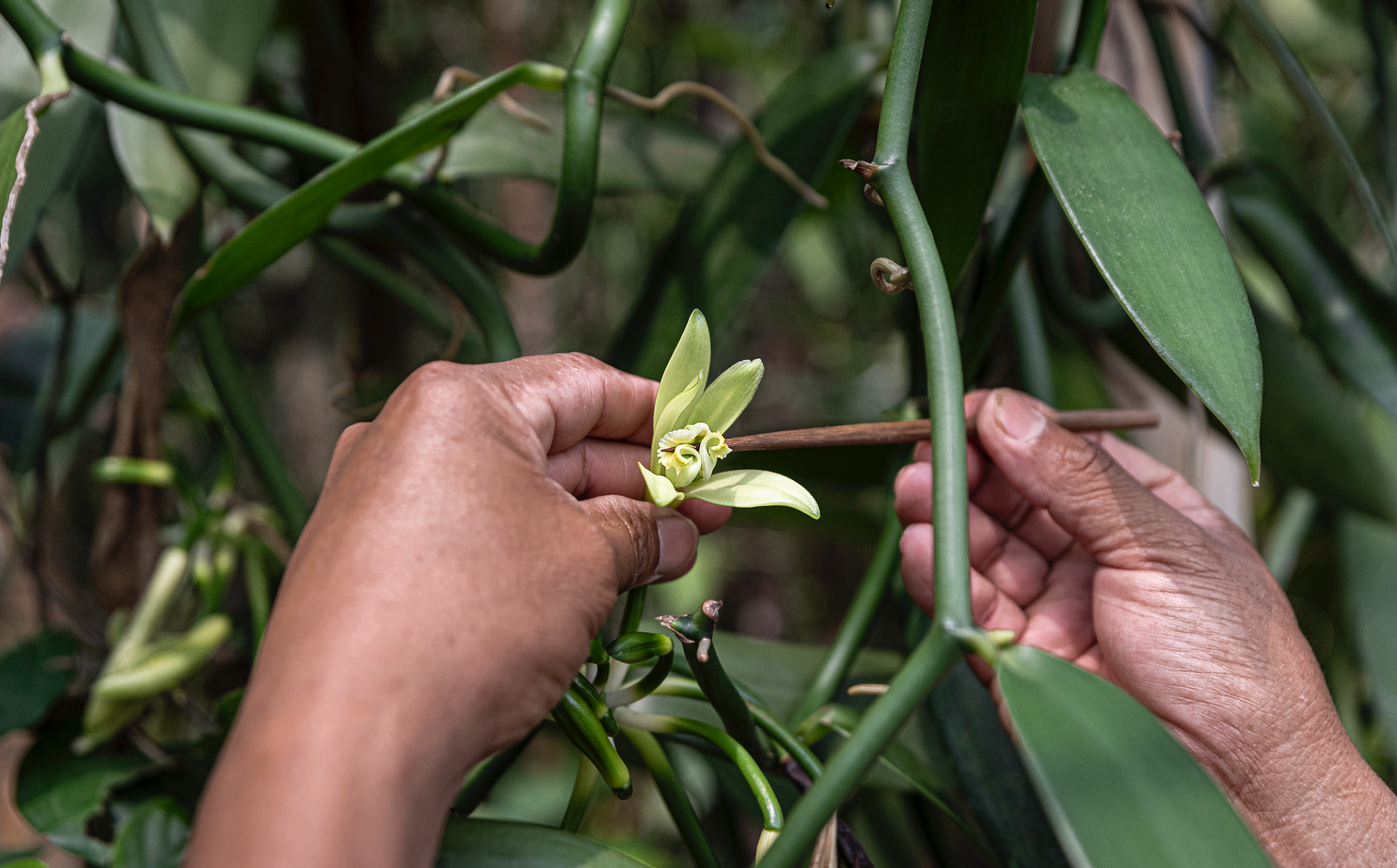
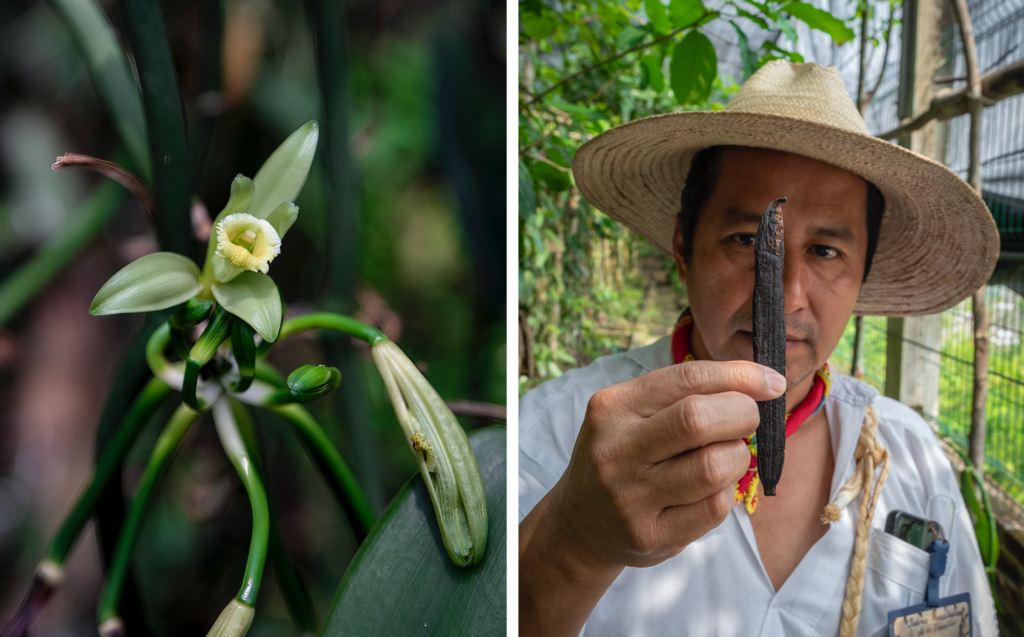
Meanwhile, the Mexicans are also pollinating the orchids by hand. “There simply aren’t enough bees to pollinate all the plants on our plantations,” says Castaños Lopez. He hurries from plant to plant. As soon as he spots a blooming orchid, he picks it up very carefully with his left hand. He opens the flower with a thin stick in his right hand and very gently transfers a little pollen from the male anther to the female stigma. The whole process takes maybe twenty seconds, and then the Totonaak is already at the next flower.
“Each flower blooms for about five hours,” says Castaños Lopez. “So you have five hours to pollinate it. If that doesn’t happen, the flower won’t develop pods, and you won’t get any vanilla.” Manual pollination, harvesting, and fermenting vanilla are labor-intensive processes. That’s why real vanilla is expensive. As a result, at most 2 percent of all vanilla products in the world contain real vanilla. Most vanilla ice creams are made with synthetic vanilla, a substance that contains far fewer flavors and aromas.
On the zócalo in Papantla, there’s a small tourist shop that sells authentic vanilla products. In the supermarkets, however, only bottles of synthetic vanilla are available. Fortunately, there are two restaurants in town that specialize in dishes made with real, local vanilla. There, you can enjoy a delicious mug of chocolate drink with vanilla, just like the Aztecs did.









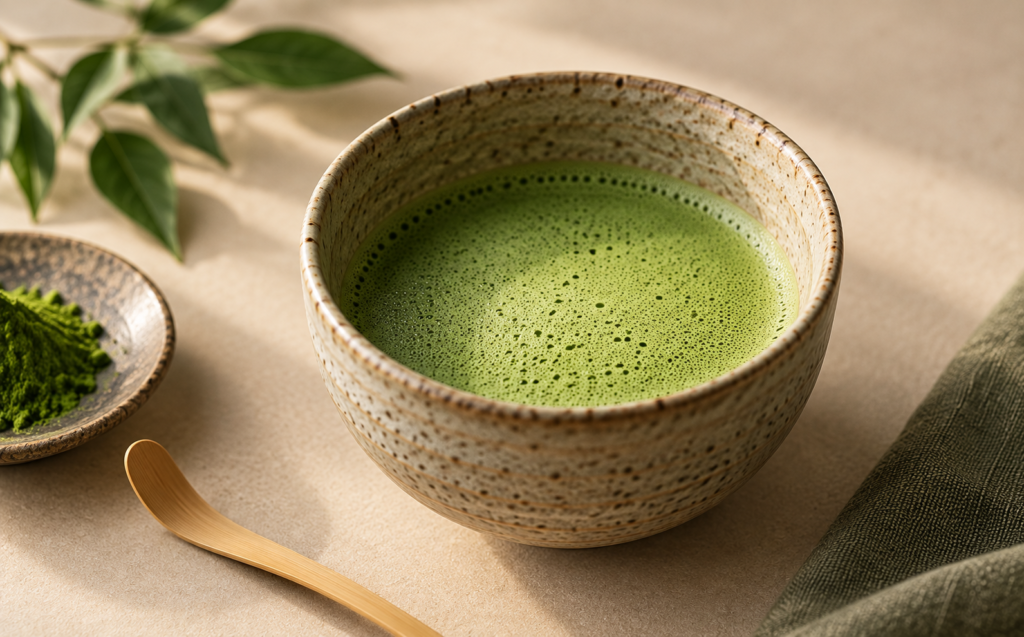


This bright green tea powder comes from a remote mountain community in China and is perfect for tea and (iced) matcha lattes.

Coffee and tea experts share seasonal recipes and practical ideas for restaurant menus. The workshops take place at a pick-your-own garden in Stoutenburg.

These classic madeleines from The Art of Baking by Hidde de Brabander combine a soft texture with a rich buttery taste.


